Missing a tooth (or a few) isn’t just a “deal with it later” problem. It can change how you chew, how you speak, and even how confident you feel smiling in photos. And if you’ve started looking into dental implants, you’ve probably noticed something frustrating fast: there isn’t just one type.
In this guide, we’ll answer the big question: what are the types of dental implants available? You’ll get a clear breakdown of the main options, what they’re used for, and how dentists decide which one is the right fit.
At Elizabeth L. Wakim DDS, we use advanced diagnostics like 3D imaging and digital scanning to evaluate bone structure, bite alignment, and overall oral health before recommending an implant approach. That way, your treatment plan is tailored to your needs, your goals, and the results you want to feel confident about.
What Exactly Are Dental Implants?
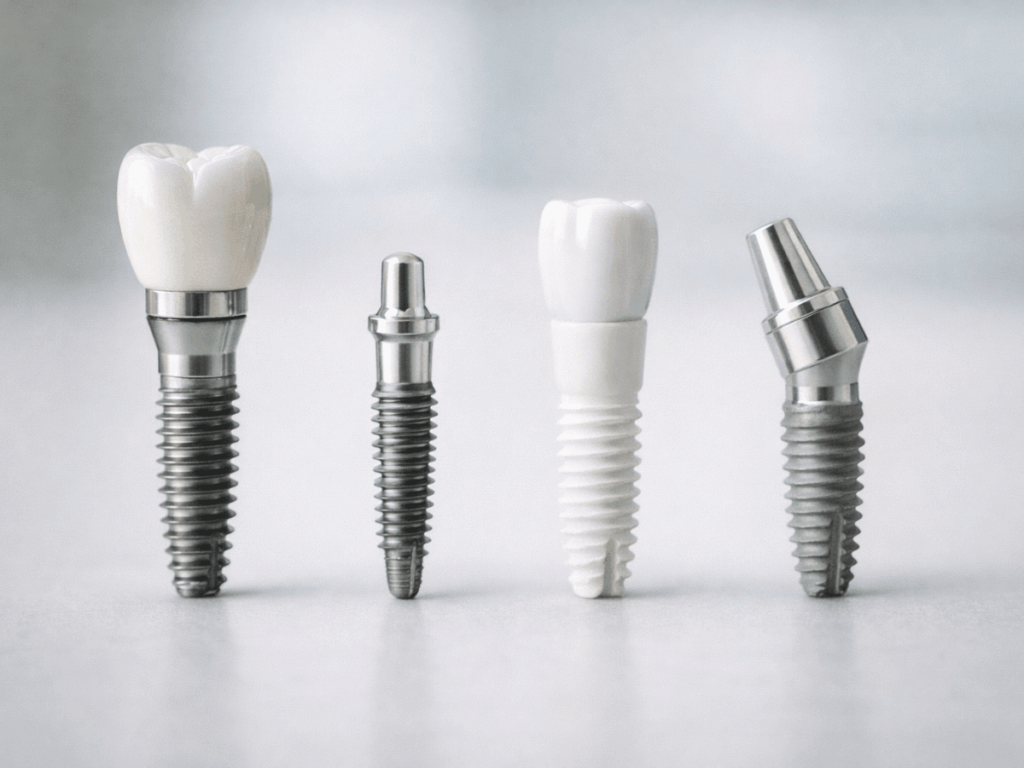
A dental implant is a replacement tooth root, usually made of titanium or a titanium alloy, that is placed into your jawbone to support a new tooth. Think of it as a strong foundation. Once it heals and bonds with the bone, a connector piece called an abutment and a prosthetic tooth like a crown, bridge, or denture are attached on top.
In simple terms, implant = artificial root + replacement tooth.
Why implants are often better than dentures or bridges
Nearly 7% of adults over 20 experience complete tooth loss, and that number increases with age. That is one reason dental implants matter. They do more than fill a gap. They are designed to restore function and support long-term oral health.
Implants can:
- Feel more natural when chewing because they are anchored in the jawbone and function more like natural tooth roots
- Stay stable without slipping or relying on adhesives, which many patients appreciate when replacing missing teeth in the upper or lower jaw
- Help protect jawbone over time by supporting a healthy jawbone and reducing the changes that can happen after tooth loss
- Avoid reshaping healthy teeth, which may be needed with some dental bridges, helping preserve your remaining teeth
- Look very natural when the final dental crown is custom-matched for a natural look and a more confident smile
Implants are not automatically the best choice for everyone, though. A proper dental implant consultation helps evaluate bone support, gum health, and overall medical history to determine whether implant treatment is the right fit.
Types of Dental Implants Available (Traditional + Modern Options)
Dental implants are known for being a reliable, long-term tooth replacement option, with reported success rates often around 95% to 98%, and many lasting for decades with proper care. Most people assume dental implants are a one-option treatment. You either “get an implant” or you don’t. But there are actually several types, and the right choice depends on many factors.
Here’s a clear breakdown of the main implant types, plus a few modern options that have become more common in recent years.
1. Endosteal Implants (Most Common)

Endosteal implants are the most common type of dental implant used today. They are placed directly into the jawbone and serve as a stable foundation for a replacement tooth. After placement, they can be restored with a crown, or used to support a bridge or implant-supported denture, depending on how many teeth are being replaced.
Best for: Patients with good overall oral health and enough jawbone volume to support implant placement. It is also commonly recommended when you want the most “natural-feeling” replacement for a missing tooth.
Functional Advantages:
- Strong, stable chewing support that does not shift like removable appliances
- Works for single-tooth replacement or as support for multi-tooth restorations
- Helps preserve jawbone structure by replacing the missing root support
Limitation: Requires adequate bone density for secure placement, and some patients may need bone grafting first
2. Subperiosteal Implants
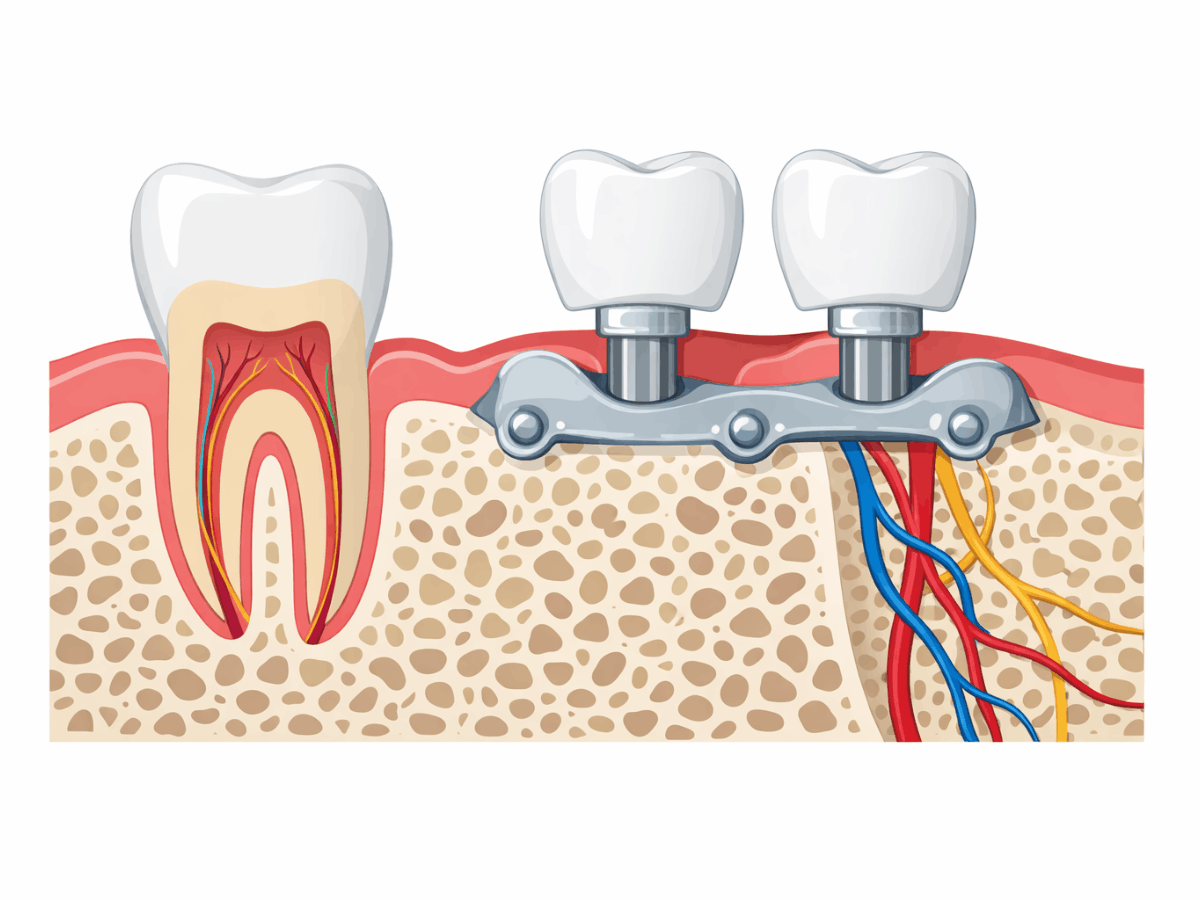
Subperiosteal implants are placed on top of the jawbone, underneath the gum tissue, rather than being inserted into the bone itself. Instead of acting like a root inside the bone, this type of implant uses a custom-fitted framework that sits along the bone’s surface to support a replacement tooth or teeth.
Best for: Patients with low jawbone height or volume who may not be ideal candidates for traditional implants, especially when bone grafting is not preferred or not recommended.
Functional Advantages:
- Provides implant support without placing the implant into the jawbone
- May be an option when bone height is limited
- Can support fixed or removable restorations in select cases
Limitation: Not as commonly used as endosteal implants today, and candidacy depends heavily on bone shape, gum health, and bite forces.
3. Zygomatic Implants

Zygomatic implants are a specialized type of implant used in the upper jaw when there is not enough bone to support traditional placement. Instead of anchoring into the upper jawbone, these implants are secured in the cheekbone, which provides a stronger base for restoring missing teeth in complex cases.
Best for: Patients with severe upper jaw bone loss who are not candidates for standard implants, often when advanced bone grafting would otherwise be needed.
Functional Advantages:
- Provides a stable anchor when upper jaw bone support is limited
- Can restore function in cases where traditional implants are not possible
- Supports full-arch restorations for advanced tooth loss cases
Limitation: This is a highly specialized procedure that requires advanced training, detailed imaging, and careful surgical planning.
4. Mini Dental Implants

Mini dental implants are smaller-diameter implants designed to provide support in cases where a standard implant may not be the best fit. Because they are narrower, they can sometimes be placed with a less invasive approach and are commonly used to improve stability for certain restorations, especially when space is limited.
Best for: Patients who need added denture stability or have smaller spaces where a traditional implant may be difficult to place, depending on bone support and bite forces.
Functional Advantages:
- Can improve stability for certain dentures and removable restorations
- Useful in areas with limited space for standard implant placement
- Often involves a less invasive placement process in appropriate cases
Limitation: Not ideal for every situation, especially in areas that require higher bite strength or long-term heavy chewing forces.
5. All-on-4 and All-on-6 (Full-Arch Solutions)

All-on-4 and All-on-6 are full-arch implant options designed to replace an entire upper or lower set of teeth using four to six strategically placed implants. Instead of placing one implant per missing tooth, this approach uses a smaller number of implants to support a full arch restoration, creating a stable, long-term alternative to traditional dentures.
Best for: Patients who are missing most or all teeth in an arch, or those with failing teeth who want a fixed, more secure option than removable dentures.
Functional Advantages:
- Restores a full arch of teeth with fewer implants than traditional methods
- Provides strong stability for chewing and speaking compared to removable dentures
- Often reduces the need for placing individual implants for each missing tooth
Limitation: Candidacy depends on bone support, bite alignment, and overall oral health, and not every patient qualifies for the same timeline or treatment approach.
6. Implant-Supported Bridges and Implant-Supported Overdentures

Implant-supported bridges and overdentures use dental implants as anchors to replace multiple missing teeth without relying on natural teeth for support. A bridge can replace several teeth in a row, while an overdenture is a removable denture designed to attach securely to implants for improved stability and function.
Best for: Patients missing multiple teeth who want a more secure alternative to traditional bridges or removable dentures, especially when stability and comfort are top priorities.
Functional Advantages:
- Provides stronger support than traditional removable dentures
- Can replace multiple teeth with fewer implants than placing one per tooth
- Improves comfort and confidence while eating and speaking
Limitation: Requires careful planning to ensure proper implant placement, fit, and long-term maintenance of the restoration.
How Dentists Choose the Right Type of Dental Implant
With over 3 million dental implants placed each year in the U.S., it is clear this is not a rare or niche treatment anymore. If choosing an implant feels like picking from a menu you do not understand, you are not alone. The truth is, your dentist is not just looking at the missing tooth. They are looking at what is happening underneath it, because the best implant is the one that stays stable, looks natural, and holds up when you actually use it.
Bone quality and volume
Your jawbone is the foundation. If there is enough bone height and density, placing a traditional implant is usually more predictable. If bone support is limited, your dentist may recommend bone grafting or a different implant approach designed for low-bone situations.
How many teeth you are replacing
Replacing one tooth is a different plan than rebuilding an entire smile. A single missing tooth may only need one implant and one crown, and addressing it early can help prevent bigger changes over time, especially if a missing tooth is already affecting your smile. If you are missing several teeth in a row, an implant-supported bridge can often replace multiple teeth without placing an implant for every gap.
Budget, timeline, and aesthetic goals
Implants are not all the same cost or timeline. Some treatments require extra steps like grafting or healing time before the final tooth is placed, while others are designed to restore function sooner. Your dentist will match the plan to your priorities, and it also helps to understand options like financing dental procedures when planning treatment.
The role of digital scans and CBCT imaging
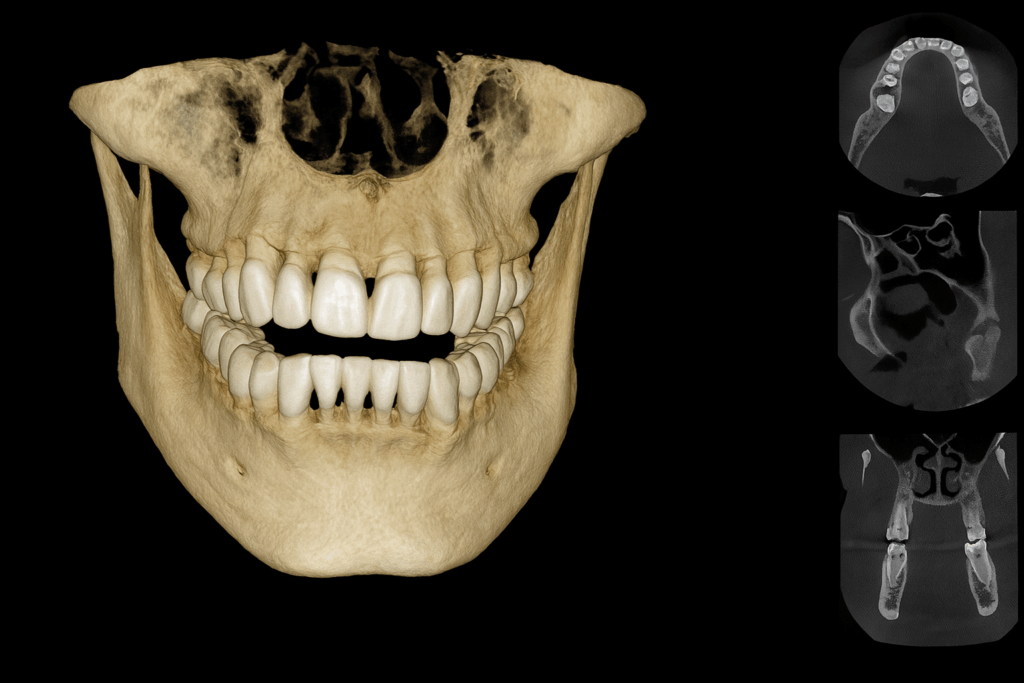
This is where modern implant planning gets smarter. CBCT imaging and digital scans give your dentist a 3D view of your bone structure, bite alignment, and the safest placement areas. That means fewer surprises, more precise planning, and a final result that is built to fit your anatomy, not guesswork.
Once your dentist has your scans, bone measurements, and bite mapped out, the right implant option usually becomes obvious, because it is the one your mouth can actually support long-term and the one that fits your overall restorative dentistry plan.
Ready to Find the Right Implant Option for Your Smile?
Now that you know what types of dental implants are available, the next step is figuring out which option fits your bone support, bite, and long-term goals. A strong foundation of preventive dentistry also plays a key role in long-term implant success by helping keep your gums and supporting structures healthy. The right choice is not about picking the most popular implant. It is about choosing the one that will feel stable, look natural, and hold up in real life.
At Elizabeth L. Wakim DDS, our team is committed to restoring smiles with gentle, personalized care and modern implant planning. If you are missing teeth, considering implants, or want a clear treatment plan based on your unique needs, we are here to help. Contact our Pennsylvania office at (724) 558-8222 or use our contact form to schedule a visit and get guidance tailored to your oral health goals.
FAQ: Dental Implants Beyond the Basics
Q1: Can dental implants replace more than one tooth without placing an implant for every gap?
A:Yes. In many cases, implants can support dental bridges, which means you can replace multiple missing teeth with fewer implants. This approach can be a smart option for a stable, long lasting solution, especially when paired with early prevention, like reversing a cavity before it progresses.
Q2: Will my implant match the rest of my smile, or will it look obvious?
A: A well-made implant restoration is customized for shade, shape, and proportion. The goal is for the final dental crown or permanent crown to blend naturally with nearby teeth, so your artificial teeth look balanced and not “noticeably dental,” even up close.
Q3: Can you get dental implants if you still have some natural teeth left?
A: Yes. Many patients choose implants even when they still have healthy remaining teeth. Implants can fill specific gaps, support your bite, and protect your overall dental health, especially when you want a permanent solution that does not rely on removable false teeth.
Q4: Are dental implants a good option if you grind your teeth at night?
A: They can be, but grinding adds extra pressure that needs to be planned for. Your dentist will look at several factors like bite force, overall health, and good bone density to recommend the right dental implant approach and design a crown that can hold up long-term.
Q5: Can dental implants help with a loose lower denture?
A: Yes. Implant support can help stabilize lower dentures, which often shift more than upper dentures. Depending on your needs, your dentist may recommend standard implants or mini implants to improve comfort, chewing confidence, and day-to-day stability in the lower teeth.

Dr. Elizabeth Wakim, DDS, is the founder of Enhanced Wellness. She’s a compassionate and highly-regarded dentist with her own practice in Washington, Pennsylvania, known for providing modern, comprehensive dental care, botox and facial aesthetics with a focus on patient comfort and anxiety reduction, serving general, cosmetic, and pediatric dentistry needs.