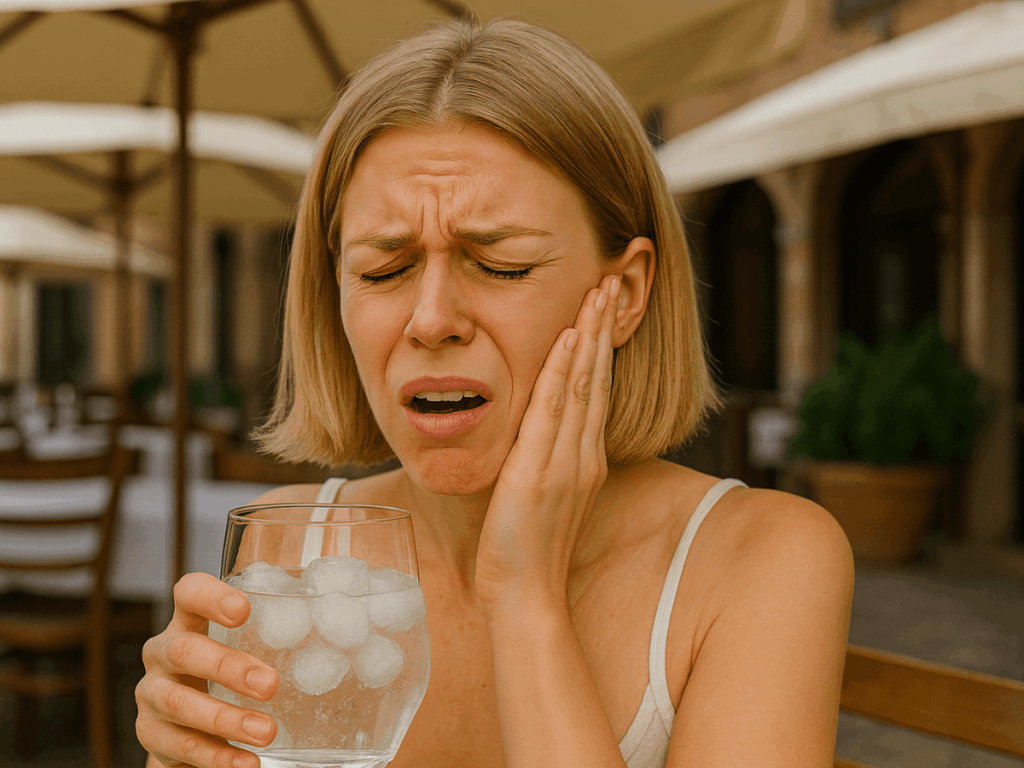
You finally achieved that brighter, whiter smile. Then you take a sip of iced coffee and feel a sudden sharp twinge in your teeth. This reaction is surprisingly common after whitening ,the good news is that the discomfort usually fades quickly, and there are practical ways to soothe it fast.
At Elizabeth L. Wakim DDS, we use the latest whitening systems and enamel-protective treatments designed to brighten your teeth while minimizing sensitivity. During your visit, we can also recommend personalized desensitizing care to keep your smile comfortable and healthy long after treatment.
In this guide, we’ll break down why sensitivity happens, when it’s worth a dentist’s attention, and the most effective ways to calm it fast so you can enjoy your brighter smile without the sting.
The Science Behind Post-Whitening Sensitivity
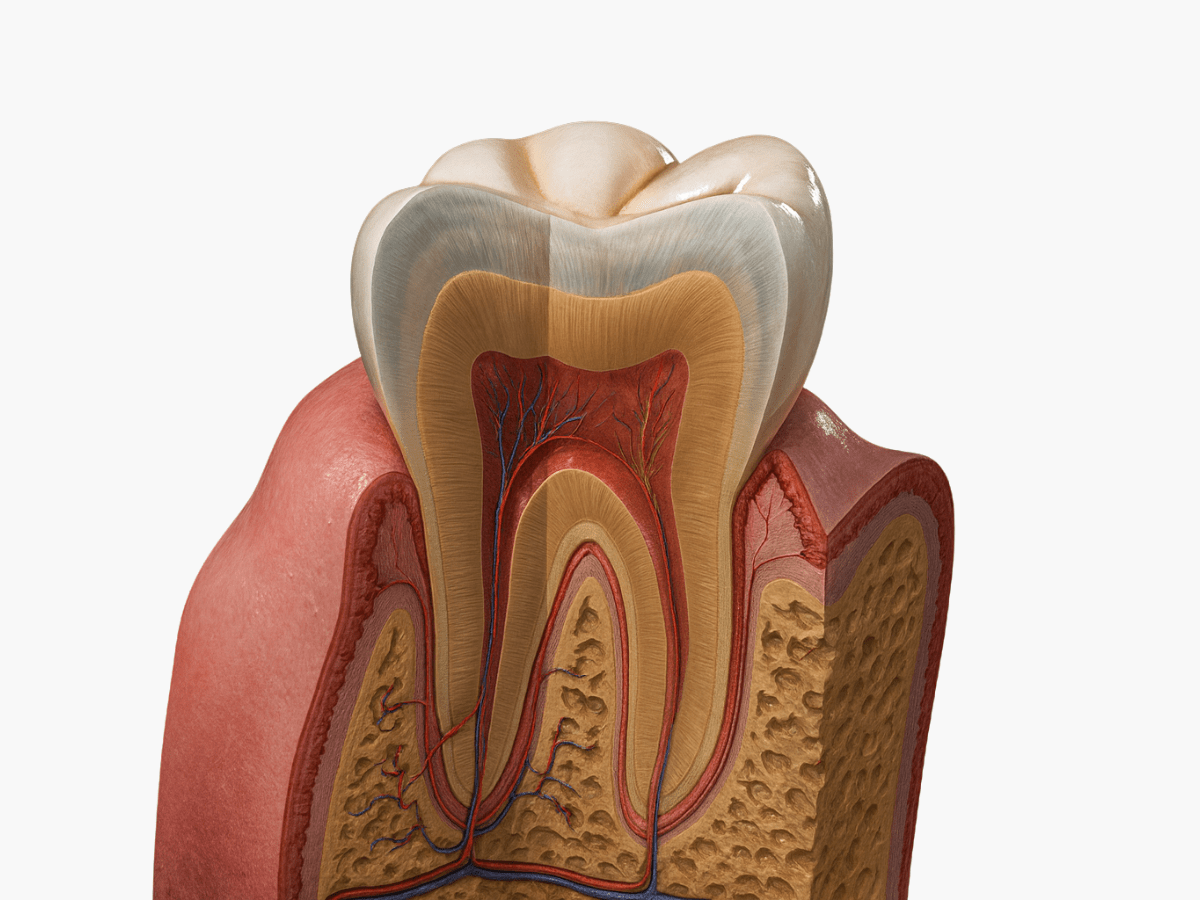
When you whiten your teeth, the active ingredients such as hydrogen peroxide or carbamide peroxide break down stain molecules trapped in the enamel. To reach those deeper stains, the whitening gel temporarily makes the enamel more permeable. Studies show that tooth sensitivity tends to peak within the first 24 hours after whitening treatments, when the enamel is at its most porous.
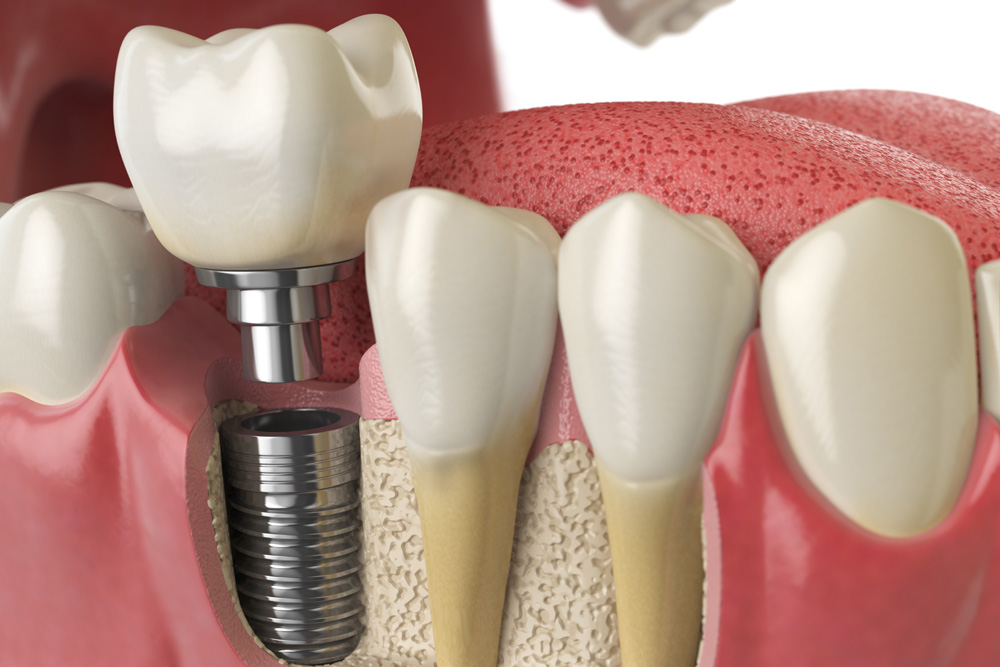
Beneath the enamel is a layer called dentin. This layer is full of tiny pathways that lead to the nerves inside your tooth. When the enamel becomes more open after whitening, these pathways let hot, cold, or sweet sensations travel more easily to the nerves, which is why you may feel a quick zing of pain.
Sensitivity can feel stronger if your whitening trays do not fit well, if gel touches your gums, or if you already have thin enamel or exposed roots. For most people, the sensitivity fades within a day or two as the enamel returns to normal and the pathways close back up.
Prep Your Smile: How to Avoid Sensitivity Before Whitening
Taking a few steps before your whitening session can make a big difference in how your teeth feel afterward.
- Start with a desensitizing toothpaste: Switch to a toothpaste designed for sensitive teeth about one to two weeks before whitening. Ingredients like potassium nitrate and stannous fluoride help block the nerve pathways that trigger pain. Check out the best toothpastes for sensitive teeth to find one that works for you.
- Ask your dentist for a protective barrier: In-office whitening often includes a gel or coating that shields the gums and enamel. If you are using take-home trays, ask your dentist about adding a desensitizing gel to your routine.
- Choose a gentler whitening option: High-concentration gels and long whitening sessions increase the risk of sensitivity. Consider lower-strength gels or shorter sessions, especially if you have a history of tooth sensitivity. If stains from red wine are your main concern, try these safe dentist-approved tips to remove red wine stains from teeth before committing to a full whitening treatment.
- Check the fit of your trays or strips: Whitening trays that do not fit well can let gel seep onto the gums, which can cause irritation and soreness. A custom-fitted tray from your dentist provides better results and more comfort.
- Keep your enamel healthy: Avoid acidic drinks and harsh brushing leading up to your treatment. Frequent consumption of acidic foods and drinks, such as citrus fruits and soda, can gradually wear down tooth enamel and expose the underlying dentin, which increases the risk of sensitivity.
Calm the Discomfort: How to Stop Tooth Sensitivity After Whitening
If your teeth feel tender after whitening, focus on these key steps to soothe discomfort and protect your smile:
- Use a sensitivity-focused toothpaste with ingredients like potassium nitrate or stannous fluoride to calm nerve reactions.
- Switch to a soft-bristled toothbrush and brush gently to avoid irritating enamel and gums.
- Avoid very hot, cold, or acidic foods and drinks for 48 hours to prevent sensitivity. If you have acid reflux, see this guide on protecting enamel to keep your teeth safe during recovery.
- Rinse with a fluoride mouthwash or gel to help strengthen enamel and reduce pain pathways.
- Ask your dentist about professional desensitizing treatments such as in-office gels, varnishes, or sealants for quick, lasting relief.
Mythbusting: Whitening Sensitivity Myths vs Facts
With so many teeth whitening products, home whitening kits, and quick-fix tips online, it can be hard to know which advice is safe. In fact, research shows that about 85 percent of people report experiencing some level of sensitivity after whitening procedures. Understanding how a whitening treatment affects tooth enamel can help you separate fact from fiction and reduce tooth sensitivity more effectively.
Myth: Tooth sensitivity after whitening never goes away.
Fact: Sensitivity after teeth whitening is usually temporary. Bleaching agents used in a whitening procedure open tiny tubules in the enamel, which can react to hot or cold foods and drinks. These tubules typically close within a few days as the enamel recovers.
Myth: The stronger the whitening gel, the whiter the teeth.
Fact: Using high-strength bleaching gels or whitening strips does not always lead to brighter results. It can irritate tooth enamel and increase temporary sensitivity. Gentler professional whitening treatments or well-monitored at-home whitening treatment plans often achieve similar results with less discomfort.
Myth: Natural remedies like salt or baking soda help reduce sensitivity.
Fact: Abrasive substances can damage already weakened enamel and make sensitivity worse. Fluoride treatments provided by a dental professional are safer and more effective to relieve sensitivity and strengthen enamel.
Myth: You should keep whitening even if you experience teeth sensitivity.
Fact: Continuing to whiten when sensitivity persists can further irritate tooth enamel. Taking a short break between whitening teeth sessions allows enamel to recover and helps minimize discomfort.
Myth: Only people with weak enamel experience sensitivity.
Fact: Even patients with healthy enamel can feel temporary sensitivity after a teeth whitening procedure because bleaching agents open up microscopic pathways in the enamel that react to hot and cold foods.
When to See a Dentist
Most sensitivity after teeth whitening treatments fades on its own, but there are times when it signals something more serious. Schedule a visit to your dental office if you notice any of the following:
- Sensitivity that lingers or worsens beyond 48 hours after whitening, even after using desensitizing toothpaste or fluoride rinses to reduce discomfort
- Sharp or throbbing pain that continues even when you are not eating or drinking
- Sensitivity that affects only one tooth or a specific area rather than all teeth
- Visible cracks, chips, or areas of exposed root near the gumline
- Gum swelling, redness, or irritation that does not subside despite efforts to reduce inflammation
Your dentist can determine whether the issue is simple post-whitening sensitivity or a sign of enamel damage, gum recession, or cavities. They may recommend professional in-office treatments such as desensitizing gels, fluoride applications, or bonding to protect exposed enamel and reduce discomfort.
Bright Smile, Lasting Comfort
A whiter smile should feel as good as it looks. With the right care before and after whitening, most people can keep sensitivity brief and manageable. From switching to a desensitizing toothpaste to knowing when to take a break or call your dentist, small steps can make a big difference in your comfort.
At Elizabeth L. Wakim DDS, we combine advanced whitening systems with enamel-protective treatments to help patients achieve brighter smiles without unnecessary discomfort. If sensitivity continues or you want personalized guidance for your next whitening session, schedule a consultation so we can tailor a plan that keeps your smile healthy, radiant, and pain-free.
Call our Pennsylvania office at (724) 558-8222 or use our contact form to schedule a visit. Do not let a small problem turn into a serious one. Protect your smile today with expert, personalized treatment.

Dr. Elizabeth Wakim, DDS, is the founder of Enhanced Wellness. She’s a compassionate and highly-regarded dentist with her own practice in Washington, Pennsylvania, known for providing modern, comprehensive dental care, botox and facial aesthetics with a focus on patient comfort and anxiety reduction, serving general, cosmetic, and pediatric dentistry needs.