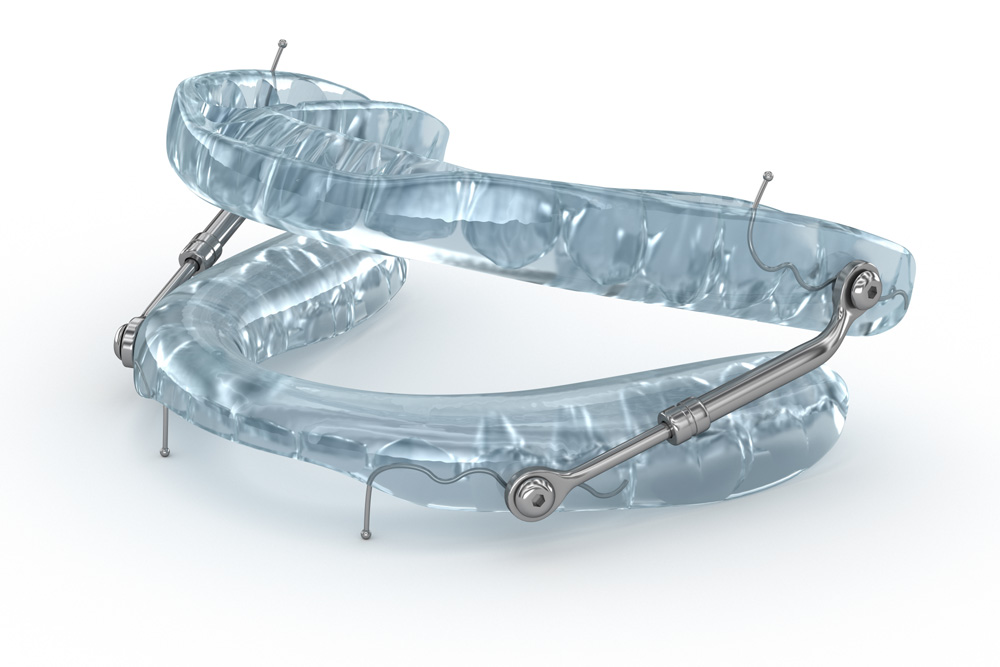
Do you have chipped, cracked, or discolored teeth? Are you looking for a non-invasive, safe, and cheap treatment? Look no further than dental bonding!
What is dental bonding?
Dental bonding is a cosmetic, or preventative, treatment. It is used to address minor to moderate flaws of the teeth and create a natural, healthy smile. Dental bonding is different from orthodontics, which uses technology such as braces, invisalign, or expanders to move teeth into a desired shape over several months or years. Instead, dental bonding does not move the teeth themselves, but rather adds a resin onto the teeth to fix a smile in one visit.
Dental bonding is a fast procedure that can normally be performed in thirty minutes to an hour. There is almost no recovery time, and you can get back to your normal routine right away.
Process of Dental Bonding

Image: A doctor holding up a dental X-ray. You may need an X-ray before proceeding with dental bonding.
- Before the procedure, it will be determined whether or not you are eligible for dental bonding. If you have conditions such as gum disease, gum decay, or severe tooth decay, dental bonding may not be the best option for you. This is normally determined by an X-ray.
- Once it is determined that you are able to receive dental bonding, the first thing you do is discuss with your dentist your desired outcome. Some questions you may have to answer are:
- Which teeth would you want touched up?
- Would you want your teeth recolored?
- Do you want gaps between certain teeth to be less prominent?
- Are there any chips or cracks in your teeth you would like filled in?
- After you and your dentist have outlined a treatment plan, your dentist matches the resin that will be used for bonding with the natural color of your teeth. This resin—a moldable, durable plastic—will eventually be used to shape or recolor your teeth during the process of bonding.
- This resin can also be referred to as a composite veneer. This is different from what you’d normally think of as a veneer, which is typically made of the sturdier porcelain.
- Fine-grit diamond bur or coarse paper is used to rough up the teeth prior to bonding. This creates an extremely thin layer of scratches and debris on the top of the enamel (outside of the tooth) which is called a smear layer. This smear layer gives traction for the next materials to be added to the tooth.
- A glue-like liquid called a dentin bonding agent is applied to the smear layer. The dentin bonding agent is composed of a thin layer of resin, similar to the material used to complete the bonding.
- The tooth-colored resin designed in step 3 is applied to the tooth. The resin is then molded, smoothed, and polished until it resembles the desired shape of the tooth.
- If someone is looking to recolor their tooth, the layer of resin will likely be thinner but surround the majority of the tooth. If someone wants to fill in a gap, the resin will be thicker but concentrated in the area of interest.
- Once the resin is shaped to perfection, the tooth is exposed to a UV light, which triggers a photochemical reaction which ultimately ‘cures’, or hardens, the resin, so that the bonded tooth is able to perform the functions of teeth.
- The tooth is then polished as much as possible to make it appear natural. Once this step is completed, the modified tooth or teeth will look like they have always been a part of your mouth.
Recovery from Dental Bonding
Bonding typically is not painful and does not require any anesthesia. However, for a day or two after treatment, patients may be asked to eat soft food, and their teeth may not feel entirely normal. After the surgery, there are not many long-term lifestyle changes patients have to make, but advisably, patients may avoid:
- Bruxism, or teeth grinding, can damage the resin applied during dental bonding. Dental bonding is often not the best treatment for damage caused by bruxism, as composite veneers are more fragile than crowns or porcelain veneers.
- Mouthguards should be worn for contact sports due to the fragility of composite veneers. However, even if you have not had dental bonding done, it is a good idea to wear a mouthguard during contact sports to protect your teeth from damage.
- Brushing two times a day, flossing, mouthwash, and regular dental checkups are advised whether or not you have dental bonding, but are especially important to maintain the health of your bonded teeth.
For such a simple procedure, the before and after pictures of dental bonding are stunning!
Before and after picture of patient who received bonding for discoloration:
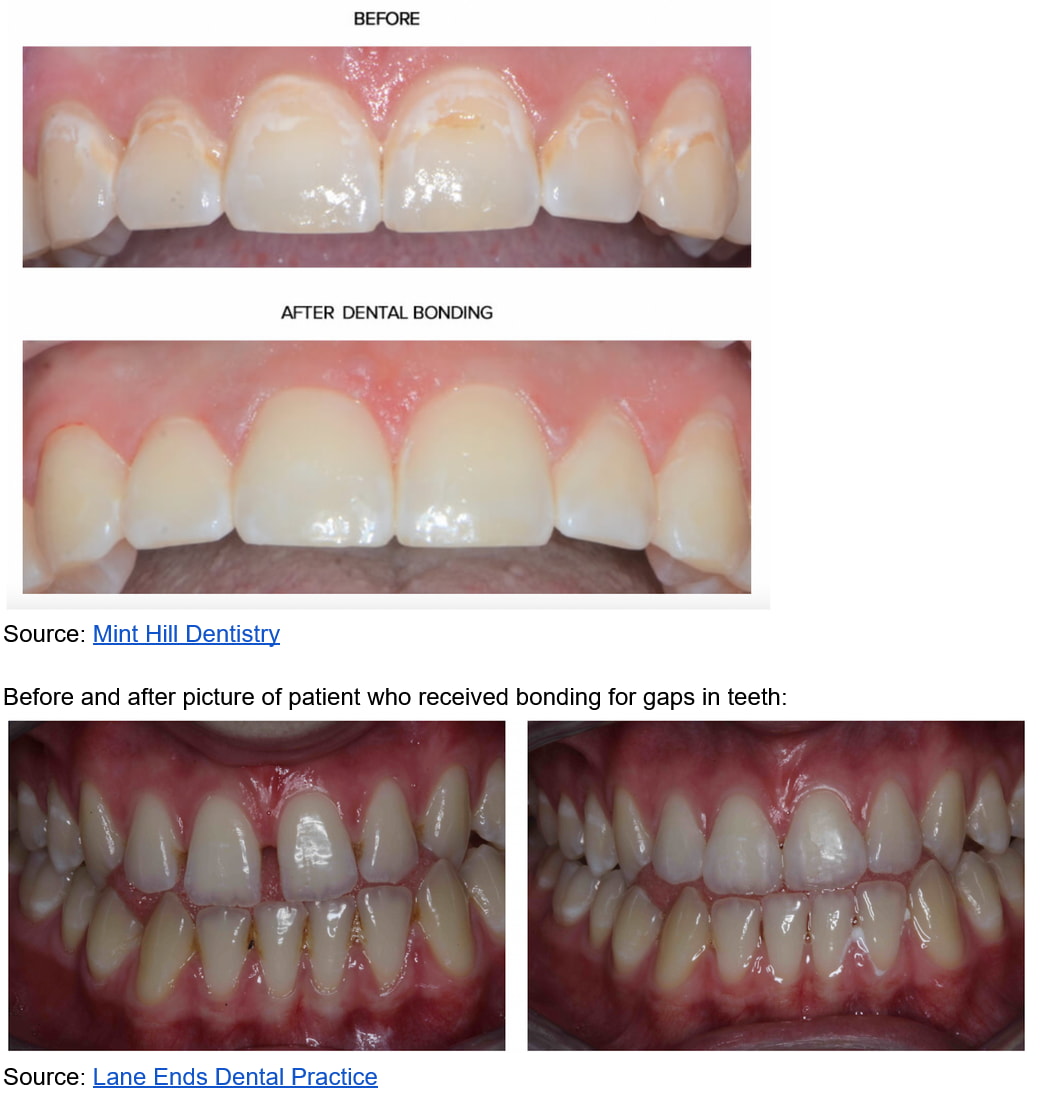
Before and after picture of patient who received bonding for cracks or chips:

Source: Arch Dental
Alternatives to Dental Bonding
Dental bonding is primarily used for minor to moderate issues with teeth. However, some chips, discolorations, or gaps may be so significant that dental bonding may be unable to produce the desired results.
Dental bonding is classified as a cosmetic procedure, similar to veneers and crowns. However, veneers and crowns are far more invasive procedures that take longer, are generally irreversible, and are usually used to address larger issues than what dental bonding could treat.
Veneers
Veneers are similar to dental bonding in many ways, but have some differences. Unlike dental bonding, which does not permanently damage the enamel (outer layer) of the teeth, veneers involve removing a small amount of enamel from the tooth. This is called “tooth trimming”.
The veneer will then adhere to the tooth in the space created by the enamel removal. Afterwards, a cast is made of the tooth and then applied, just like for dental bonding. However, this cast is made of porcelain rather than composite resin.
You may want to use veneers instead of bonding as they are more permanent. However, they are also more expensive than dental bonding. Dental bonding is also better for repairing chips and gaps than veneers.
Crowns
Crowns tend to be used for the most severe cases of tooth decay. It is a more drastic procedure and is usually recommended for people with broken, decayed, or weak teeth.
In order for a dental crown to be applied, a tooth must be filed down into a little nub to make space for the crown, which is irreversible. You receive a temporary crown in this first appointment. In the following appointment, the dentist will apply your permanent crown in a process similar to dental bonding. This will last from 5-15 years.
That’s it for this guide to dental bonding!
Dental bonding is a simple procedure that can completely change your smile and bring back confidence in your teeth. If you’re thinking about receiving dental bonding or another cosmetic dental treatment, reach out to the award-winning dentist Elizabeth Wakim DDS for a consultation.

Dr. Elizabeth Wakim, DDS, is the founder of Enhanced Wellness. She’s a compassionate and highly-regarded dentist with her own practice in Washington, Pennsylvania, known for providing modern, comprehensive dental care, botox and facial aesthetics with a focus on patient comfort and anxiety reduction, serving general, cosmetic, and pediatric dentistry needs.