Gingivitis vs. Periodontitis: Catching Gum Disease Before It’s Permanent
Patients hear “gingivitis” and “periodontitis” used almost interchangeably, as if they’re just two names for the same thing at slightly different severities. They’re not, and the distinction matters more than almost anything else I discuss in a periodontal exam, because it marks the line between a condition that fully reverses and one that doesn’t. Let me walk through what actually separates them, why that line is harder to catch than most patients expect, and what changes once you cross it.
The single most important distinction
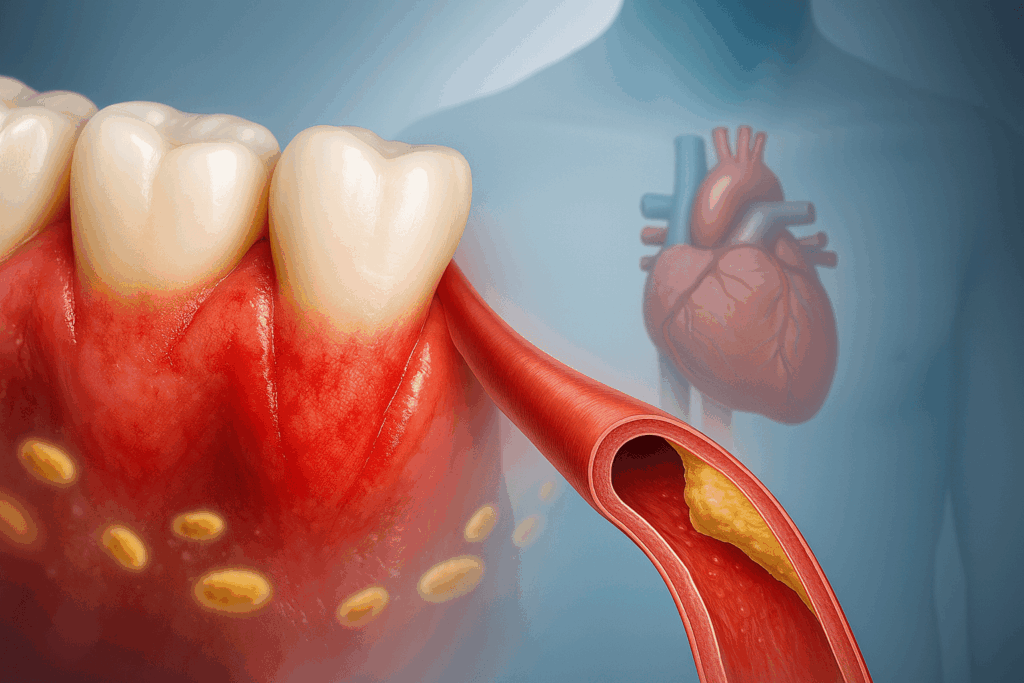
Gingivitis is inflammation confined to the soft gum tissue — redness, swelling, and bleeding when you brush, caused by plaque bacteria irritating the gums. Crucially, at this stage, the bone and the ligament anchoring your teeth in place haven’t been affected. That’s why gingivitis is completely reversible: with a professional cleaning and genuinely improved home care, the tissue returns to full health, with no lasting damage left behind.
eriodontitis is what happens when that inflammation isn’t resolved and spreads below the gumline, beginning to destroy the bone and connective tissue that hold your teeth in place. This is the part that doesn’t reverse. Once bone has been lost, it doesn’t regenerate back to its original level on its own. Treatment for periodontitis shifts from “restore to full health” to “stop the progression and manage it going forward” — a fundamentally different goal than treating gingivitis.
The four stages, briefly
The current classification system used by periodontists divides periodontal status into distinct categories based on measurable attachment loss, not just how inflamed the gums look:
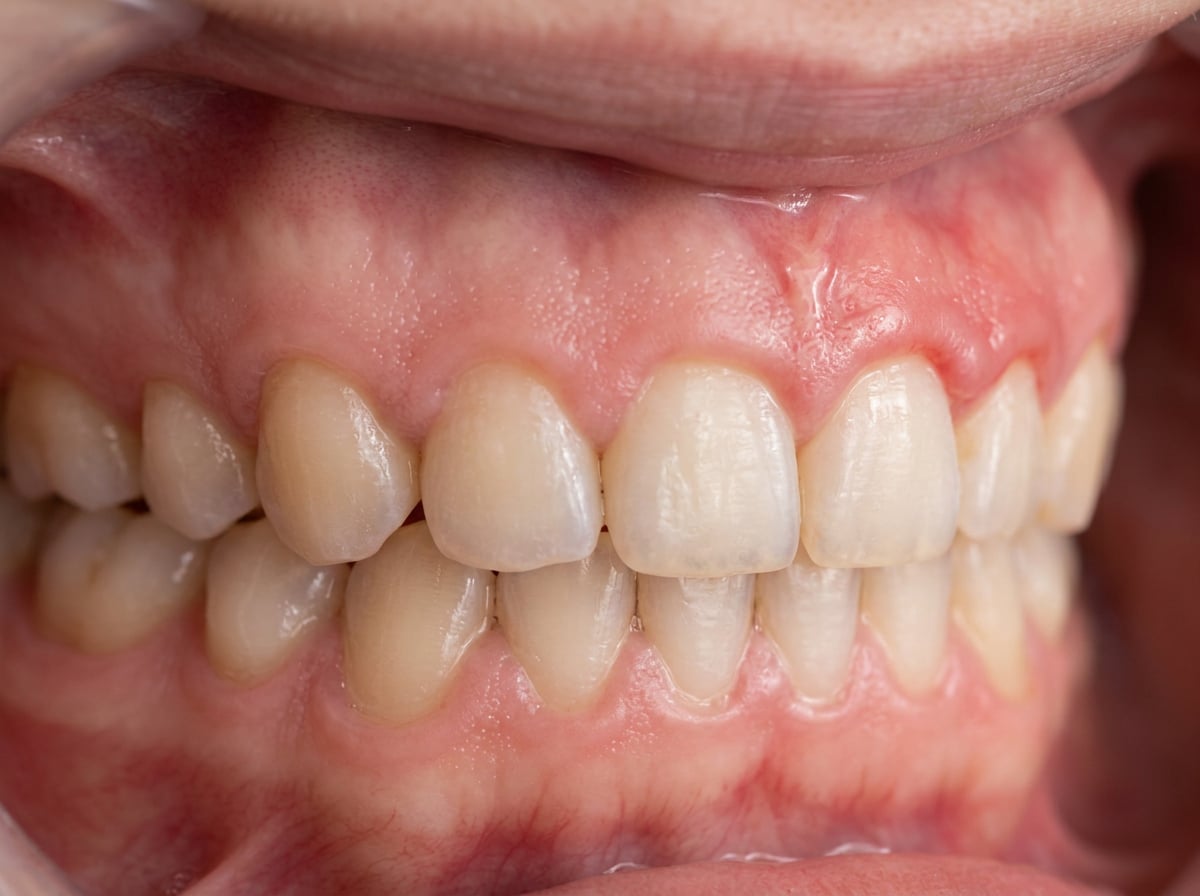
Healthy gums are pink, firm, and sit snugly against the teeth, with pocket depths of 1 to 3 millimeters and no bleeding on probing.
Gingivitis shows inflammation and bleeding but no measurable loss of the attachment between gum and tooth — this is the stage where everything is still fully recoverable.
Periodontitis, Stage I (mild) marks the beginning of measurable attachment loss, typically 1 to 2 millimeters, affecting the bone in a limited way.
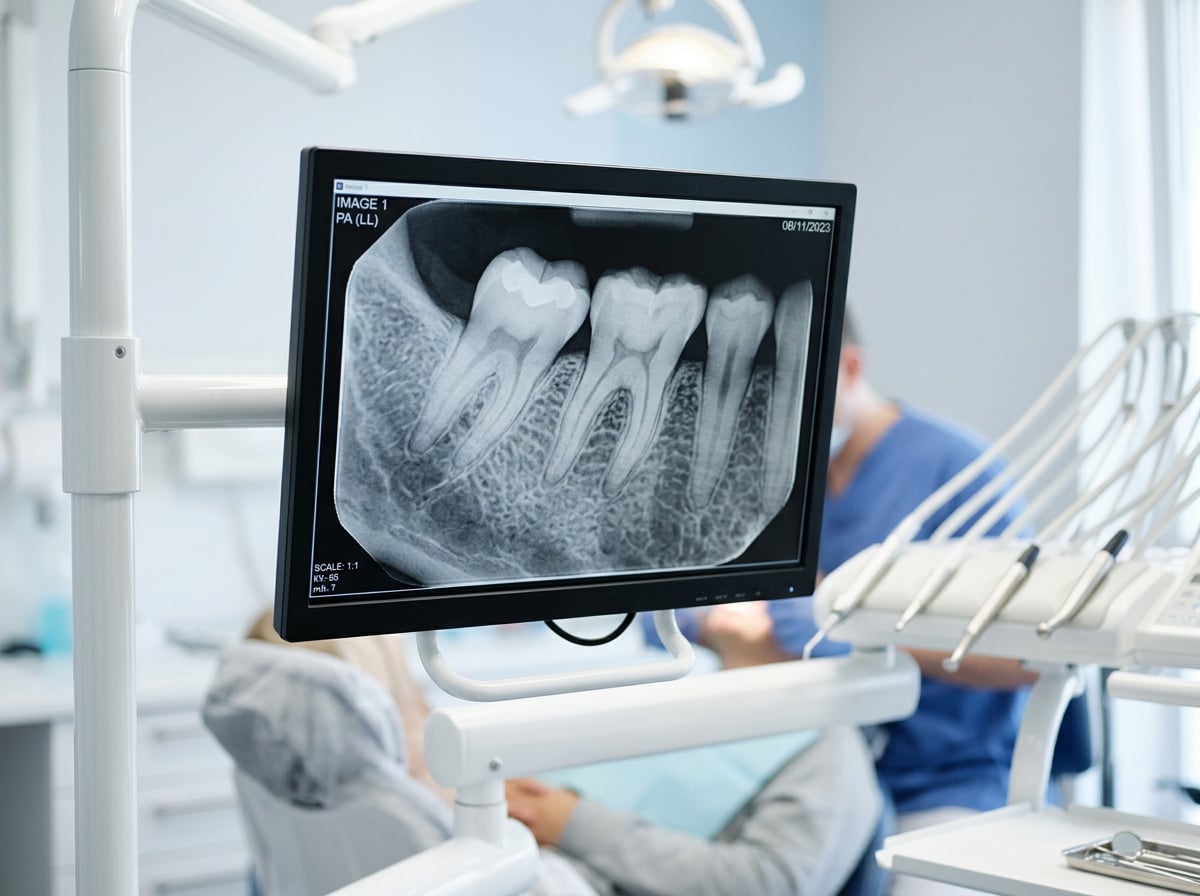
Periodontitis, Stage II (moderate) involves more established attachment loss, generally 3 to 4 millimeters, with more noticeable bone changes on X-rays.
Periodontitis, Stages III and IV (severe) involve attachment loss of 5 millimeters or more, extending further down the root, with a real risk of tooth mobility and eventual tooth loss if not managed. Stage IV specifically includes cases where the bone loss has progressed enough to threaten the overall stability of the bite, sometimes requiring more complex, coordinated treatment beyond standard periodontal therapy alone.
It’s worth noting that these stages are assessed at the level of the worst affected site in your mouth, not an overall average — meaning a patient could have healthy gum measurements around most teeth and Stage II periodontitis at just one or two problem areas, which is exactly the kind of detail a full periodontal charting catches and a general glance in the mirror never would.
Did You Know
According to CDC data, an estimated 42% of adults aged 30 and older have some form of periodontal disease, and most don’t know it, because the early stages frequently produce no obvious symptoms. The condition most people picture when they think “gum disease” — visible recession, loose teeth — is actually one of the later, more advanced stages, not where the disease starts.
Why the line is harder to catch than you’d expect
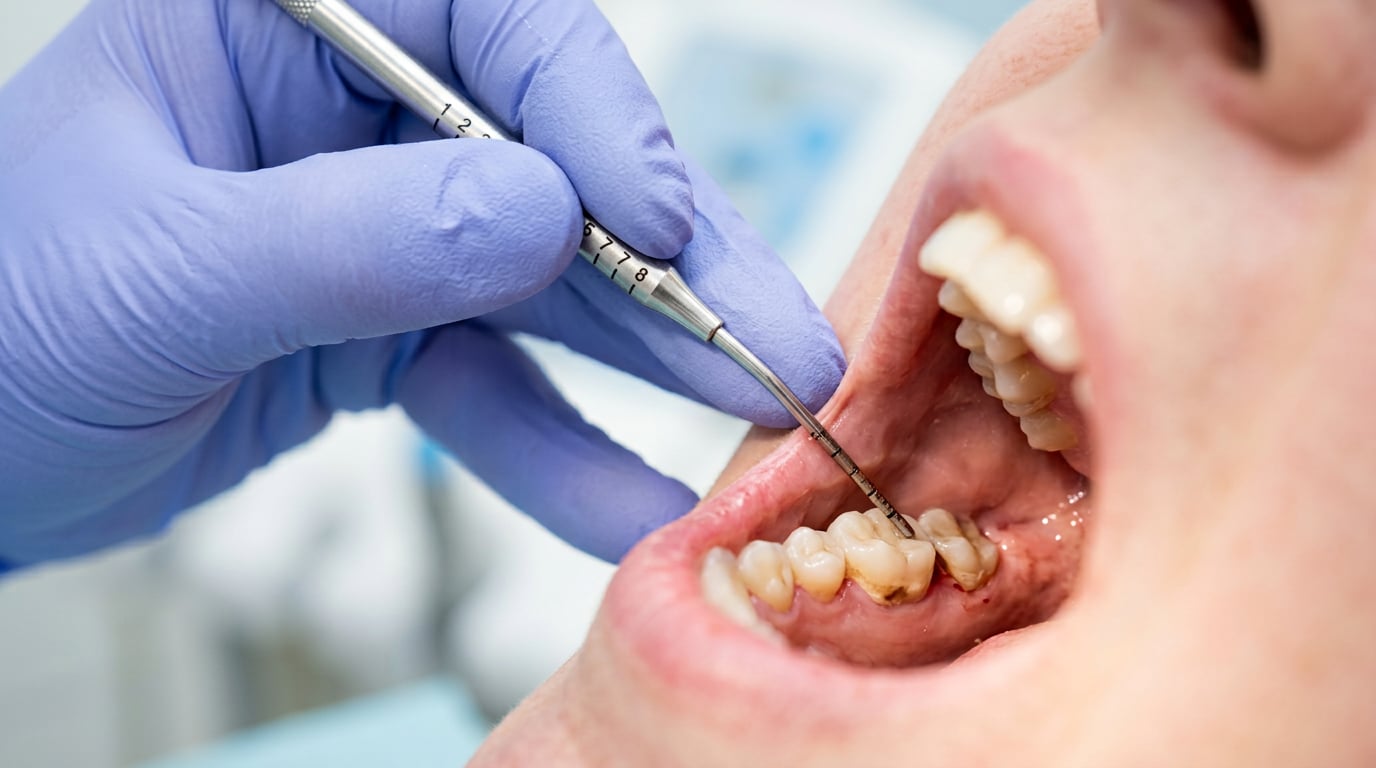
Here’s the part that surprises most patients: the earliest stage of periodontitis and advanced gingivitis can look and feel almost identical day to day. Both involve red, swollen, bleeding gums. Neither necessarily comes with pain. The actual distinguishing factor — whether measurable attachment loss has occurred — isn’t something you can see in the mirror or feel with your tongue. It requires a periodontal probe measuring pocket depths at multiple points around every tooth, often combined with X-rays showing the bone level beneath the gumline. This is precisely why an at-home assessment, however attentive, can’t reliably tell you which side of this line you’re on — it’s a clinical measurement, not a visual one.
Worth Knowing
Once measurable bone loss has occurred, the goal of treatment permanently changes from “return to full health” to “stop further progression and manage what remains.” This is exactly why catching gum disease at the gingivitis stage — before that line is crossed — is so much more valuable than catching it after, even though both stages can look deceptively similar from the outside.
Signs worth paying attention to at each stage
At the gingivitis stage, look for gums that bleed during brushing or flossing, look redder or puffier than usual, or feel tender to the touch — all without any looseness in the teeth themselves or noticeable changes in how your bite feels.
As periodontitis begins, watch for gums that appear to be pulling back from the teeth, persistent bad breath that doesn’t resolve with normal hygiene, and a bad taste that seems to return no matter how thoroughly you clean.
In more advanced periodontitis, teeth may feel loose or shift position, visible gaps can open between teeth that weren’t there before, and biting or chewing may become uncomfortable in ways it wasn’t previously.
The unsettling part is that a meaningful amount of progression can happen between the first category and the second without much change in how things feel day to day — which loops back to why professional measurement matters more than symptom-watching alone.
What actually causes gingivitis to progress into periodontitis
Not every case of gingivitis becomes periodontitis, and understanding what tips the balance helps explain why some patients progress and others don’t despite similar-looking gums.
Persistent, unaddressed plaque and tartar. This is the foundational driver — ongoing bacterial buildup that isn’t disrupted by consistent brushing, flossing, and professional cleanings keeps the inflammation active long enough to eventually reach the bone.
Smoking. Tobacco use is one of the most significant risk factors for the progression from gingivitis to periodontitis, both by feeding the bacterial environment and by impairing the blood flow and healing response the gum tissue depends on.
Genetics. Some patients are simply more susceptible to attachment loss than others with comparable hygiene and plaque levels — part of why periodontitis sometimes clusters within families independent of shared habits.
Uncontrolled diabetes. Elevated blood sugar impairs the body’s ability to fight the bacterial infection driving gum inflammation, which is a major reason diabetes and periodontitis are so closely linked in both directions.
Hormonal changes. Pregnancy, puberty, and other periods of hormonal fluctuation can make gum tissue more reactive to the same amount of plaque, sometimes accelerating progression during those windows specifically.
Questions that come up often
“Can periodontitis ever be fully cured?” Not in the sense of restoring lost bone to its original level, no. It can be effectively managed and stopped from progressing further, which for most patients means keeping their teeth long-term, but the bone that’s already gone doesn’t grow back on its own.
“If I have gingivitis, will it definitely turn into periodontitis?” No. Many people have gingivitis at some point without ever progressing to periodontitis, particularly if it’s addressed with a cleaning and improved hygiene. Progression depends on the risk factors discussed above, not an inevitable timeline.
“Can I tell which stage I’m at just by how my gums feel?” Not reliably. As covered above, the earliest stage of periodontitis and advanced gingivitis often feel and look similar day to day — the distinguishing measurement requires a professional exam, not a self-assessment.
“Is bone loss from periodontitis ever reversible with treatment?” Some regenerative procedures exist that can rebuild a portion of lost bone or attachment in specific situations, but this is a targeted surgical intervention for particular cases, not something achieved through cleanings or home care, and it doesn’t fully restore the original architecture in most cases.
“How often do I need periodontal charting done?” This should happen at essentially every routine exam, not as a separate, occasional test — it’s part of what a thorough checkup measures every time, precisely so changes are caught as early as possible.
How treatment actually differs between the two
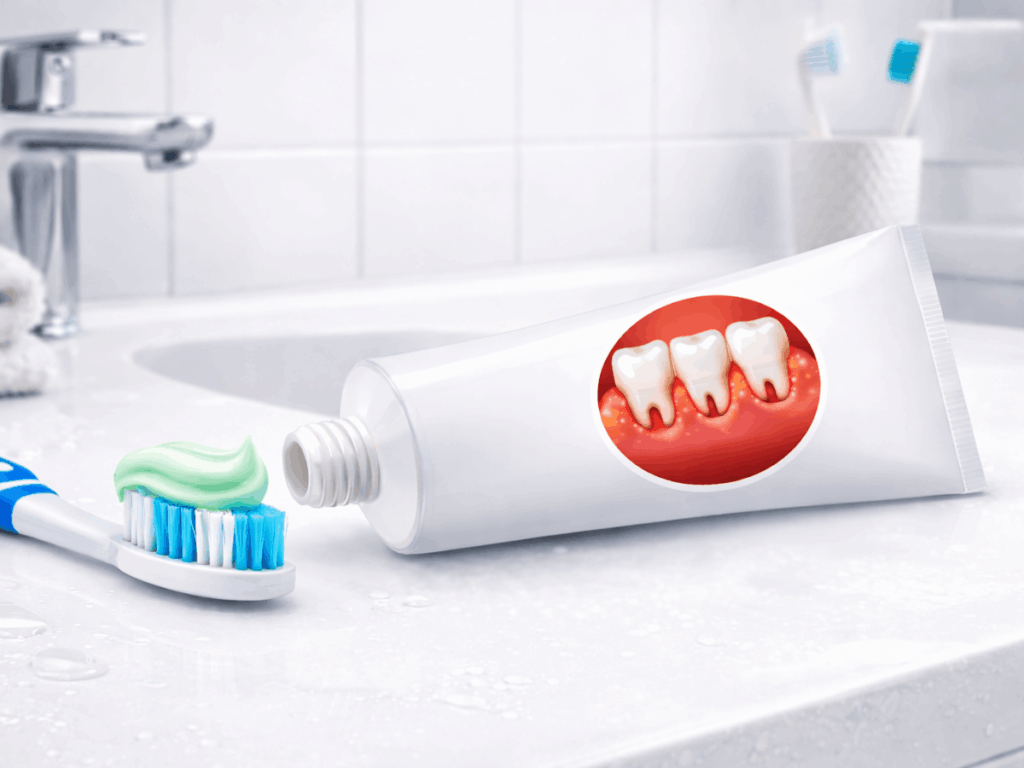
Gingivitis is treated with a professional cleaning to remove the plaque and tartar driving the inflammation, combined with genuinely improved daily brushing and flossing technique at home. Given time and consistency, the tissue returns to full health, and no further intervention is needed beyond maintaining good habits.
Periodontitis requires a deeper intervention: scaling and root planing, a more thorough cleaning that reaches below the gumline to remove buildup and smooth the root surface, halting further progression even though it doesn’t restore bone that’s already been lost. Once treated, patients typically move onto a periodontal maintenance schedule — cleanings spaced closer together than a standard six-month visit, because periodontitis is a manageable but not curable condition that requires ongoing monitoring to keep it from progressing further. More advanced cases sometimes require gum surgery to address deeper pockets that scaling and root planing alone can’t fully resolve.
| Factor | Gingivitis | Periodontitis |
|---|---|---|
| Bone/attachment loss | None Fully reversible |
Present and measurable Permanent |
| Reversibility | Fully reverses with cleaning & hygiene | Managed and stopped, not undone |
| Typical treatment | Professional cleaning + improved home care | Scaling & root planing, then ongoing maintenance |
| Follow-up schedule | Standard 6-month checkups | More frequent periodontal maintenance visits |
| Can you self-diagnose? | No — looks similar to early periodontitis | No — requires professional probing & X-rays |
Gingivitis vs. periodontitis, side by side
What this means for your next checkup
The practical takeaway is this: don’t wait for gum disease to become visually obvious before taking it seriously, because by the time it’s visually obvious, you may have already crossed into the stage that doesn’t reverse. Periodontal charting — the measurements taken with a small probe at every checkup — is precisely how this line gets caught while it’s still on the reversible side. If it’s been a while since your gums were actually measured, not just glanced at, that’s worth prioritizing at your next visit, particularly if any of the risk factors above apply to you specifically.
The bottom line
Gingivitis and periodontitis aren’t two names for the same thing at different severities — they’re separated by a genuinely important line: whether measurable, permanent bone loss has occurred. Gingivitis, caught and treated, fully resolves, with no lasting trace once your gums heal. Periodontitis, once present, can be stopped and managed but not undone, which shifts the entire goal of treatment for the rest of your life with that tooth. Because the two can look remarkably similar from the outside, the only reliable way to know which side of that line you’re on is a proper periodontal evaluation — which is exactly why regular, thorough checkups matter more than waiting for your gums to visibly announce a problem.
Washington, PA & Pittsburgh
Not sure where your gum health actually stands?
Dr. Wakim can measure your periodontal health directly and tell you exactly where you fall — before it becomes something that can’t be undone.

Dr. Elizabeth Wakim, DDS, is the founder of Enhanced Wellness. She’s a compassionate and highly-regarded dentist with her own practice in Washington, Pennsylvania, known for providing modern, comprehensive dental care, botox and facial aesthetics with a focus on patient comfort and anxiety reduction, serving general, cosmetic, and pediatric dentistry needs.