How Much Is Invisalign? Real Price Ranges, What Insurance Covers, and How It Compares to Braces
Wondering how much Invisalign really costs? Dr. Liza Wakim breaks down real price ranges by case type, what is included in a quote, what insurance usually covers, and how Invisalign compares with braces.

“How much is Invisalign?” is usually one of the first questions I hear in a consultation, and it is a fair one. The honest answer is that it depends on how much your teeth need to move. But that does not mean you have to guess. In this post I will share our price ranges, what drives the cost up or down, and how to compare quotes fairly.
The short version
- At our practice, Invisalign ranges from about $3,000 to $8,000, depending on whether your case is Lite, Moderate or Comprehensive.
- Dental insurance with orthodontic coverage often contributes about $1,000 to $3,000.
- A good quote should spell out what is included: refinements, attachments and retainers.
- HSA, FSA and payment plans can make treatment more manageable.
How much Invisalign costs (quick answer)
At our office in Washington, PA, Invisalign typically costs between $3,000 and $8,000. Smaller cases, like minor crowding or relapse after braces, sit at the lower end. Complex cases that involve bite correction sit at the upper end. Invisalign itself notes that cost depends on the complexity of your case and your provider, so the only way to get an exact number is an exam and a digital treatment plan.
Price by case type: Lite, Moderate, Comprehensive

Prices are ranges, not quotes, and can change. See our Invisalign page for current information.
What is included in the quote (and what is not)
Two Invisalign quotes can look very different simply because they include different things. Ask whether yours covers:
- Records: exam, X-rays and digital scans
- All aligners, including refinements (extra aligners if teeth need fine-tuning)
- Attachments: small tooth-colored bumps that help aligners grip and move teeth
- Check-up visits throughout treatment
- Retainers after treatment, and how many sets
- Extras, like whitening or replacement aligners if one is lost
Retainers matter most. Teeth naturally try to drift back, and without retainers, the money you spent can be undone.
Does insurance cover Invisalign?
Many dental plans with orthodontic benefits cover Invisalign the same way they cover braces, usually up to a lifetime orthodontic maximum. That contribution is often about $1,000 to $3,000. Some plans limit orthodontic coverage to children or exclude it entirely, so it is worth checking your plan’s details. You can also use HSA or FSA funds for Invisalign, which lets you pay with pre-tax dollars. Our finance and insurance page explains the options we accept.
Invisalign vs. braces cost
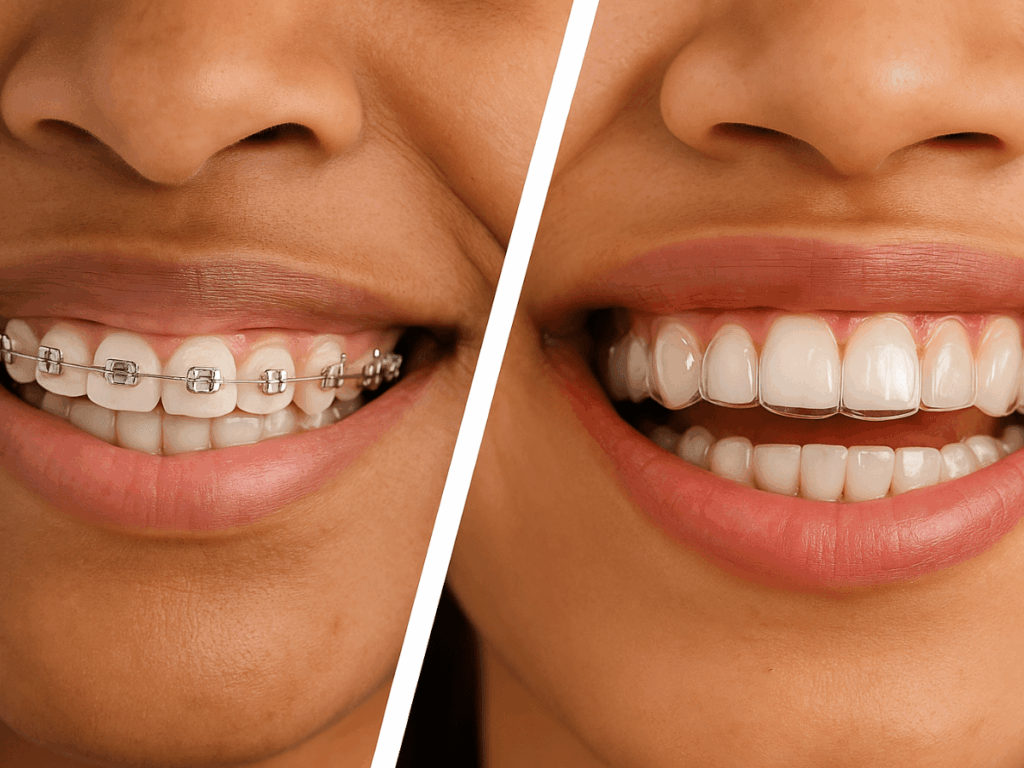
For many cases, Invisalign and traditional braces fall in a similar price range, and the right choice usually comes down to your case and lifestyle rather than cost alone.

Our Invisalign page explains how treatment works at our office.
Invisalign vs. mail-order aligners
Mail-order aligners can look cheaper, but they are not the same treatment. With in-office Invisalign, a dentist examines your teeth and gums, takes X-rays, plans every movement, checks progress in person and handles refinements. Moving teeth without an exam can miss gum disease, cavities or bite problems, and fixing a poor result can cost more than doing it right the first time.
Payment plans and financing
Most people do not pay for Invisalign all at once. Options can include monthly payment plans, third-party financing, HSA or FSA funds, and insurance benefits. My post on how to finance dental procedures explains how these work.
How to tell if you are a candidate

Invisalign works for many adults and teens with crowding, spacing, overbites, underbites and crossbites. You may need extra steps first if you have untreated cavities or gum disease. A consultation with a digital scan shows what your treatment would involve and lets you see a preview of the result.
When to see a dentist
Book a consultation if your teeth have shifted, you are self-conscious about crowding or gaps, or you have bite problems like an overbite. You will leave with a clear, itemized quote.
Frequently asked questions
How much does Invisalign cost on average?
At our practice, Invisalign typically ranges from about $3,000 for a small Lite case to about $8,000 for a comprehensive case. The exact price depends on how much your teeth need to move, how long treatment takes and what is included. A consultation with a digital scan gives you an exact quote.
Does insurance cover Invisalign?
Many dental plans with orthodontic benefits cover Invisalign similarly to braces, often contributing about $1,000 to $3,000 up to a lifetime maximum. Some plans only cover children or exclude orthodontics. You can usually use HSA or FSA funds for the rest.
Is Invisalign more expensive than braces?
Not necessarily. For many cases, Invisalign and braces cost about the same. Price differences depend more on case complexity and the provider than on the type of treatment. The right choice depends on your teeth, bite and lifestyle.
Are retainers included in the price?
It depends on the provider, so always ask. Some quotes include the first set of retainers, while others charge separately. Retainers are essential after treatment, because teeth naturally drift back without them.
Why is Invisalign Lite cheaper?
Invisalign Lite is designed for simpler cases, like minor crowding or spacing or a small relapse after braces. It uses fewer aligners and a shorter treatment time, so it costs less than moderate or comprehensive treatment.
Can I pay for Invisalign monthly?
Yes. Many practices offer monthly payment plans or third-party financing, and you can often combine those with insurance benefits and HSA or FSA funds. Ask about options during your consultation so the total and monthly amounts are clear before you start.
Get your personal Invisalign quote
If you are in or around Washington, PA, you can request an Invisalign consultation at Enhanced Wellness or call us at (724) 225-5070. Prices are estimates and can change; your exact quote depends on your exam.
Sources
- Invisalign. How much does Invisalign cost?
- Enhanced Wellness. Invisalign (practice price ranges).
- Clear aligner treatment outcomes. PubMed Central.
Want your personal Invisalign quote?
A consultation with a digital scan shows what your treatment would involve and gives you a clear, itemized quote, including retainers and refinements, before you decide anything.

Dr. Elizabeth Wakim, DDS, is the founder of Enhanced Wellness. She’s a compassionate and highly-regarded dentist with her own practice in Washington, Pennsylvania, known for providing modern, comprehensive dental care, botox and facial aesthetics with a focus on patient comfort and anxiety reduction, serving general, cosmetic, and pediatric dentistry needs.