Lie Bumps on Your Tongue: What Causes Them, How Long They Last, and When a Tongue Bump Needs a Look
Found a sore little bump on your tongue, or a row of big ones at the back? Dr. Liza Wakim explains what lie bumps are, which tongue bumps are perfectly normal, how to soothe them, and when a bump needs a closer look.

It usually starts with a sting. You take a sip of hot coffee or bite into something sour, and suddenly there is a tiny, painful bump on the tip of your tongue. Or you stick your tongue out in the mirror, see a row of big bumps at the back you have never noticed before, and start to worry.
Both are things I hear about all the time, and the reassuring news is that most tongue bumps are either harmless and short-lived or completely normal anatomy. In this post I will help you tell the difference, explain how to soothe a lie bump, and walk you through the signs that mean a bump deserves a closer look.
The short version
- Lie bumps are small, sore, red or white bumps from an irritated taste bud, usually on the tip or sides of the tongue.
- They are common, not contagious, and usually clear up on their own within hours to a few days.
- The large bumps in a V-shape at the back of your tongue are normal. Everyone has them.
- A bump or patch that lasts more than two weeks, keeps growing, bleeds or feels hard should be checked by a dentist.
What are lie bumps?
Lie bumps are small, painful red or white bumps on the tongue caused by an inflamed taste bud. Their medical name is transient lingual papillitis. They usually appear on the tip or sides of the tongue, can sting or burn, and typically go away on their own within hours to a few days without treatment.
The name comes from an old folk tale that telling a lie gives you a bump on your tongue. It is not true, of course, but the name stuck.
According to DermNet, lie bumps are a common inflammatory condition affecting one or more fungiform papillae, the small mushroom-shaped bumps that hold taste buds and temperature sensors. The classic form is very common: DermNet notes it affects more than half of the population at some point.
Normal tongue anatomy that people mistake for bumps
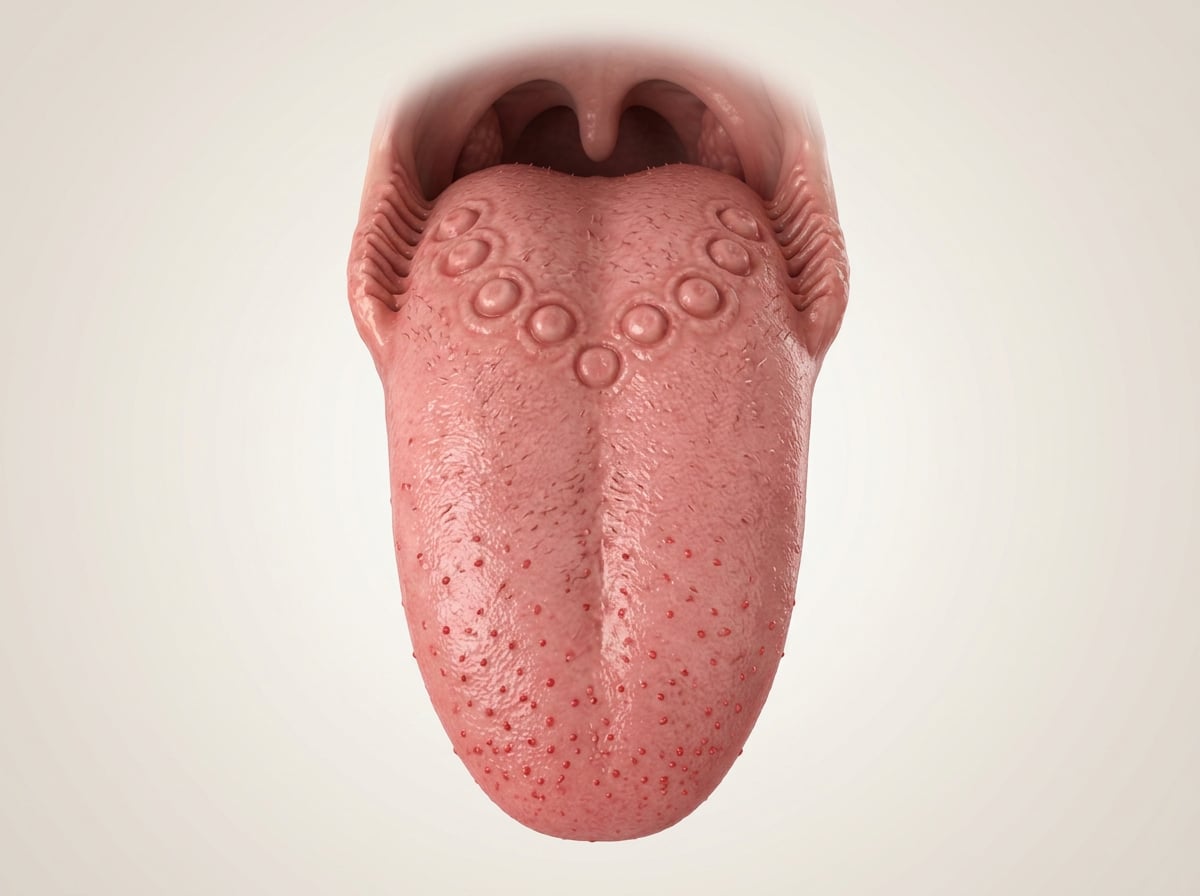
A lot of the worried messages I get about “bumps on the back of my tongue” turn out to be normal structures that someone is noticing for the first time. Your tongue is covered in four kinds of papillae, the tiny projections that give it texture and hold your taste buds:
The big ones at the back are the circumvallate papillae. Research describes them as sitting in a V-shaped arrangement at the back of the tongue, with the foliate papillae as ridges along the sides. They are supposed to be there, on both sides, and they do not hurt.
A few clues that you are looking at normal anatomy:
- The bumps are symmetrical, matching on both sides
- They have always been there, even if you just noticed them
- They are painless and the same color as the rest of your tongue
These bumps can look more swollen when you have a sore throat or cold, because the lymphoid tissue at the back of the tongue reacts too. If they are symmetrical and settle as you recover, that is usually nothing to worry about.
What causes lie bumps
The exact cause is not always clear, but DermNet notes that the most likely cause is local irritation or minor injury to a fungiform papilla. Common triggers include:
- Hot food or drinks that slightly burn the tongue
- Acidic or spicy foods, like citrus, pineapple, sour candy or hot sauce
- Biting your tongue or rubbing it against a sharp tooth edge or appliance
- Rough foods like chips or crusty bread
- Stress and hormonal changes, which many people notice line up with flares
- Viral illness: a related form called eruptive lingual papillitis, seen mostly in young children and their families, can come with fever and swollen glands
One interesting note: lie bumps have also been reported in people with COVID-19. That does not mean a lie bump means you have COVID, only that the tongue can react to many kinds of irritation.
How long do lie bumps last, and how to soothe them

Most classic lie bumps need no treatment at all. DermNet describes the condition as resolving within hours or days. They can come back, especially if you have a favorite trigger food.
While you wait, a few simple steps can make you more comfortable:
If a mouthwash makes your mouth sting, my post on whether mouthwash is bad for mouth ulcers explains what to look for. And if a broken tooth or rough filling keeps catching your tongue in the same spot, that is worth fixing, because repeated rubbing can keep a sore spot coming back.
Other tongue bumps: what else it could be
Not every bump on the tongue is a lie bump. These are the other common causes I check for:
Thrush is more likely if you use an inhaled steroid, have recently taken antibiotics, wear dentures, have diabetes or have a weakened immune system, according to MedlinePlus. If the white coating on your tongue is more of a general film than a bump, that is usually a different issue, and a dentist can help sort out the cause.
Can tongue bumps be a sign of an infection or something serious?
Most of the time, no. Lie bumps are not contagious, and the classic form is simply an irritated taste bud. Some infections, including certain viral and sexually transmitted infections, can cause sores or bumps in the mouth, but they cannot be diagnosed from a description or a photo online. If you are worried about an infection, the right step is an in-person exam with your dentist or doctor, where you can talk openly and get tested if needed.
Very rarely, a lasting sore or lump on the tongue can be a sign of oral cancer. The American Cancer Society lists warning signs that include a sore or lump in the mouth that does not go away, a white or red patch, pain, numbness, bleeding, and trouble chewing or swallowing. These signs are much more likely to have a harmless cause, but they should always be checked.
Red flags that mean a tongue bump needs a look:
- It has lasted more than two weeks without improving
- It keeps growing, or feels hard or firm
- It bleeds easily or does not heal
- There is a white or red patch on one side that does not wipe off
- It comes with numbness, ongoing pain, or trouble chewing, swallowing or moving your tongue
The two-week mark is a helpful rule of thumb. A lie bump or a canker sore should be getting better well before then. Something that is not is worth showing to a professional.
When to see a dentist

It can usually wait if:
- You have a small, sore bump on the tip or side of your tongue that started after hot, spicy or acidic food, and it is improving within a few days
- The bumps are the symmetrical ones at the back of your tongue and they do not hurt
Book a dental visit if:
- A bump or sore has lasted more than two weeks
- Bumps keep coming back in the same spot, which can point to a sharp tooth or appliance rubbing your tongue
- You have white patches that do not wipe away, or a white or red patch on one side
- A bump is growing, hard, bleeding, or comes with numbness
Get care promptly if your tongue swells suddenly, or you have a high fever, trouble swallowing or trouble breathing.
Checking the tongue is a routine part of every comprehensive dental exam, and an oral cancer screening looks closely at the tongue, cheeks, gums and throat for anything that needs a closer look. If you have noticed other changes, my post on scalloped tongue explains what wavy edges along the tongue can mean.
Frequently asked questions
How long do lie bumps last?
Most lie bumps clear up on their own within hours to a few days. Avoiding hot, spicy, acidic and rough foods while it heals can help it settle sooner. If a bump on your tongue lasts more than two weeks, or keeps coming back in the same spot, have a dentist take a look.
Are lie bumps contagious?
No. The classic lie bump is an irritated taste bud and cannot be passed to someone else. A related form called eruptive lingual papillitis, seen mostly in young children and their families, may be linked to a virus and can come with fever and swollen glands, so it is worth checking with a doctor if several family members are affected.
Should I pop a lie bump?
No. A lie bump is an inflamed taste bud, not a pimple, so there is nothing to drain. Picking, scraping or squeezing it can irritate it further and slow healing. Leave it alone, rinse gently with cool or salt water and avoid trigger foods until it settles.
Why do I keep getting lie bumps?
Repeat lie bumps usually come from repeat triggers, such as a love of hot coffee, citrus, sour candy or spicy food, or a habit of biting your tongue. A sharp tooth edge, rough filling or appliance rubbing the same spot can also cause them again and again. Stress and hormone changes seem to play a role for some people too.
What are the big bumps at the back of my tongue?
The large, round bumps arranged in a V-shape at the back of your tongue are circumvallate papillae, and everyone has them. Along the back edges you may also see ridges called foliate papillae. These are normal taste structures. If they are symmetrical, painless and have always been there, they are not a cause for concern.
Can stress cause lie bumps?
Stress is often mentioned as a possible trigger, and many people notice lie bumps during busy or stressful periods. The exact cause is not fully understood, though, and local irritation from food or injury is considered the most likely cause. If they come back often, look for food or habit triggers as well.
Not sure what that bump is? Let’s take a look
Most tongue bumps are harmless, and the peace of mind that comes from knowing that is worth a lot. If you have a bump that is not going away, keeps coming back or simply has you worried, a quick look can sort it out.
If you are in or around Washington, PA, I would be happy to see you. You can request an appointment at Enhanced Wellness or call us at (724) 225-5070. Every mouth is different, so we will look at the whole picture before recommending anything.
Sources
- DermNet. Transient lingual papillitis.
- Transient lingual papillitis: a retrospective study of 11 cases and review of the literature. Quintessence International. 2016.
- Gross anatomy of the human tongue and the locations of taste papillae. Physiological Reviews. 2022.
- American Dental Association, MouthHealthy. Canker Sores.
- MedlinePlus. Thrush (children and adults).
- American Cancer Society. Signs and symptoms of oral cavity and oropharyngeal cancers.
A bump on your tongue that won’t go away?
Most tongue bumps are harmless, but some deserve a closer look. Dr. Liza can tell you in one visit whether it is a lie bump, normal anatomy or something that needs follow-up, and every exam includes a careful check of your tongue and mouth.

Dr. Elizabeth Wakim, DDS, is the founder of Enhanced Wellness. She’s a compassionate and highly-regarded dentist with her own practice in Washington, Pennsylvania, known for providing modern, comprehensive dental care, botox and facial aesthetics with a focus on patient comfort and anxiety reduction, serving general, cosmetic, and pediatric dentistry needs.