Finding a pediatric dentist in Washington, PA isn’t the hard part. Getting your kid to actually sit still for one? That’s where most first-time parents quietly panic.
Dental studies recommend scheduling that first dental visit by age one, way earlier than most parents expect. Not because there’s a mouth full of teeth to examine, but because early visits prevent bigger problems: cavities in baby teeth can affect incoming permanent ones, and untreated decay is still the most common chronic childhood disease in the U.S.
At Enhanced Wellness, we understand that a child’s first dental experience sets the tone for a lifetime of oral health habits. That’s why our approach goes beyond routine checkups. We combine gentle, kid-friendly care with modern diagnostic tools to create a comfortable, stress-free environment where both parents and children feel confident from the very first visit.
If you’re new to this, here’s what actually matters: the right age to start, what a first appointment looks like, what to ask when vetting a pediatric dentist, and which Washington, PA practices are worth your time.
Did You Know
Cavities in Baby Teeth Are More Common Than You Think
Tooth decay is the most common chronic childhood disease in the U.S., affecting nearly 1 in 5 children under age 5. Baby teeth matter more than most parents realize. They hold space for permanent teeth, support speech development, and affect how your child chews and eats. A pediatric dentist in Washington, PA can catch early decay before it becomes painful or costly.
When to Book Your Child’s First Dental Visit
The AAPD guideline is straightforward: schedule the first dental visit by age one or within six months of the first tooth appearing, whichever comes first.
Worth Knowing
A Pediatric Dentist Is Not Just a Regular Dentist for Small Mouths
Pediatric dentists complete an additional 2 to 3 years of specialized training after dental school, focused specifically on children’s dental development, behavior management, and treating kids with special needs. Their offices are also designed with children in mind, from the equipment size to the way the team communicates with young patients.
Bottom line: Taking your child to a pediatric dentist in Washington, PA rather than a general dentist means they are seen by someone specifically trained to make the experience comfortable, age-appropriate, and stress-free from the very first visit.
Most parents push it to age two or three. By then, early decay can already be present. Baby teeth are not placeholders. They guide permanent teeth into the correct position, support jaw development, and affect speech. A cavity in a baby tooth can damage the permanent tooth forming beneath it.
Book sooner if you notice any of these:
- White spots or discoloration on teeth are early signs your child’s smile needs attention
- Your child regularly falls asleep with a bottle, a habit our patients are often counseled on during dental care visits
- Prolonged thumb-sucking or pacifier use past age two, something the American Academy of Pediatric Dentistry flags as a concern worth addressing at an early age
- Any visible tooth pain or sensitivity, which our entire team is happy to evaluate and provide advice on
If the first tooth is in or the first birthday has passed, it is time to explore pediatric dentistry and book that first appointment.
What Actually Happens During a First Pediatric Dental Visit
Early dental visits can reduce cavity risk by up to 40% when started before age one, according to the American Academy of Pediatric Dentistry. First visits are shorter and simpler than most parents expect, typically 30 to 45 minutes.
Here is what the appointment generally looks like from start to finish.
1. Check-In and Health History

The front desk will ask for your child’s medical history, including any medications, allergies, or health conditions. Bring insurance information and any relevant medical records if this is your first visit to the dental office. You can also email the practice ahead of time to confirm what documents to prepare.
2. Meeting the Dentist
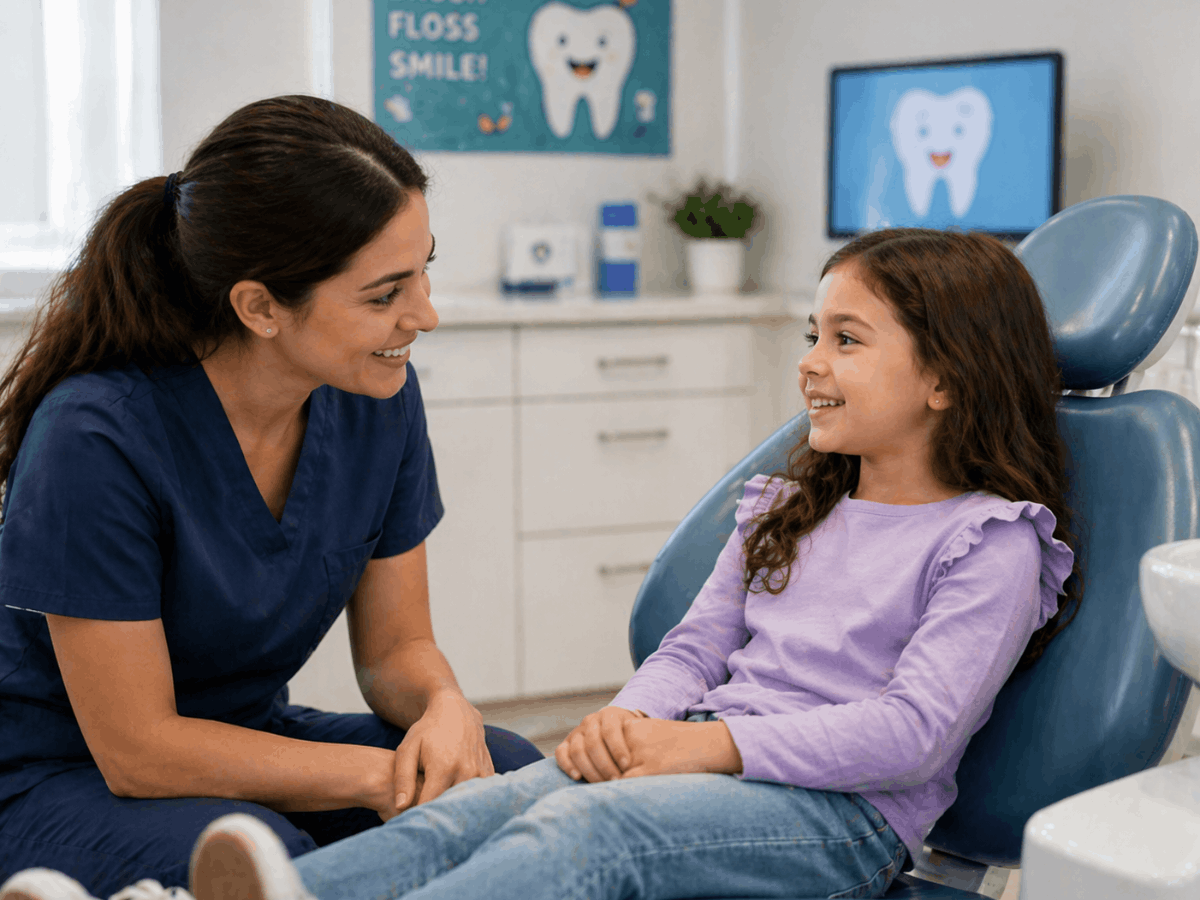
Before anything clinical happens, the dentist or hygienist will spend a few minutes talking with your child at their level. This is intentional. Every member of the team strives to ensure your child feels comfortable and at ease before any tools come out.
3. The Exam
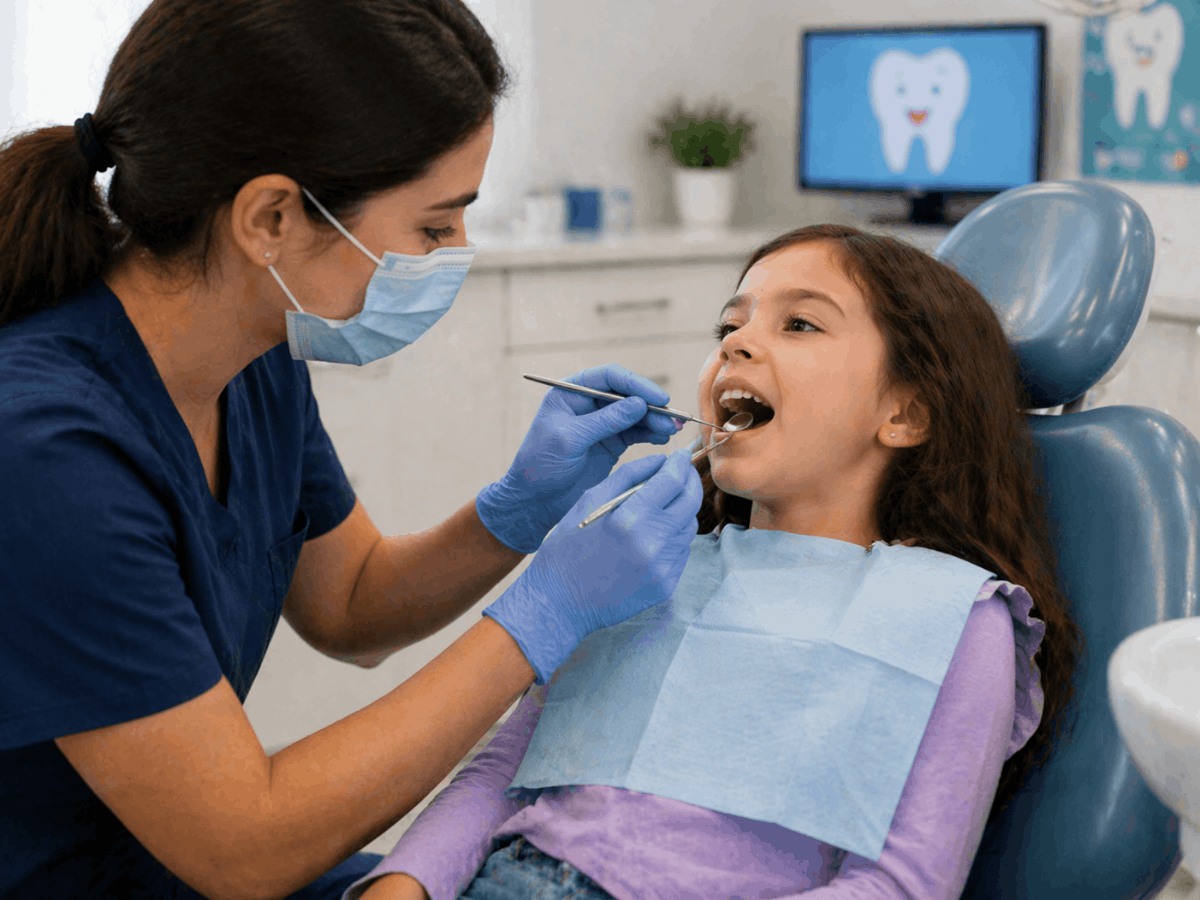
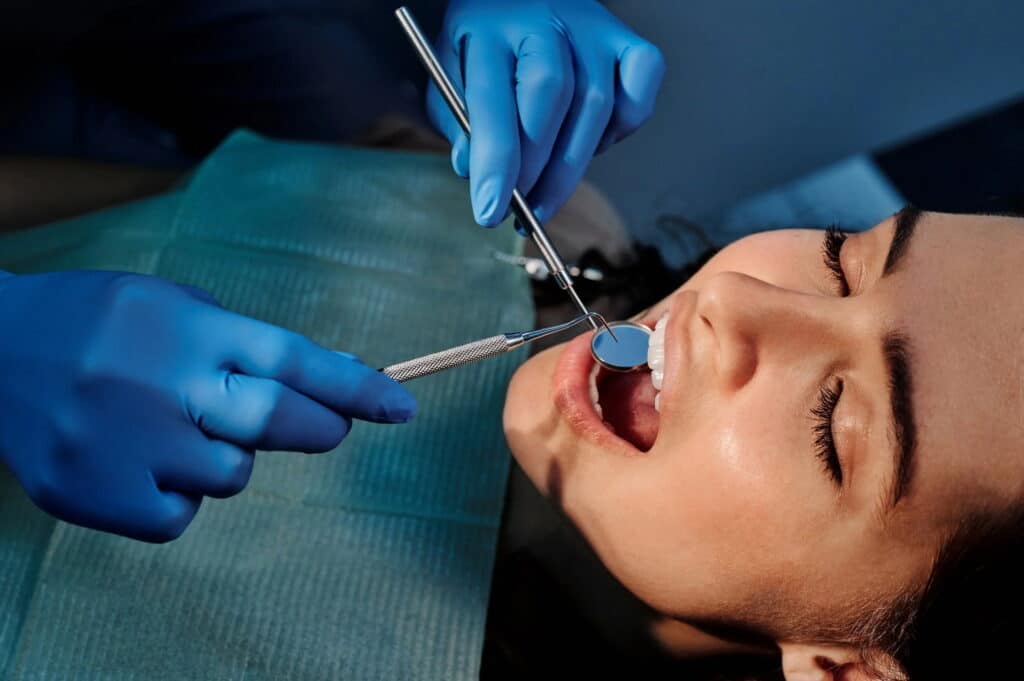
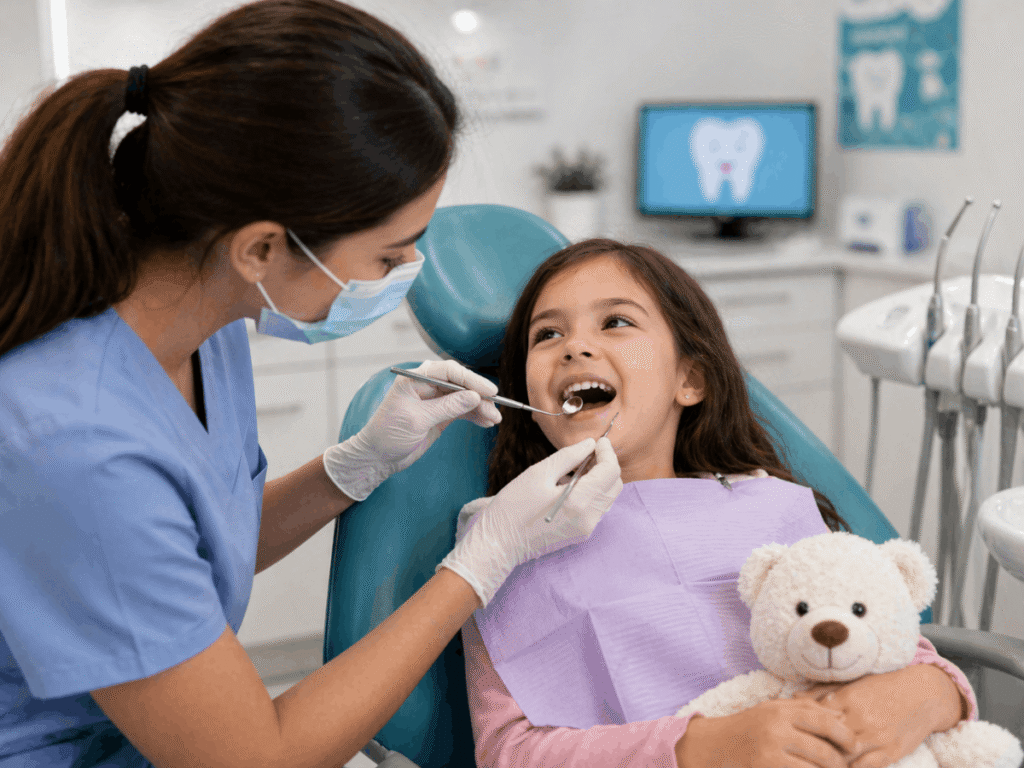
The dentist will perform a dental inspection of your child’s teeth, gums, jaw, and bite. For very young children, this is often done with the child sitting in the parent’s lap, facing the dentist. Practices that specialize in treating children are trained to handle even the most anxious little patients with patience and care. X-rays are typically not taken at the very first visit unless there is a specific concern.
4. Cleaning
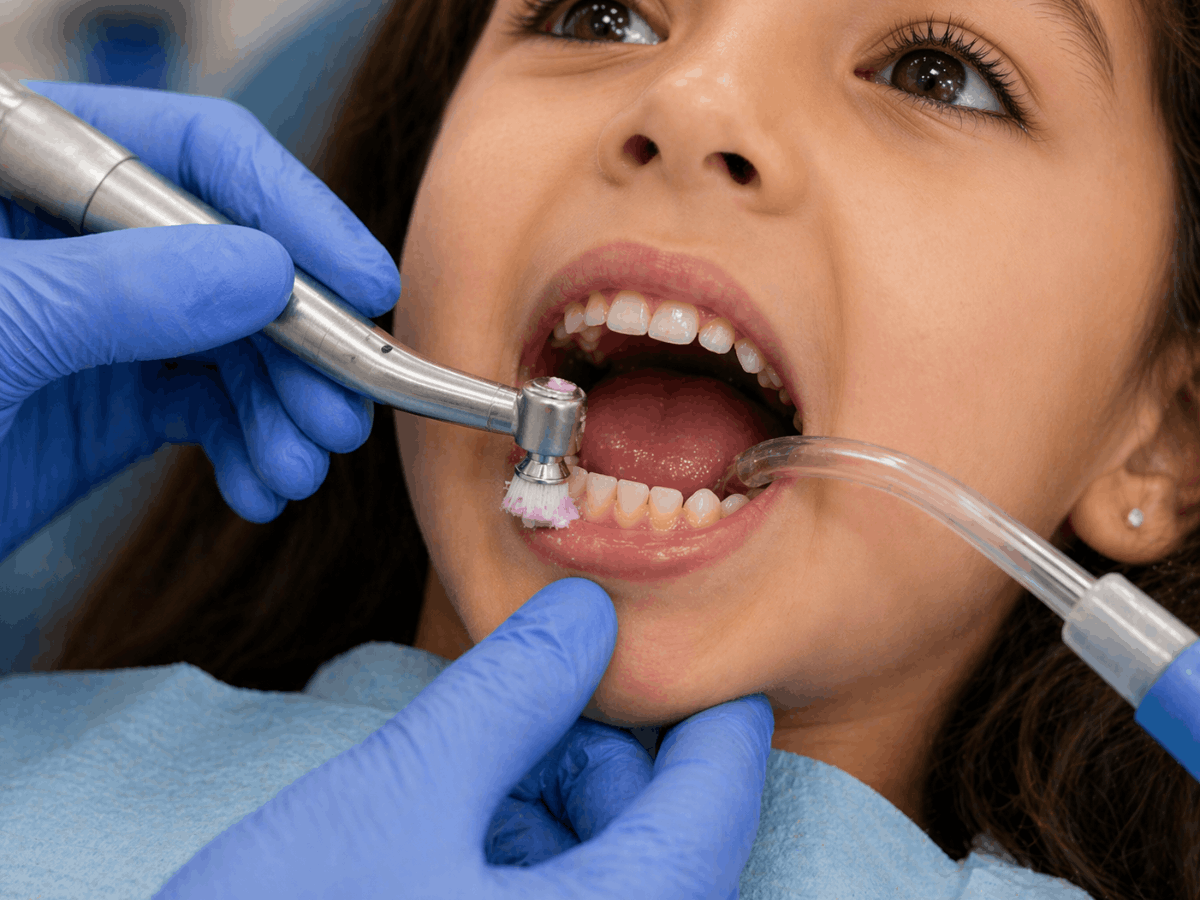
A gentle cleaning removes plaque and buildup. The hygienist will use child-sized tools and explain each step to keep your child calm and informed. If your son or daughter is particularly nervous, the team will work at their pace without rushing.
5. Fluoride Treatment
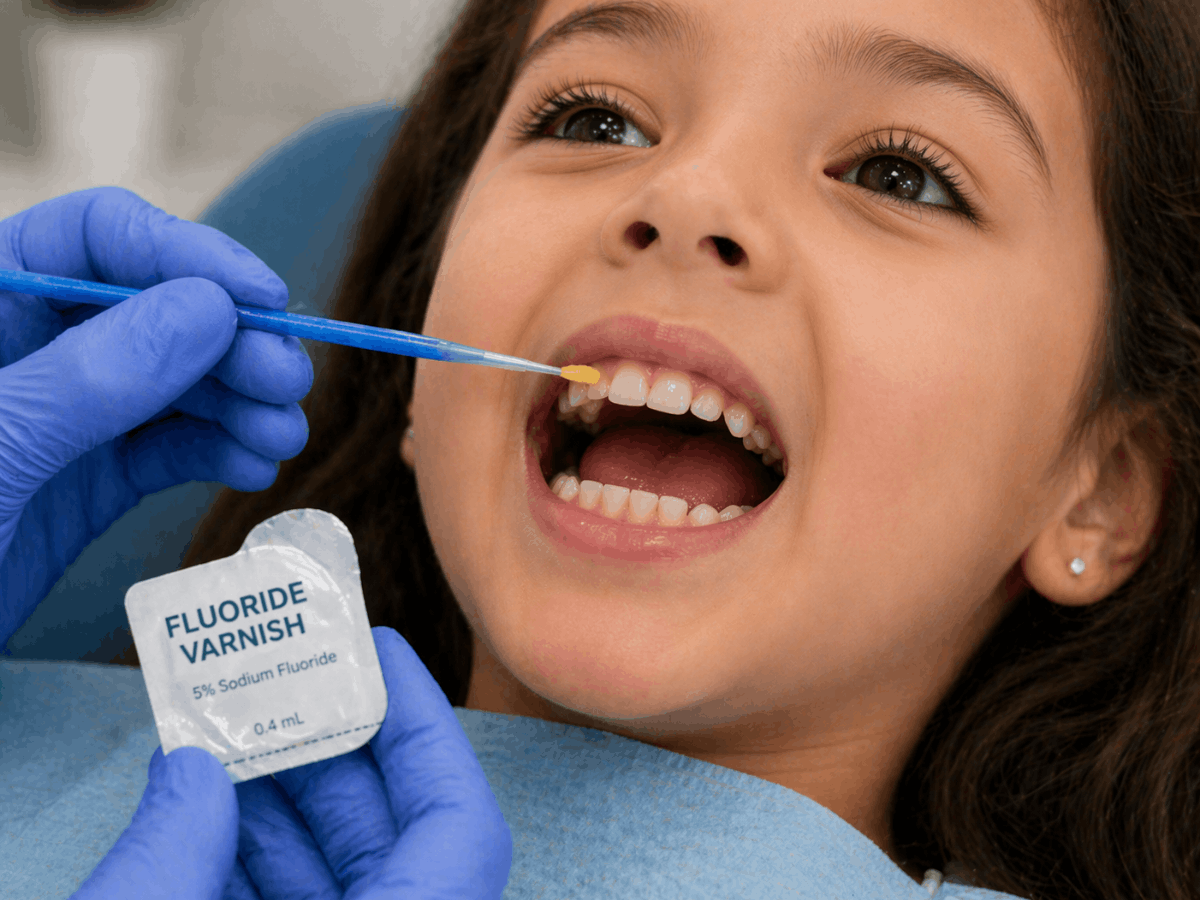
A fluoride varnish is commonly applied at the end of the visit. It takes seconds, strengthens enamel, and significantly reduces cavity risk in young children. Many parents love how quick and painless this step is compared to what they imagined. Early fluoride treatment also plays a key role in reversing a cavity before it progresses into something that requires more extensive treatment.
6. Parent Debrief

Before you leave, the dentist will walk you through findings, flag anything to watch, and offer practical guidance on brushing technique, diet, and when to come back. Some practices also provide college-level research-backed resources for parents who want to go deeper on their child’s oral health.
Most parents walk out surprised by how smoothly it went. The anticipation is almost always worse than the visit itself. A calm environment, a dentist who knows how to work with kids, and a short appointment time make a bigger difference than most people expect going in. Much of what happens during that first visit falls under preventive dentistry, a proactive approach focused on keeping small issues from becoming bigger ones down the road.
How to Prep Your Child for Their First Dental Visit
Parental behavior and communication before dental visits significantly impacts a child’s anxiety levels and cooperation during treatment, according to the NIH. What you say and do in the days leading up to the appointment shapes how your child walks through that door. A little preparation goes a long way.
- Start the Conversation Early: Bring it up a few days before, not the morning of. Keep it casual and positive. “We’re going to visit the dentist to keep your teeth strong and healthy” is enough. Avoid phrases like “it won’t hurt” or “don’t be scared” since those plant the exact worries you are trying to avoid.
- Read Books or Watch Videos About It: There are age-appropriate books and short videos that show kids what a dental visit looks like. Familiar visuals reduce fear of the unknown, which is usually the biggest hurdle for young children.
- Play Pretend Dentist at Home: Let your child count your teeth, then you count theirs. Use a toothbrush and a small mirror. Making it a game before the real thing helps normalize the experience in a way that feels fun rather than clinical. While you are at it, switching to a natural or organic kids toothpaste can make brushing feel less like a chore and more like part of the routine.
- Be Honest Without Overdoing It: If your child asks what happens at the dentist, tell them the truth in simple terms. The dentist looks at their teeth, counts them, cleans them, and makes sure everything is growing the way it should. Kids handle honesty better than vague reassurances.
- Keep Your Own Anxiety in Check: Children pick up on parental stress faster than most parents realize. If you are nervous, they will sense it. Try to stay relaxed and matter-of-fact about the visit. Your calm is contagious.
Schedule the appointment when your child is typically well-rested and in a good mood, usually mid-morning. Bring a comfort item if your child has one, a favorite small toy or stuffed animal. Celebrate afterward, not with candy, but with something they enjoy, a trip to the park, a fun activity, or simple praise for being brave.
Children do not need the visit to be perfect. They just need to feel safe, and that starts with you.
Beyond Cavities: What a Pediatric Dentist Is Actually Looking For
Most parents assume a pediatric dental visit is about checking for cavities. That is part of it, but it is far from the whole picture. A trained pediatric dentist is screening for several developmental markers that have long-term implications for your child’s health.
Bite and Jaw Development
Pediatric dentists assess how the upper and lower jaws align as teeth come in. Misalignment caught early, before the jaw finishes developing, is significantly easier and less costly to correct than issues addressed in adolescence or adulthood.
Oral Habits and Their Impact
Prolonged thumb-sucking, pacifier use past age three, and tongue thrusting can alter the shape of the palate and shift incoming teeth. A pediatric dentist can identify whether a habit has already caused structural changes and recommend intervention before it progresses.
Airway and Breathing Patterns
Mouth breathing in young children is not always just a cold symptom. Chronic mouth breathing can signal nasal obstruction, enlarged tonsils, or airway issues that affect sleep quality, behavior, and facial development. Pediatric dentists are trained to spot early signs and refer appropriately.
Speech Development Markers
Tooth positioning and oral structure directly affect how children form sounds. A pediatric dentist may flag concerns that warrant a speech evaluation, catching potential delays earlier than they might otherwise be identified.
Gum and Soft Tissue Health
Beyond teeth, the gums, tongue, and soft tissues are examined for signs of inflammation, lesions, or developmental abnormalities that may require follow-up. Gum issues are more common in children than most parents realize, and understanding why gums hurt can help parents identify early warning signs between visits.
| Age | At-Home Care | What the Dentist Checks |
|---|---|---|
| Birth – 6 Months | Wipe gums gently with a clean, damp cloth after each feeding. | N/A — focus is on parent education at this stage. |
| 6 – 12 Months | Brush twice daily with a rice-grain sized smear of fluoride toothpaste. | Gum health, first tooth eruption, and early cavity risk assessment. |
| 12 – 18 Months | Transition off the bottle; never put your child to bed with milk or juice. | Bite alignment, spacing, and signs of early bottle decay. |
| 18 – 24 Months | Start flossing once any two teeth touch side by side. | Molar eruption, decay between teeth, and jaw growth patterns. |
| 2 Years | Supervise brushing — children lack the dexterity to brush effectively on their own. | Full mouth development, cavity screening, and oral hygiene habits review. |
| 2 – 3 Years | Increase toothpaste to a pea-sized amount and encourage spitting, not swallowing. | Complete primary dentition, speech-related dental concerns, and cavity prevention plan. |
Every visit is treated as a full developmental checkpoint, not just a dental cleaning. Our team looks at the complete picture of your child’s oral health to catch what matters early, when it is easiest to address.
Your Child’s Oral Health Is in Good Hands
The first dental visit is one of those parenting milestones that feels bigger in your head than it actually is. Most children handle it better than expected, and most parents leave wishing they had come in sooner.
Starting early, staying consistent, and choosing a practice that genuinely understands how to work with kids makes all the difference. Healthy dental habits built in childhood do not just protect baby teeth. They carry forward into adulthood in ways that matter far beyond the mouth.
Our team is committed to making every visit a positive experience for your child and a stress-free one for you. Whether you have questions about your child’s development, need guidance on home care, or are simply ready to get started, we are here to help. Contact our Pennsylvania office at (724) 558-8222 or use our contact form to schedule your child’s first visit today.

Dr. Elizabeth Wakim, DDS, is the founder of Enhanced Wellness. She’s a compassionate and highly-regarded dentist with her own practice in Washington, Pennsylvania, known for providing modern, comprehensive dental care, botox and facial aesthetics with a focus on patient comfort and anxiety reduction, serving general, cosmetic, and pediatric dentistry needs.