What Happens During a Dental Crown Procedure — And Is It Really That Scary?
Nervous about a dental crown? Dr. Liza Wakim walks through every step — what you’ll feel, what takes longest, and what’s easier than you expect.
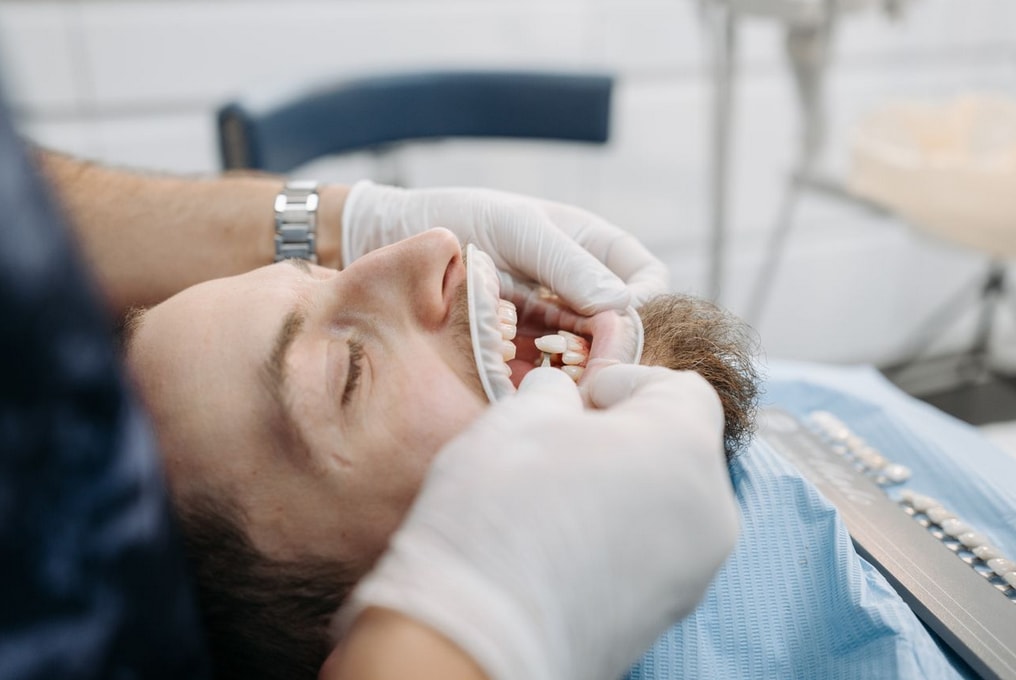
Of all the procedures patients tell me they’re nervous about, dental crowns come up more than almost anything else. And when I ask what specifically they’re worried about, the answers are usually some version of the same thing: they don’t know what’s going to happen, and the not-knowing is the worst part.
That’s the most common source of dental anxiety I see in my practice — not pain, not needles, not the sound of the drill. It’s the uncertainty. Not knowing what to expect, how long it will take, what you’ll feel, and what you’ll look and feel like when it’s over.
So let me just tell you. All of it, step by step, the same way I’d explain it to a patient sitting in my chair before we start.
First — why crowns exist
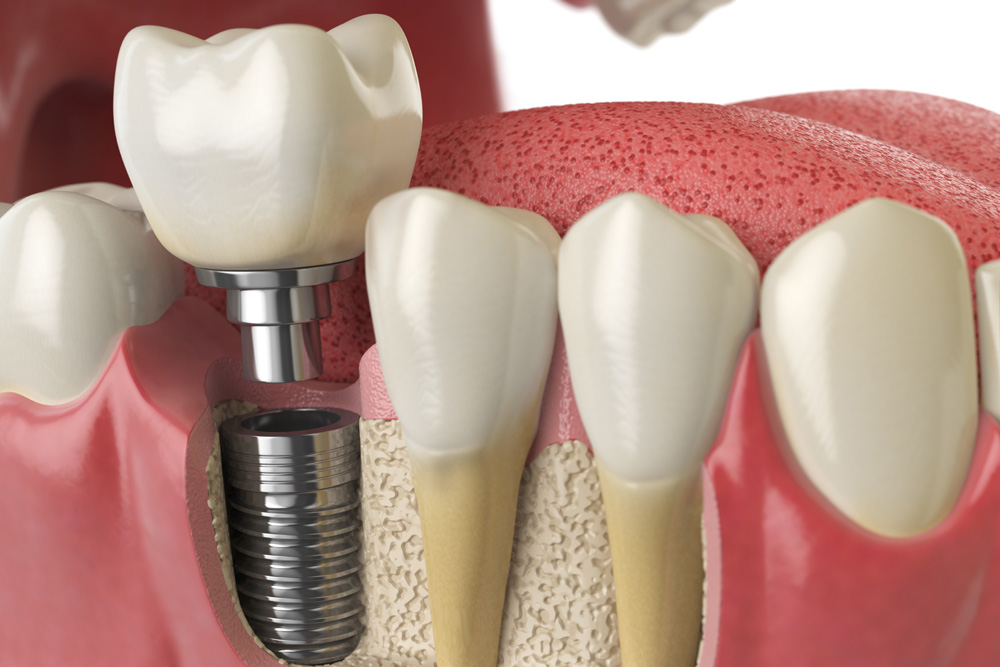
A dental crown is a cap that fits over the entire visible portion of a tooth, from the gumline up. It’s used when a tooth needs more protection or structural support than a filling can provide — after a root canal, when a tooth is cracked or significantly decayed, when an existing filling has failed and there isn’t enough healthy tooth structure left to place a new one, or when a tooth has become so weakened that it needs to be fully covered to function safely.
A crown restores the tooth’s shape, size, strength, and appearance. Once it’s placed, it looks and functions like a natural tooth — you bite with it, chew with it, brush and floss around it the same way you would any other tooth.
The goal of a crown is always to save a tooth that would otherwise be lost or continue to deteriorate. That context matters, because patients sometimes come in feeling like a crown is a bad outcome. It isn’t. It’s a preservation outcome — keeping a tooth that’s worth keeping.
What actually happens, appointment by appointment
Appointment one: preparation
The first appointment is the longer of the two, typically lasting one to two hours depending on the complexity of the tooth. This is where most of the dental crown procedure happens.
Anesthesia first. Before anything else, I numb the area thoroughly. This is the part patients tend to brace for, and I understand why — nobody loves an injection. But the anesthetic injection itself is brief, and once it takes effect, you shouldn’t feel pain during any of what follows. Pressure, yes. Vibration, sometimes. Pain, no. If at any point during the procedure you feel something sharp, I want to know immediately. That’s not something you should push through.
Reshaping the tooth. Once you’re numb, I reshape the tooth to create space for the crown. This involves removing a thin, uniform layer from the outer surface of the tooth on all sides — enough to allow the crown to sit over it without making that tooth feel oversized or altering your bite. A drill is used for this, which produces sound and vibration. The sound, I’ll be honest, is not the most pleasant. The sensation, with proper anesthesia, should be pressure without pain.
Impressions or digital scan. Once the tooth is prepared, I take either a traditional impression or a digital scan — depending on the technology we’re using — to capture the exact shape of the prepared tooth and the surrounding teeth. This is what the lab uses to fabricate your crown to precise specifications.
Temporary crown placement. Before you leave, I place a temporary crown over the prepared tooth. This protects it while your permanent crown is being made, which typically takes one to two weeks. The temporary is made from a resin material and is cemented with a softer, temporary adhesive — it’ll feel normal to chew on, but I’ll ask you to be a little careful with it. Sticky foods and chewing on that side heavily are worth avoiding for the two weeks you have it in.
What to expect after appointment one. Once the anesthesia wears off — usually two to four hours after the appointment — it’s common to have some soreness around the tooth and gum tissue. This is normal. The tooth has been worked on, the gum tissue has been retracted slightly to access the edges of the preparation, and everything needs a day or two to settle. Over-the-counter pain relief like ibuprofen handles this comfortably for most patients.
The two-week window
While the lab fabricates your permanent crown, you go about your normal life. Most patients forget they’re even in a temporary after the first day or two. If the temporary comes off — which occasionally happens, especially if something sticky pulled at it — call us and we’ll re-cement it. Don’t leave the prepared tooth uncovered for long, both for comfort and to prevent the surrounding teeth from shifting.
Appointment two: permanent crown placement
The second appointment is considerably shorter — typically 30 to 45 minutes — and for most patients, much more comfortable than the first.
Removing the temporary. I take off the temporary crown, clean the prepared tooth, and check the fit of the permanent crown before cementing anything. This is an important step — I want to confirm the crown fits precisely, that the contacts between teeth feel right, and that the bite is correct before it’s bonded permanently.
Checking the fit and bite. You’ll be asked to bite down on articulating paper — thin paper that marks where your teeth make contact — so I can see exactly how the crown is meeting your opposing teeth. Minor adjustments are common at this stage and are made chairside. Getting the bite right before cementing is much easier than adjusting it after.
Permanent cementation. Once everything checks out, the crown is bonded with a permanent dental cement. I’ll clean up the edges, check the bite one more time, and that’s it. The tooth is restored.
What to expect after appointment two. Some patients notice a little sensitivity around the newly cemented crown for a few days, particularly to temperature or biting pressure. This is normal and typically resolves within a week as the tooth settles. If sensitivity is significant, persists beyond two weeks, or the bite feels off after the initial adjustment period, call us — those are easy things to address and worth checking on.
The parts that are genuinely uncomfortable — and the parts that just seem that way
I think it’s worth being direct about this, because I’d rather prepare you accurately than reassure you vaguely.
The injection is the part most patients find most unpleasant. It’s brief. We can use a topical anesthetic first to numb the surface before the injection, which reduces the sensation considerably. If needle anxiety is significant for you, tell me before we start — there are things we can do to make it easier.
The sound of the drill is unpleasant. It sounds like more than it is. With proper anesthesia, the preparation should feel like pressure and vibration, not pain. If the sound bothers you, headphones and music help more than most patients expect.
The impression (if we use a traditional one rather than a digital scan) can feel uncomfortable for patients with a strong gag reflex. If that’s you, tell me — there are techniques to make it more manageable, and in many cases a digital scan is a more comfortable alternative.
The temporary occasionally causes mild sensitivity, especially to cold. This is because the temporary material isn’t as dense as porcelain or zirconia, and the prepared tooth underneath is a little more exposed than it was. It’s manageable and temporary.
What is not particularly uncomfortable, for most patients: the actual reshaping of the tooth (once numb), the waiting time while the temporary is in, and the second appointment.
The question I hear most
“Will it feel like my real tooth?”
Yes — once any post-placement sensitivity settles, a well-made, well-fitted crown should feel entirely normal. You’ll forget it’s there. Patients who’ve had crowns for years often can’t remember which tooth it’s on without checking their records.
A crown done well doesn’t feel like a foreign object. It feels like a tooth — because that’s exactly what it’s designed to be.
Ready to take the next step?
If you’ve been putting off a crown because you weren’t sure what to expect, I hope this helps. The procedure is manageable, the discomfort is temporary, and the outcome — a tooth that’s protected and functioning properly — is worth it.
If you’re in the Washington, PA or Pittsburgh area and want to talk through what a crown procedure would look like for your specific situation, I’m happy to have that conversation.
Washington, PA & Pittsburgh
Been putting off a crown? Let’s talk it through.
Dr. Liza takes the time to walk every patient through exactly what to expect — before the first appointment, not after. No surprises.

Dr. Elizabeth Wakim, DDS, is the founder of Enhanced Wellness. She’s a compassionate and highly-regarded dentist with her own practice in Washington, Pennsylvania, known for providing modern, comprehensive dental care, botox and facial aesthetics with a focus on patient comfort and anxiety reduction, serving general, cosmetic, and pediatric dentistry needs.