Why Your Teeth Are Sensitive After Whitening — And What to Do About It
Tooth sensitivity after whitening is common — but that doesn’t mean you have to just live with it. Dr. Liza Wakim explains exactly why it happens and what to do about it.
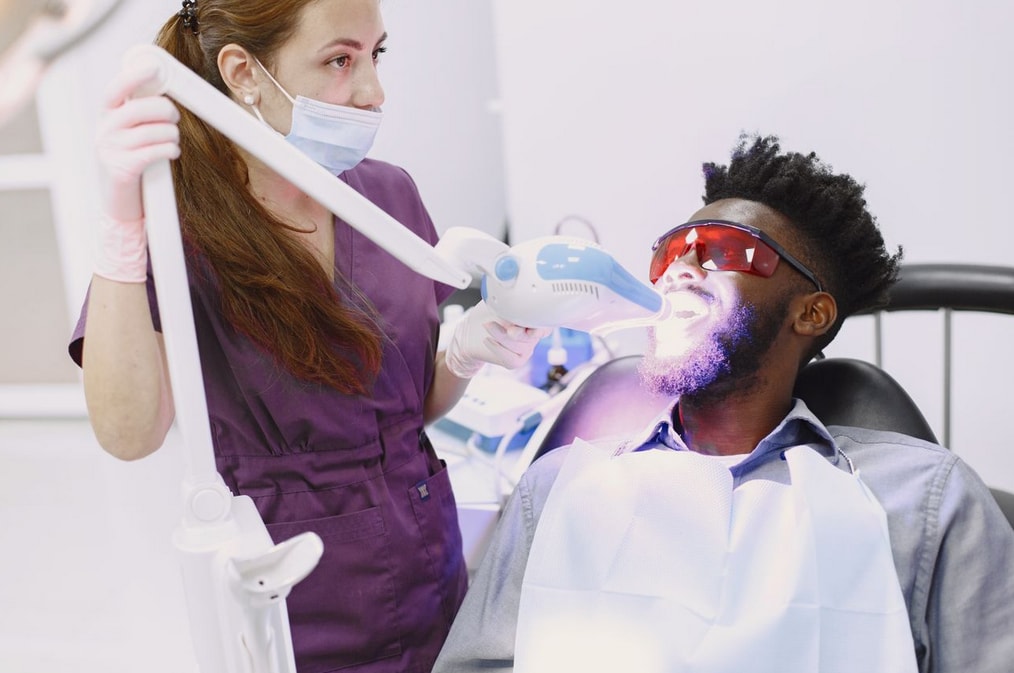
You finally did the whitening treatment. Your smile looks noticeably brighter. And now your teeth hurt when you drink your morning coffee or breathe in cold air.
This is one of the most common things patients come to me about after whitening — and one of the most unnecessarily alarming. Sensitivity after whitening is real, it’s common, and for the vast majority of patients, it’s temporary. It also doesn’t mean something went wrong.
Let me explain what’s actually happening, why some people experience it more than others, and what you can do to make it more manageable.
During treatment
Peroxide activates
Whitening agents penetrate enamel and open dentin tubules. Some patients feel mild tingling or early sensitivity.
0 – 24 hours
Peak sensitivity
The most uncomfortable window for most patients. Avoid temperature extremes. Use sensitivity toothpaste.
24 – 72 hours
Gradual improvement
Tubules begin to close as peroxide clears. Sensitivity decreases steadily for most patients.
72+ hours
Resolved
For most patients, sensitivity is fully gone. If it persists beyond 3–4 days, contact your dentist.
What’s causing the sensitivity
To understand post-whitening sensitivity, it helps to understand how whitening actually works.
Whether you’re using a professional in-office treatment, a dentist-prescribed take-home kit, or an over-the-counter product, the active ingredient is a peroxide compound — typically hydrogen peroxide or carbamide peroxide. That compound penetrates the outer layer of the tooth (the enamel) and reaches the inner layer (the dentin), where it breaks apart the molecules responsible for staining.
The dentin layer is where the sensitivity comes from. Dentin contains microscopic tubules — tiny channels that run from the surface of the tooth toward the nerve at the center. When peroxide temporarily opens or widens these tubules during the whitening process, external stimuli — temperature, air, pressure — can travel more easily toward the nerve. The result is that sharp, shooting sensation you might feel when you sip something cold.
This is a physiological response, not damage. The tubules close back up as the whitening agents clear your system, typically within 24 to 72 hours after treatment.
Why some people feel it more than others
Not everyone who whitens their teeth experiences sensitivity. For some patients it’s barely noticeable; for others it’s uncomfortable enough to interrupt their day. A few factors influence where you’ll fall on that spectrum:
Your baseline sensitivity. If your teeth are already sensitive before whitening — to cold, to sweet, to air — you’re more likely to experience heightened sensitivity after treatment. This is something I always ask about before recommending a whitening protocol, because it affects which product and concentration I’d suggest.
Enamel thickness. Thinner enamel means less distance between the surface of the tooth and the dentin tubules. Patients with worn enamel tend to feel whitening sensitivity more acutely.
Gum recession. Where the gumline has receded, the root surface of the tooth is exposed. Root surfaces don’t have an enamel layer — they’re covered by a softer material called cementum, which is more permeable. If you have any recession, those areas can be particularly sensitive during and after whitening.
Peroxide concentration and contact time. Higher concentration peroxides and longer application times produce faster results — and more sensitivity. This is one reason I’m specific about the protocols I recommend to patients rather than sending everyone home with the same kit. What’s appropriate for one person’s teeth isn’t necessarily right for another’s.
Existing dental work. Whitening agents don’t affect crowns, veneers, or bonding — those restorations will stay the same shade while natural teeth lighten around them. They also won’t cause sensitivity in restored teeth. If you have a mix of natural teeth and restorations, the sensitivity you feel will be coming from the natural teeth only.
What to do about it
The good news is that most post-whitening sensitivity resolves on its own within a day or two. But there are things you can do to make the window more comfortable and reduce sensitivity during future treatments.
Use a sensitivity toothpaste before and during treatment. Toothpastes containing potassium nitrate or stannous fluoride help block the dentin tubules and calm the nerve response. I recommend starting these a week or two before whitening if you know you’re prone to sensitivity — not just reaching for them after the fact.
Take a whitening break. If you’re using a take-home kit and the sensitivity is significant, skip a day or two between applications. Extending the treatment timeline by a few days is a much better outcome than stopping entirely or whitening through pain that causes you to dread the process.
Avoid temperature extremes immediately after treatment. The 24 to 48 hours after whitening are when the tubules are most open. That’s not the time for iced drinks or very hot beverages. Room temperature water is your friend during this window.
Ask your dentist about a fluoride treatment. In-office fluoride applications can help remineralize the enamel and close dentin tubules more quickly after whitening. If you’re doing an in-office whitening treatment and anticipate sensitivity, this is worth asking about at the same appointment.
Talk to your dentist before you whiten, not after. This is the one I’d most want patients to take seriously. Sensitivity after whitening is manageable when it’s anticipated and planned for. It’s much more disruptive when it catches you off guard. If you tell me you’re planning to whiten at home and I know you have thin enamel, recession, or existing sensitivity, I can recommend a lower-concentration product, a shorter application time, or a desensitizing protocol that makes the process much more comfortable.
When sensitivity after whitening is worth a call to your dentist
Most post-whitening sensitivity follows a predictable pattern: it shows up within a few hours of treatment, peaks around 24 hours, and fades within two to three days. If yours follows that arc, you’re almost certainly looking at normal physiological sensitivity.
A few situations are worth a conversation with your dentist:
- Sensitivity that persists beyond three to four days without improving
- Sharp, spontaneous pain that occurs without any obvious trigger — not just when drinking cold water, but seemingly out of nowhere
- Pain localized to one specific tooth rather than generalized sensitivity across the teeth that were whitened
- Any sensitivity that feels significantly different from what you’ve read to expect
These aren’t necessarily signs of something serious, but they warrant a look. Persistent localized pain in particular can sometimes indicate a pre-existing issue — a hairline crack, early decay, or an inflamed nerve — that the whitening process irritated rather than caused. In those cases, it’s better to know sooner.
The bottom line
Sensitivity after whitening is common, it’s temporary, and it doesn’t mean your treatment failed or your teeth are damaged. It means the chemistry is doing what it’s supposed to do, and your teeth need a little time to settle.
The patients who have the easiest time with whitening are usually the ones who come in, tell me what they’re planning, and let me help them do it in a way that works for their specific teeth. A smile worth sharing shouldn’t come with a week of discomfort — and for most patients, with the right preparation, it doesn’t have to.
Washington, PA & Pittsburgh
Thinking about whitening? Let’s talk first.
Dr. Liza can recommend a whitening protocol that works for your specific teeth — including how to minimize sensitivity before it starts.

Dr. Elizabeth Wakim, DDS, is the founder of Enhanced Wellness. She’s a compassionate and highly-regarded dentist with her own practice in Washington, Pennsylvania, known for providing modern, comprehensive dental care, botox and facial aesthetics with a focus on patient comfort and anxiety reduction, serving general, cosmetic, and pediatric dentistry needs.