Dental Bonding vs. Veneers: Which One Is Right for You?
Bonding or veneers — which is actually right for your teeth? Dr. Liza Wakim breaks down when each option makes sense, what the real differences are, and how she thinks through the decision with patients.
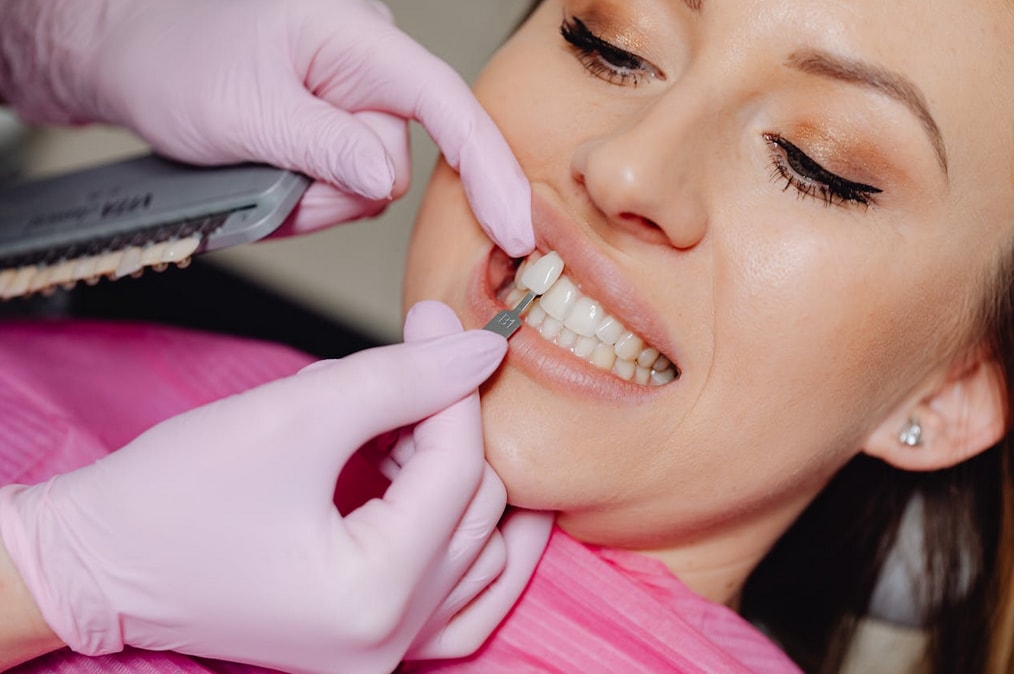
When patients come in wanting to fix a chip, close a small gap, or improve the shape of a tooth, two options almost always come up in the same breath: dental bonding and veneers. They’re both cosmetic treatments. They both change the appearance of your teeth. And they’re often confused for each other.
They’re not the same thing — and choosing between them isn’t just a matter of preference. It’s a matter of which one is actually right for your teeth, your concern, and your life.
Here’s how I think about it.
What dental bonding is
Dental bonding uses a tooth-colored composite resin — the same material used in composite veneers — applied directly to the surface of a tooth, sculpted into shape, hardened with a curing light, and polished. The whole process typically takes 30 to 60 minutes per tooth and requires little to no removal of existing tooth structure.
It’s one of the most versatile tools in cosmetic dentistry precisely because of its simplicity. There’s no lab involved, no waiting period, no temporary restorations. You come in with a concern and leave with it addressed.
What veneers are
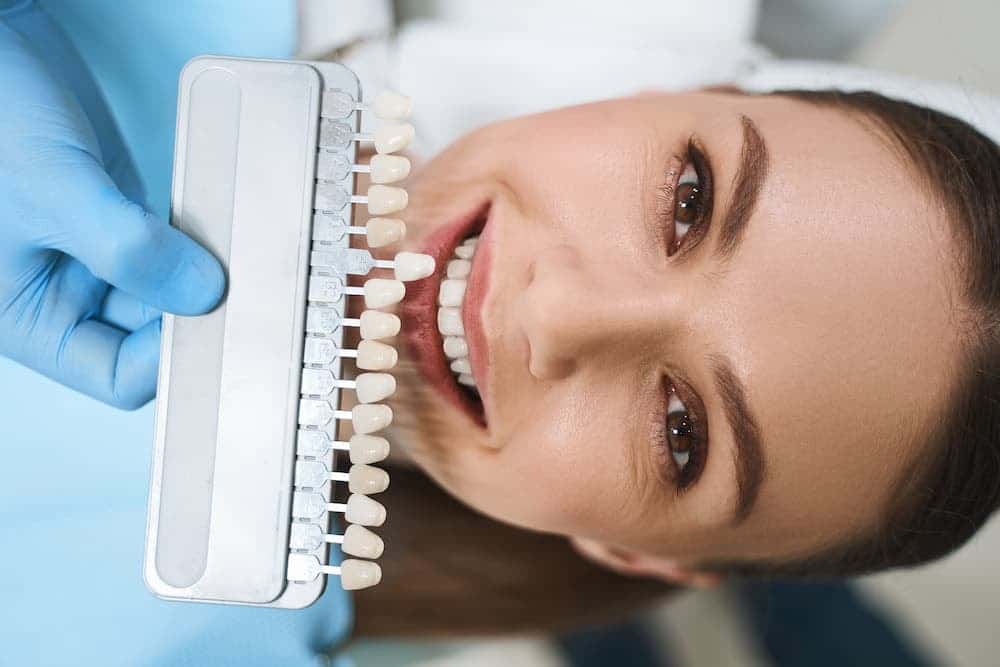
Veneers — whether composite or porcelain — are thin shells that cover the front surface of a tooth to change its color, shape, or size. Composite veneers are applied chairside in a similar process to bonding but cover more of the tooth’s surface and are designed as a more comprehensive cosmetic solution. Porcelain veneers are lab-fabricated and bonded at a second appointment, requiring a small amount of enamel removal to place correctly.
If you want a deeper breakdown of composite vs. porcelain veneers specifically, I’ve written about that separately — but for this comparison, what matters is understanding when bonding is the right call and when veneers make more sense.
When bonding is the better choice
Bonding is the right answer more often than people expect. Patients sometimes come in assuming they need veneers when bonding would do the job just as well — or better — for their specific situation.
Bonding tends to be the better fit when:
- The concern is localized. A single chipped tooth, a small gap between two front teeth, a minor irregularity in shape — these are exactly what bonding is designed for. Placing a full veneer on a tooth that only needs a small repair is like repainting an entire wall because of a scuff.
- You want to preserve as much of your natural tooth as possible. Bonding requires minimal to no enamel removal. For patients who are cautious about irreversible procedures, that matters.
- You’re younger or your smile is still changing. Bonding is easier to adjust, replace, or build on over time. It’s a good option for patients who aren’t ready to commit to a longer-term solution.
- Budget is a primary consideration. Bonding is considerably less expensive than porcelain veneers, and for the right case, it delivers results that are genuinely comparable in appearance — at least in the short to medium term.
When veneers are the better choice
Veneers make more sense when the scope of what needs to change is larger, or when longevity is the priority.
Veneers tend to be the better fit when:
- Multiple teeth need improvement. If you’re looking to transform the overall appearance of your smile rather than address one specific tooth, veneers provide a more uniform, comprehensive result.
- Discoloration is significant or deep. Bonding material can be color-matched, but it sits on top of the tooth — it won’t fully mask severe intrinsic staining the way a porcelain veneer does.
- You want a result that lasts. Composite bonding typically lasts 5 to 7 years before it needs to be touched up or replaced. Porcelain veneers, well-maintained, can last 10 to 20 years. If longevity matters to you, veneers are worth the investment.
- Stain resistance is important. Bonding resin is more susceptible to staining from coffee, tea, and wine over time. Porcelain is highly stain-resistant.
The honest answer
The distinction I find myself making most often in practice is this: bonding fixes a specific thing, while veneers transform the overall picture.
Neither is universally better. What I’m always trying to figure out — before I recommend anything — is what a patient is actually trying to accomplish. A chipped lateral incisor that’s bothering someone in photos is a bonding conversation. A patient who wants to overhaul the shape, length, and color of their entire smile is a veneer conversation.
And sometimes the answer is both — bonding on a tooth or two where it’s sufficient, veneers where a more durable or comprehensive solution is needed. A good treatment plan doesn’t force everything into one category.
A quick comparison
| Dental bonding | Veneers | |
|---|---|---|
| Best for | Localized concerns — chips, small gaps, minor shape issues | Multiple teeth, comprehensive smile transformation |
| Appointments | One visit Advantage |
One visit (composite) or two+ (porcelain) |
| Tooth removal | Minimal to none Advantage |
None (composite) or thin layer of enamel (porcelain) |
| Reversibility | Generally reversible Advantage |
Composite: reversible — Porcelain: irreversible |
| Lifespan | 5–7 years | 5–7 yrs (composite) · 10–20 yrs (porcelain) Advantage |
| Stain resistance | Moderate — resin stains over time | High (porcelain especially) Advantage |
| Cost | Lower Advantage |
Higher — especially porcelain |
| Ideal patient | Targeted fix, budget-conscious, preserving natural tooth | Full smile transformation, long-term investment Longer lasting |
Not sure which one fits your situation?
That’s exactly what a consultation is for. I’d rather spend the time helping you understand your options than have you come in already committed to something that might not be the right fit. If you’re in the Washington, PA or Pittsburgh area, come in and let’s take a look.
Washington, PA & Pittsburgh
Not sure which option fits your situation?
Dr. Liza will take a look at your specific teeth and give you an honest recommendation — no pressure, no upselling. Just a clear path forward.

Dr. Elizabeth Wakim, DDS, is the founder of Enhanced Wellness. She’s a compassionate and highly-regarded dentist with her own practice in Washington, Pennsylvania, known for providing modern, comprehensive dental care, botox and facial aesthetics with a focus on patient comfort and anxiety reduction, serving general, cosmetic, and pediatric dentistry needs.