Oral Appliances for Sleep Apnea: What They Are and Whether One Might Work for You
CPAP isn’t the only treatment for sleep apnea. Dr. Liza Wakim explains oral appliance therapy — how it works, who it’s right for, and what the process looks like from diagnosis to fitted device.
Most people know sleep apnea as the condition that gets treated with a CPAP machine — the device that delivers pressurized air through a mask worn during sleep. What fewer people know is that for a significant portion of sleep apnea patients, there’s an alternative: a custom oral appliance, fitted and provided by a dentist, that addresses the airway problem without a mask, a machine, or a power source.
I offer oral appliance therapy at Enhanced Wellness as part of my practice’s focus on sleep and airway health, and it’s a treatment option I find myself explaining regularly to patients who either didn’t know it existed or didn’t realize a dentist was involved in providing it.
This article is for those patients.
What sleep apnea actually is
Sleep apnea is a condition in which breathing repeatedly stops and starts during sleep. The most common form — obstructive sleep apnea, or OSA — occurs when the muscles in the throat relax during sleep to the point where the airway becomes partially or fully blocked. The brain detects the drop in oxygen and briefly rouses the body to restore breathing. This cycle can happen dozens or even hundreds of times per night, fragmenting sleep so thoroughly that patients wake unrefreshed regardless of how many hours they’ve spent in bed.
The consequences extend well beyond feeling tired. Untreated sleep apnea is associated with elevated blood pressure, increased cardiovascular risk, metabolic disruption, cognitive impairment, and a significantly higher risk of motor vehicle accidents from daytime drowsiness. It’s not a minor inconvenience — it’s a chronic medical condition with meaningful health implications.
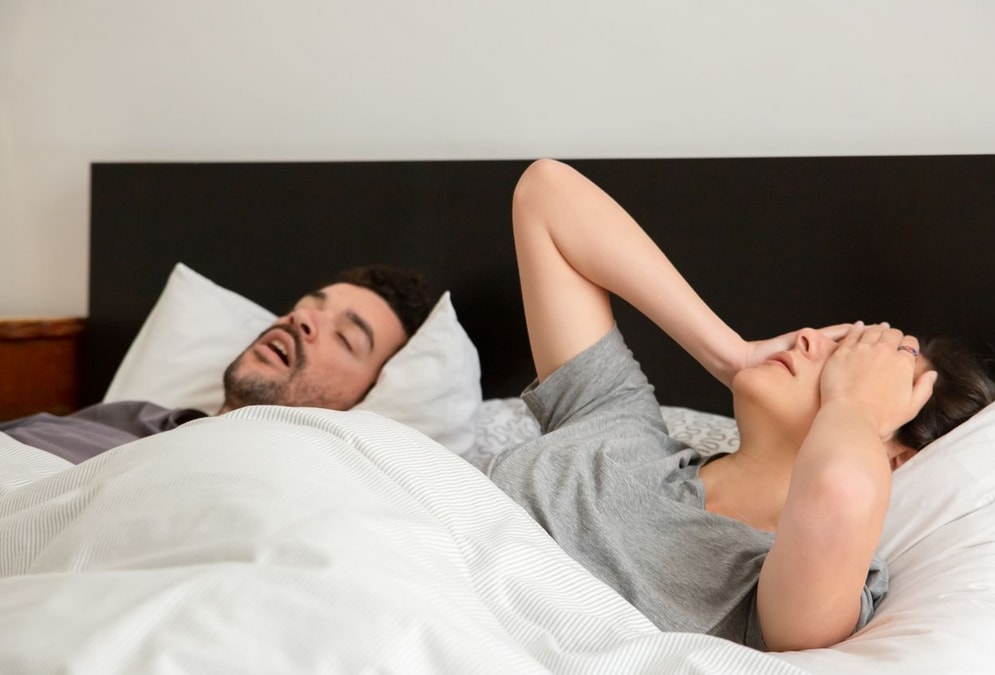
Common signs include loud, chronic snoring, witnessed apnea episodes (a bed partner notices you stop breathing), waking with a gasping or choking sensation, morning headaches, excessive daytime sleepiness, and difficulty concentrating. Many patients have lived with these symptoms for years before receiving a diagnosis.
How oral appliances work
An oral appliance for sleep apnea is a custom-fitted device worn in the mouth during sleep. The most commonly used type is a mandibular advancement device — or MAD — which works by positioning the lower jaw slightly forward and downward, which in turn keeps the tongue and soft tissue at the back of the throat from collapsing into the airway.
By maintaining this forward jaw position, the appliance physically holds the airway open during sleep. It doesn’t deliver pressurized air the way a CPAP does — it maintains airway patency through jaw repositioning.
The appliance looks similar to a mouthguard or an orthodontic retainer — two pieces of custom-fitted acrylic, one for the upper teeth and one for the lower, connected in a way that allows the lower jaw to be held in the advanced position while still allowing some mouth opening and jaw movement.
Who oral appliances are appropriate for
Oral appliance therapy is not appropriate for every sleep apnea patient — but it is appropriate for a meaningful subset, and the American Academy of Sleep Medicine endorses it as a first-line treatment option for the right candidates.
Mild to moderate OSA. Oral appliances are most effective for patients with mild to moderate obstructive sleep apnea. For severe OSA — defined as more than 30 apnea events per hour — CPAP is typically more effective and remains the primary recommendation.
CPAP intolerance. A significant number of patients who are prescribed CPAP don’t consistently use it — the mask is uncomfortable, the pressure feels claustrophobic, or the device is simply disruptive enough to sleep that compliance is poor. For these patients, an oral appliance that achieves adequate treatment effect is better than a CPAP that sits unused on the nightstand.
Positional OSA. Some patients’ apnea is primarily positional — significantly worse when sleeping on the back — and oral appliances tend to be particularly effective for this presentation.
Patients who travel frequently. An oral appliance is portable, doesn’t require electricity, and doesn’t need to be packed with a machine, humidifier, and power adapter. For frequent travelers, this is a practical advantage over CPAP.
Oral appliances are not appropriate for patients without sufficient healthy teeth to support the device, patients with certain jaw joint conditions that contraindicate jaw advancement, or patients with severe OSA where the level of treatment effect CPAP provides is medically necessary.
The process for getting an oral appliance
Step one: diagnosis. An oral appliance is a treatment for a diagnosed medical condition, not a product I dispense on request. Patients need a sleep study — either an in-lab polysomnogram or a home sleep test — and a diagnosis from a sleep physician before oral appliance therapy is appropriate. If you suspect you have sleep apnea but haven’t been diagnosed, the first step is talking to your primary care physician or a sleep medicine specialist about testing.
Step two: referral to dental sleep medicine. Once a diagnosis is established, your physician can refer you to a dentist trained in dental sleep medicine — which is where my scope of practice in this area comes in. I work in coordination with the diagnosing physician, not in isolation.
Step three: dental evaluation. Before fabricating an appliance, I evaluate the health of the teeth, gums, and jaw joint to confirm you’re a candidate for an oral appliance. Adequate tooth structure, healthy gums, and a jaw joint that can tolerate advancement are all necessary.
Step four: custom fabrication. Impressions or digital scans are taken to fabricate a custom device. This is not a boil-and-bite appliance — it’s a precision device made by a dental laboratory to exact specifications.
Step five: fitting and titration. When the device is delivered, I fit it and begin the titration process — gradually adjusting the degree of jaw advancement to find the position that adequately treats the apnea with the least amount of jaw strain or side effects. This takes time and typically requires follow-up visits.
Step six: follow-up sleep testing. After titration, a follow-up sleep test confirms whether the appliance is achieving adequate treatment effect. The goal is objective evidence that the apnea is being managed — not just that the patient is sleeping better subjectively.
| Oral appliance | CPAP | |
|---|---|---|
| How it works | Repositions the lower jaw forward to keep airway open | Delivers pressurized air through a mask to maintain airway |
| Best for | Mild to moderate OSA; CPAP-intolerant patients | All severities; most effective for severe OSA |
| Comfort | No mask, no machine, no pressurized air Advantage |
Mask and pressure can be difficult to tolerate |
| Portability | Small, portable, no electricity needed Advantage |
Machine, humidifier, mask, and power required |
| Efficacy | Highly effective for mild–moderate OSA | Most effective option overall — especially for severe OSA Advantage |
| Long-term compliance | Higher compliance rates than CPAP in many patients Advantage |
Lower compliance due to comfort issues in some patients |
What to expect from oral appliance therapy
Most patients adapt to the appliance within a few weeks. Initial side effects — mild jaw soreness, increased salivation, temporary bite changes in the morning — are common and usually resolve as the jaw adapts to the new position.
The morning bite changes deserve specific mention: many patients notice that their teeth don’t feel like they meet normally for an hour or so after removing the appliance in the morning. This is because the jaw has been held in an advanced position during sleep and needs to settle back into its natural resting position. Jaw exercises in the morning help. For most patients this is transient, but it’s something I monitor at follow-up visits.
Long-term compliance with oral appliances tends to be significantly higher than with CPAP for patients who are good candidates — which is part of why the treatment effect, even if slightly less robust than CPAP in controlled comparisons, often produces better real-world outcomes for CPAP-intolerant patients.
How this is different from NightLase
I offer NightLase laser treatment at Enhanced Wellness for patients whose primary concern is snoring or mild sleep-disordered breathing — and patients sometimes ask how it relates to oral appliance therapy.
They’re distinct treatments for distinct situations. NightLase uses laser energy to tighten soft palate tissue, which reduces snoring and is appropriate for patients with mild airway concerns or snoring without diagnosed sleep apnea. It does not treat diagnosed obstructive sleep apnea and is not a substitute for CPAP or an oral appliance in patients with confirmed OSA.
An oral appliance physically repositions the jaw to maintain airway patency throughout the night — it’s a medical device for a diagnosed condition, with objective efficacy measured by sleep testing. The two treatments serve different patients at different points on the sleep-disordered breathing spectrum.
If you’re not sure which category you’re in, the right starting point is a sleep study — not a treatment decision made without a diagnosis.
Considering oral appliance therapy?
If you’ve been diagnosed with mild to moderate sleep apnea and are struggling with CPAP — or if you’ve been told you snore heavily and want to understand your options — I’m happy to have a conversation about whether oral appliance therapy might be appropriate for your situation. I serve patients in Washington, PA and the greater Pittsburgh area, and this is a conversation I can have either in the context of a dental visit or as a dedicated consultation.
Washington, PA & Pittsburgh
Diagnosed with sleep apnea and struggling with CPAP?
Dr. Liza can evaluate whether an oral appliance is appropriate for your situation and work alongside your sleep physician to provide a custom-fitted device.

Dr. Elizabeth Wakim, DDS, is the founder of Enhanced Wellness. She’s a compassionate and highly-regarded dentist with her own practice in Washington, Pennsylvania, known for providing modern, comprehensive dental care, botox and facial aesthetics with a focus on patient comfort and anxiety reduction, serving general, cosmetic, and pediatric dentistry needs.