Composite Veneers vs. Porcelain Veneers: A Cosmetic Dentist Explains the Real Difference
Not all veneers are created equal. Dr. Liza Wakim breaks down the real differences between composite and porcelain veneers — material, lifespan, cost, and which one actually fits your life — the same way she’d explain it in the chair.
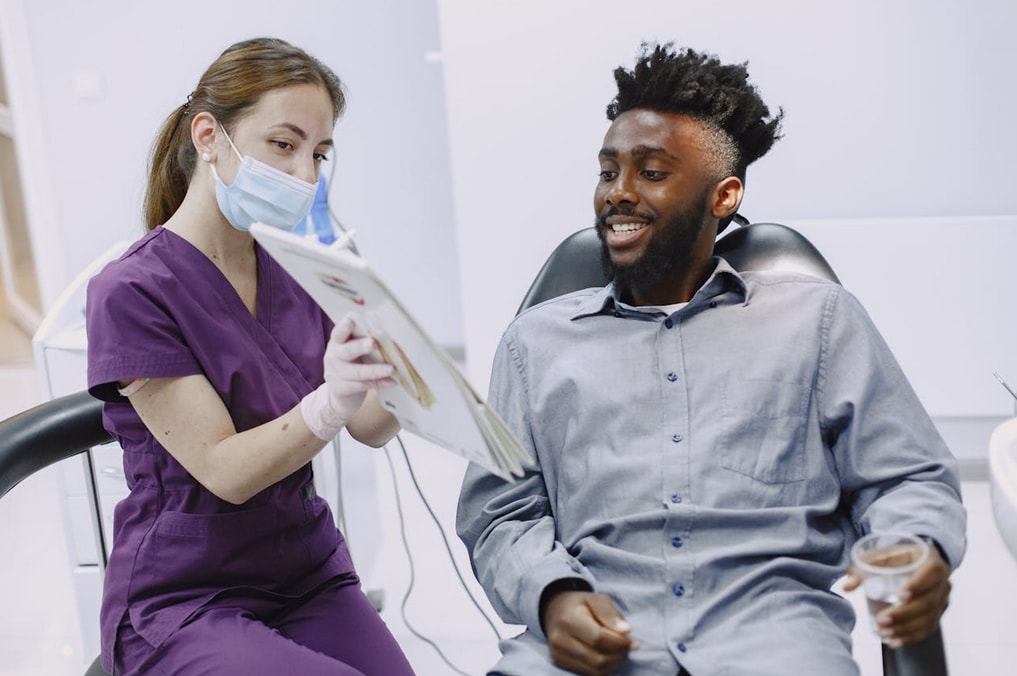
I have a version of this conversation almost every week.
A patient sits down, pulls out their phone, shows me a photo — usually someone from Instagram or TikTok with a dramatically transformed smile — and asks: “Can you do that? And what’s it going to cost me?”
The answer is almost always yes. But which path we take to get there matters more than most people realize going in.
The two most common options for dental veneers — composite veneers and porcelain veneers — are not interchangeable. They have different materials, different processes, different lifespans, and different price tags.
More importantly, they suit different patients for different reasons.
So let me walk you through how I actually think about this decision, the same way I’d explain it in the chair.
What veneers actually are (and what they’re not)
Before comparing the two types, it helps to be clear on what a veneer does. A veneer is a thin shell — typically covering the front surface of a tooth — designed to change its color, shape, size, or all three. Veneers are cosmetic by nature. They’re not used to restore a tooth that’s structurally compromised (that’s what crowns are for), and they don’t treat decay or gum disease. If those issues are present, we address them first.
Both composite and porcelain veneers achieve the same visual goal. The material, durability, process, and cost are where they diverge significantly.
Composite veneers: the flexible, faster option
Composite veneers are made from the same tooth-colored resin material we use for dental bonding — a durable plastic compound that can be sculpted, layered, and polished directly onto your tooth in a single appointment.
How the process works: I apply the composite resin to your tooth in thin layers, shaping and hardening each layer with a curing light as I go. No impressions, no lab, no waiting. In most cases, you leave the same day with a transformed smile.
What composite veneers are good for:
- Patients who want results without committing to an irreversible procedure
- Mild to moderate cosmetic concerns — minor chips, slight discoloration, small gaps, or teeth that are slightly uneven in shape
- Younger patients whose smile is still changing
- Anyone working with a tighter budget who still wants meaningful cosmetic improvement
- Patients who want to “preview” the direction of a smile transformation before committing to porcelain
What composite veneers are not ideal for:
- Heavy staining that has penetrated deep into the tooth (composite sits on top; it doesn’t bleach from within)
- Patients who are hard on their teeth — composite is more susceptible to chipping than porcelain
- Anyone seeking the most lifelike, translucent appearance over a long time horizon
Lifespan: With proper care, composite veneers typically last 5 to 7 years before they need to be touched up or replaced. They can chip more easily than porcelain, and they’re more prone to staining over time — coffee, red wine, and smoking will affect them faster than they affect porcelain.
Cost: Composite veneers are considerably more affordable than porcelain — typically a fraction of the per-tooth cost. I’d encourage you to ask any dentist you’re considering for a specific quote, because pricing varies significantly by market and case complexity.
Porcelain veneers: the durable, most lifelike option
Porcelain veneers are thin ceramic shells custom-fabricated in a dental laboratory to precise specifications — your tooth shape, your bite, your skin tone, the exact shade you want. They’re designed to match the light-reflecting properties of natural enamel better than any other restorative material.
How the process works: This is a multi-appointment process. At the first visit, I prepare the teeth by removing a thin layer of enamel — typically less than a millimeter — to create a surface the veneer can bond to. Impressions or digital scans are taken, and temporary veneers are placed while your permanent ones are fabricated at the lab, usually over one to two weeks. At the second appointment, the permanent veneers are bonded.
One thing I always make sure patients understand: because enamel is removed, porcelain veneers are considered an irreversible procedure. The teeth will always need to be covered going forward. This isn’t a reason to avoid them — for the right patient, porcelain veneers are one of the most transformative and long-lasting cosmetic treatments in dentistry. But it’s information I believe every patient deserves before making the decision.
What porcelain veneers are good for:
- Patients committed to a long-term, high-quality result
- More significant cosmetic concerns — severe discoloration that doesn’t respond to whitening, notably uneven or misshapen teeth, larger gaps, or worn enamel
- Anyone who wants the most natural-looking, light-responsive result
- Patients who want a smile transformation that will hold up over a decade or more
What porcelain veneers are not ideal for:
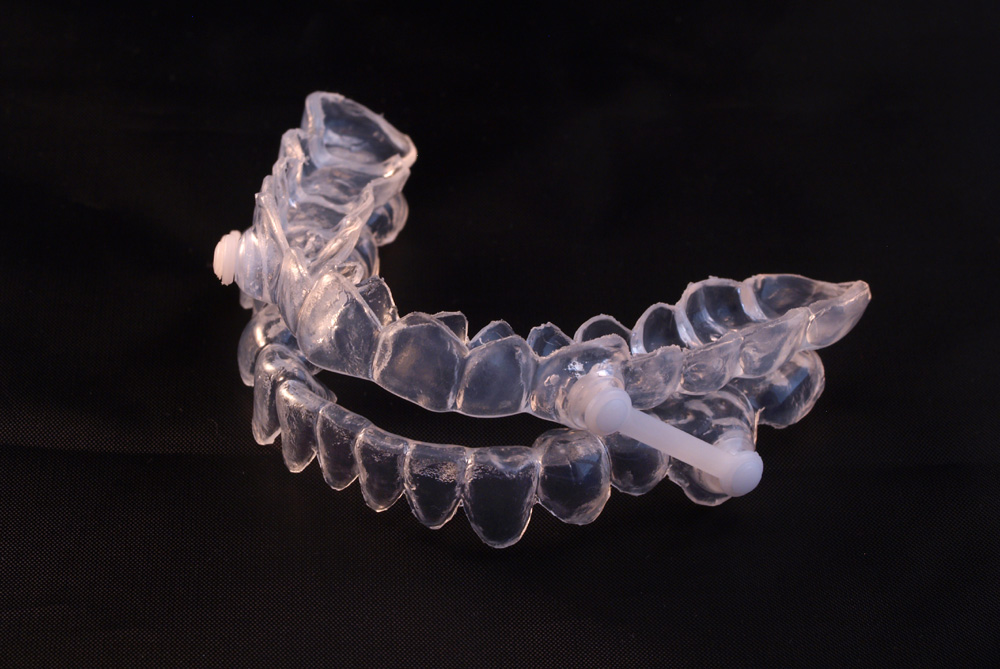
- Patients who grind their teeth heavily (bruxism can crack porcelain — we’d typically want to address that first, or discuss nightguard protection)
- Teeth that are already significantly compromised structurally (a crown may be more appropriate)
- Patients who aren’t ready for the commitment of an irreversible procedure
Lifespan: Well-maintained porcelain veneers typically last 10 to 20 years. They’re highly stain-resistant, chip-resistant, and — because they’re custom-fabricated — often indistinguishable from natural teeth.
Cost: Porcelain veneers are a more significant investment than composite — the lab fabrication, the material, and the multi-appointment process all factor in. The per-tooth cost varies considerably depending on case complexity and the number of teeth involved.
The question I ask every patient
When someone comes in asking about veneers, I don’t start with material. I start with a question my training at the Pankey Institute put at the center of how I practice: What do you actually want your smile to do for you?
Some patients want a subtle improvement — a little more brightness, a chip fixed, something that makes them feel less self-conscious in photos. For those patients, composite is often the right answer. It’s less invasive, more affordable, and can be refined over time as their preferences evolve.
Other patients come in with a clear, committed vision. They’ve thought about it for years. They want a result that will last, that will look exceptional, and that they’ll never have to think about again. For those patients, porcelain usually makes more sense — not because it’s more expensive, but because it will serve them better over the long run.
And some patients genuinely aren’t sure. That’s what consultations are for. When I sit down with someone, I want to understand what matters to them — their lifestyle, their budget, their timeline, their comfort with the process — before I recommend anything. The right veneer isn’t the most expensive one or the most technologically advanced one. It’s the one that fits your life.
| Composite veneers | Porcelain veneers | |
|---|---|---|
| Material | Tooth-colored resin, applied directly | Custom ceramic, lab-fabricated |
| Appointments | Usually one visit | Two or more visits |
| Reversibility | Generally reversible | Irreversible — enamel is removed |
| Lifespan | 5–7 years | 10–20 years |
| Stain resistance | Moderate | High |
| Appearance | Natural-looking | Most lifelike — mimics enamel translucency |
| Best for | Mild concerns, flexibility, budget More affordable |
Significant concerns, long-term results Longer lasting |
The bottom line
Both types of veneers can genuinely transform a smile. The question is which transformation is right for you — your teeth, your goals, your life.
If you’re in the Washington, PA area and curious about what your options might look like, I’m always happy to have that conversation in person. A consultation isn’t a commitment — it’s just information. And I strongly believe that every patient deserves to understand their options fully before deciding anything.
A smile is one of the first things you offer the world. It’s worth getting right.

Dr. Elizabeth Wakim, DDS, is the founder of Enhanced Wellness. She’s a compassionate and highly-regarded dentist with her own practice in Washington, Pennsylvania, known for providing modern, comprehensive dental care, botox and facial aesthetics with a focus on patient comfort and anxiety reduction, serving general, cosmetic, and pediatric dentistry needs.