What Is Full Mouth Reconstruction? Who It’s For and What the Process Looks Like
Full mouth reconstruction isn’t just a lot of dental work — it’s a coordinated plan to rebuild the entire bite. Dr. Liza Wakim explains who it’s for, how she sequences treatment, and what the process actually involves.
Most dental procedures address a specific problem: a cavity filled, a crown placed, a tooth replaced. Full mouth reconstruction is different in kind, not just scale. It’s what happens when the problems extend across the entire mouth — when years of damage, disease, or deterioration have reached the point where a comprehensive, coordinated treatment plan is the only path to a functional, healthy result.
It’s not a common procedure. Most people will never need it. But for the patients who do — and who find themselves searching for information about what it involves — I want to give a clear, honest picture of what the process looks like, what it requires, and what it can accomplish.
What full mouth reconstruction is
Full mouth reconstruction — sometimes called full mouth rehabilitation or full mouth restoration — refers to the systematic rebuilding of all or most of the teeth in both the upper and lower jaws using a combination of restorative and sometimes cosmetic dental procedures.
It’s not a single treatment. It’s a treatment plan that may incorporate crowns, bridges, implants, veneers, periodontal treatment, orthodontics, bone grafting, and other procedures — sequenced and coordinated to address every aspect of the mouth’s health, function, and appearance together rather than piecemeal.
The word “reconstruction” is intentional. It implies that what’s there has broken down significantly enough that it needs to be rebuilt — not just repaired.
Who needs full mouth reconstruction
Patients who benefit from full mouth reconstruction typically fall into one of a few categories. What they share is that the problems affecting their teeth and oral health are extensive, interrelated, and beyond what treating one tooth at a time would address effectively.
Severe tooth wear from bruxism. Patients who have ground their teeth heavily for years — often without realizing the extent of the damage — can arrive at a point where the vertical dimension of the bite has collapsed. The teeth are so worn that they’ve lost significant height, the face has changed shape subtly, and the remaining tooth structure isn’t sufficient to simply crown a few teeth. Rebuilding the bite requires a coordinated plan across the entire mouth.
Extensive decay or failed restorations. Some patients have spent years accumulating dental work — fillings that have failed, old crowns that need replacement, new decay developing around existing restorations. When the accumulation reaches a certain point, a comprehensive approach is more efficient and more effective than continuing to treat individual teeth reactively.
Periodontal disease with significant bone loss. Patients who have experienced substantial bone loss from periodontal disease may need a combination of periodontal treatment, bone grafting, and restorative work to stabilize the situation and rebuild what’s been lost. This often requires a coordinated plan that addresses the foundation before rebuilding what sits on top of it.
Trauma or injury. Accidents that affect multiple teeth — falls, sports injuries, vehicle accidents — can create a situation where comprehensive reconstruction is the appropriate response rather than isolated repair.
Congenital or developmental conditions. Some patients are born with conditions that affect tooth development — missing teeth, malformed enamel, significant malocclusion — that require comprehensive treatment to address fully.
The patient who has avoided the dentist for years. This is, honestly, one of the most common presentations I see. A patient who has let dental care lapse for a decade or more, who has been managing pain and dysfunction quietly, and who finally arrives at a point where they can’t avoid addressing it anymore. The complexity at that point often warrants a comprehensive approach. There’s no judgment in this category — life intervenes, dental anxiety is real, and the barriers to care are sometimes significant. What matters is that they came.
What the process looks like
Timeline varies by case complexity — typically several months to over a year when implants or periodontal treatment are involved.
Every full mouth reconstruction plan is different, because every patient’s situation is different. But the process follows a consistent structure regardless of what specific treatments are involved.
Comprehensive evaluation
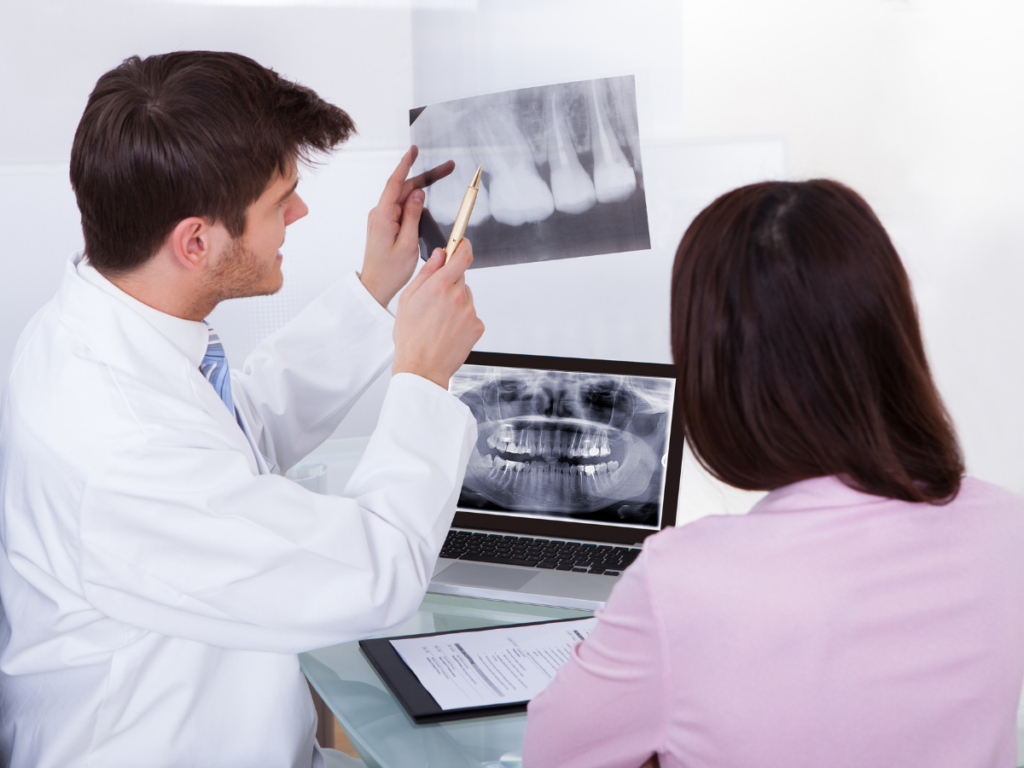
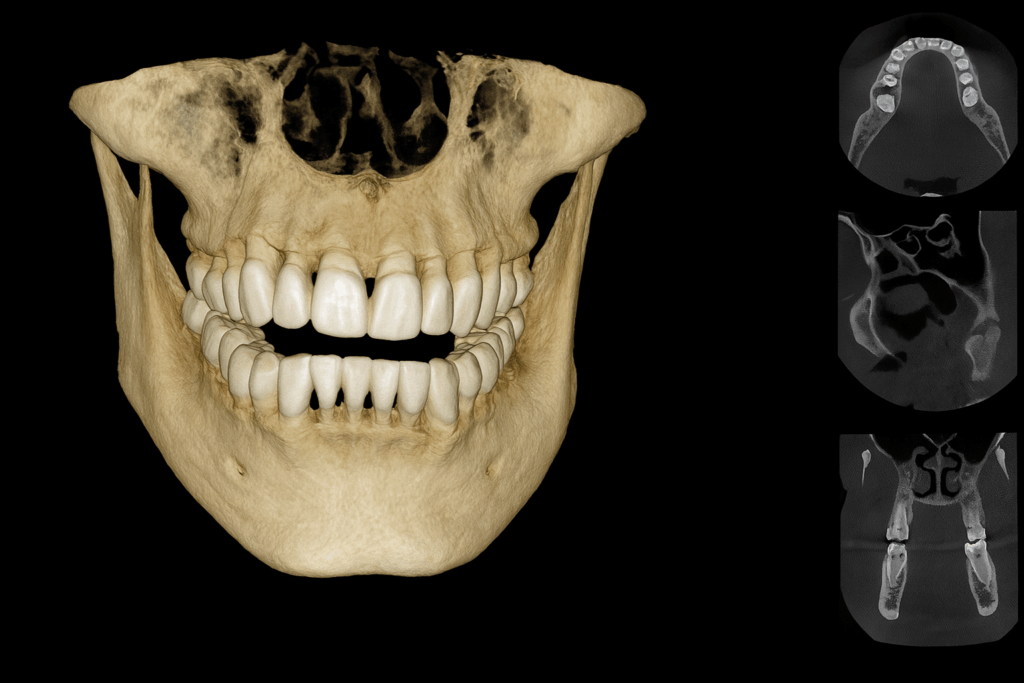
Before any treatment plan is developed, I need a complete picture of the current state of the mouth. This involves a thorough clinical examination, a full set of X-rays, periodontal charting, photographs, and in many cases digital impressions or models of the current bite. This evaluation is the foundation of everything that follows — a treatment plan built without it is guesswork.
I also spend significant time in this phase understanding what the patient wants. My training at the Pankey Institute put the patient’s goals and values at the center of treatment planning, and nowhere is that more important than in a comprehensive case. A patient who wants to preserve as much natural tooth structure as possible leads to a different plan than a patient who wants the most durable long-term result regardless of how many teeth are extracted and replaced with implants. Both are legitimate goals. The plan should reflect the patient’s priorities, not just the clinical ideal in isolation.
Establishing a treatment sequence
Full mouth reconstruction requires a specific treatment sequence. The order in which things are done matters enormously — doing things out of sequence can compromise the outcome or require redoing work.
In general terms, the sequence follows this logic:
Foundation first. Any active disease — periodontal infection, uncontrolled decay, acute pain — is addressed before restorative work begins. Building on a diseased foundation produces a result that won’t hold.
Structure before aesthetics. Functional and structural rehabilitation — establishing the correct bite, replacing missing teeth, addressing bone loss — precedes cosmetic refinement. The aesthetics have to be built on a foundation that works.
Provisional restorations before permanent ones. In complex cases, I often place temporary restorations first. This serves two purposes: it allows the patient to evaluate the proposed result before committing to permanent work, and it gives me time to assess how the bite is functioning and refine any adjustments before the final restorations are fabricated.
Permanent restorations as the final phase. Once the foundation is stable, the function is verified, and any refinements are made, the permanent restorations are placed.
The timeline
Full mouth reconstruction takes time. Depending on the complexity of the case — how many procedures are involved, whether implants are part of the plan (which require months for osseointegration), whether periodontal treatment needs to stabilize before restorative work begins — the overall timeline can range from several months to a year or more.
This is not something patients always want to hear, and I understand that. But compressing the timeline in a case this complex compromises the outcome. Rushing osseointegration, skipping the provisional phase, placing permanent restorations on tissue that hasn’t fully healed — these shortcuts create problems that are harder and more expensive to fix than taking the time to do things correctly.
I map out the timeline clearly at the start so patients know what they’re committing to before treatment begins. There should be no surprises about how long this takes.
Managing the investment
Full mouth reconstruction is a significant financial commitment. The total cost depends on the number and type of procedures involved, and it varies considerably from case to case — there’s no meaningful general figure I can offer here because the range is genuinely wide.
What I can offer is a complete, itemized treatment plan before any work begins, a clear understanding of what insurance is likely to cover (which for restorative work is often partial and sometimes significant), and a frank conversation about phasing the work if that’s what makes it financially feasible. Many comprehensive cases can be phased over time without compromising the overall outcome, as long as the sequencing is maintained.
What full mouth reconstruction can accomplish
For patients who need it, the transformation — functional and aesthetic — can be profound. Patients who have been managing pain, avoiding certain foods, hiding their smile, or simply living with a level of dental dysfunction that they’d normalized often describe the completed result as genuinely life-changing.
A smile is one of the first things we offer the world. For patients who’ve spent years without one they felt good about — whether because of damage, disease, or years of avoidance — rebuilding it comprehensively isn’t just a dental outcome. It changes how they carry themselves. How they eat. How they engage with other people.
That’s what I’m working toward in a case like this. Not just a mouth that functions, but a patient who feels genuinely well cared for.
Is full mouth reconstruction right for you?
If you’re dealing with extensive dental problems and wondering whether a comprehensive approach makes more sense than continuing to address things one tooth at a time — or if you’ve been told by another provider that you need significant work and want a second opinion — I’m happy to do a full evaluation and give you an honest assessment.
This kind of consultation takes time, and I approach it that way. If you’re in the Washington, PA or Pittsburgh area, reach out and let’s have a real conversation about where you are and what’s possible.
Washington, PA & Pittsburgh
Dealing with extensive dental problems and not sure where to start?
Dr. Liza takes the time to fully evaluate complex cases before recommending anything — and builds a treatment plan around your goals, not a generic protocol.

Dr. Elizabeth Wakim, DDS, is the founder of Enhanced Wellness. She’s a compassionate and highly-regarded dentist with her own practice in Washington, Pennsylvania, known for providing modern, comprehensive dental care, botox and facial aesthetics with a focus on patient comfort and anxiety reduction, serving general, cosmetic, and pediatric dentistry needs.