White Spots on Gums: 8 Causes, From Canker Sores to Leukoplakia, and When to Get Checked
Noticed a white spot or patch on your gums? Dr. Liza Wakim explains eight common causes, from canker sores and thrush to leukoplakia, how to tell them apart, and when a white spot should be checked.

White spots on the gums are one of those things that can look alarming in the bathroom mirror. Sometimes it is a small sore that stings when you brush. Sometimes it is a white bump, or a patch you only notice when you pull your lip down.
The good news is that most white spots on the gums have simple, treatable causes. A few, though, should always be looked at by a dentist. In this post I will walk you through the common causes, a quick self-check, and the red flags I watch for.
The short version
- Most white spots on the gums are canker sores, minor injuries, irritation, or a sign of infection like a gum boil.
- White patches that wipe off often point to thrush. Patches that do not wipe off and have no clear cause need a professional look.
- A white spot that lasts more than two weeks, grows, feels thick or rough, or has red areas should be checked.
- Treatment depends entirely on the cause, so the first step is finding out what it is.
What causes white spots on gums?
White spots on the gums are most often caused by canker sores, a gum boil from an infection, oral thrush, irritation from whitening products or a rough tooth, or a minor injury. Less often, they are a condition like lichen planus or leukoplakia, which needs a dentist’s evaluation. Most causes are harmless and treatable, but a patch lasting more than two weeks should be checked.
8 common causes of white spots on gums
1. Canker sores
Canker sores are shallow, painful sores with a white or gray center and a red border. They often show up on the gums, inside the lips or cheeks, and can sting when you eat acidic or spicy food. According to the ADA, they usually heal on their own in one to two weeks and are not contagious. If you get them often, my post on whether mouthwash is bad for mouth ulcers explains how to care for them.
2. Gum boil or abscess
A white or yellow bump on the gum near one tooth, sometimes with a salty taste, is often a gum boil: a small drainage opening for an infection at a tooth root or in a gum pocket. It may shrink and come back. This needs dental treatment, not popping. Read more in my post on gum boils.
3. Oral thrush
Thrush is a yeast infection that causes creamy white patches on the gums, tongue, cheeks or palate. A key clue is that the patches can often be wiped away, leaving a red, sore area underneath. MedlinePlus notes that thrush is more likely in babies, older adults, denture wearers, people with diabetes, and people taking antibiotics or inhaled steroids. It is treated with antifungal medicine.
4. Leukoplakia
Leukoplakia is a thick, white or gray patch that cannot be scraped off and has no other clear cause. It is often linked to tobacco use, including smoking and chewing tobacco, but not always. Most patches are not cancer, but some can show early precancerous changes, so MedlinePlus explains that a biopsy may be needed to know for sure.
5. Oral lichen planus
Lichen planus is a long-term inflammatory condition that can show up in the mouth as lacy, web-like white lines, sometimes with red, sore or peeling gums. It is not contagious. It is often found on both sides of the mouth. Your dentist may monitor it over time, and some forms need treatment to manage soreness. See MedlinePlus for an overview.
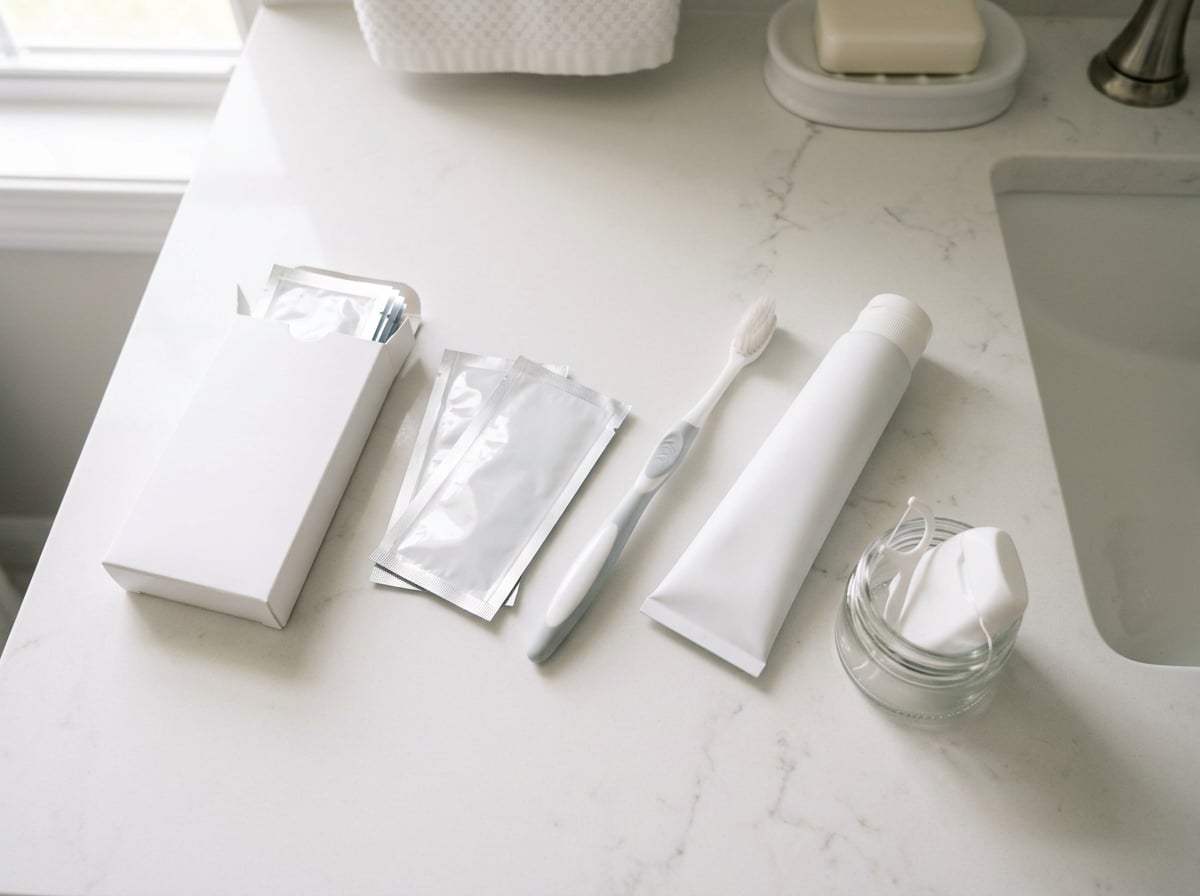
6. Whitening or chemical irritation
Whitening strips, trays or gels can briefly turn the gums white where the product touched them, often with a bit of stinging. This is usually a mild, temporary chemical irritation that fades within a day or so. The same can happen from holding aspirin against a sore tooth, or from very strong mouthwash. The ADA notes that gum irritation is one of the possible side effects of whitening.
7. Injury or friction
A burn from hot food, a scrape from a chip, aggressive brushing, or a sharp tooth, filling or denture edge rubbing the same spot can leave a white, sore area. Repeated friction can even create a thickened, callus-like white patch. These usually improve once the source of irritation is fixed.
8. Pale gums overall
Sometimes the issue is not a spot but gums that look pale all over. Gums are normally pink, and unusually pale gums can sometimes be related to anemia or other health conditions. That is a question for your doctor, especially if you also feel tired, short of breath or lightheaded.
Quick self-check: wipes off? painful? raised or flat?
This is not a diagnosis, but these three questions help narrow things down and are useful to share with your dentist:
White gums around one tooth vs. all over
Around one tooth. A white spot or bump next to a single tooth often points to something local: a gum boil from an infected tooth, irritation from a rough filling or crown edge, or a spot where whitening gel sat against the gum. When I see this, I check that tooth closely, often with an X-ray.
In several places or all over. White patches spread across the gums, tongue or cheeks are more likely to be thrush, lichen planus or a widespread irritation. Gums that look pale all over, rather than spotted, may be worth discussing with your doctor.
Red flags: when a white patch needs a biopsy
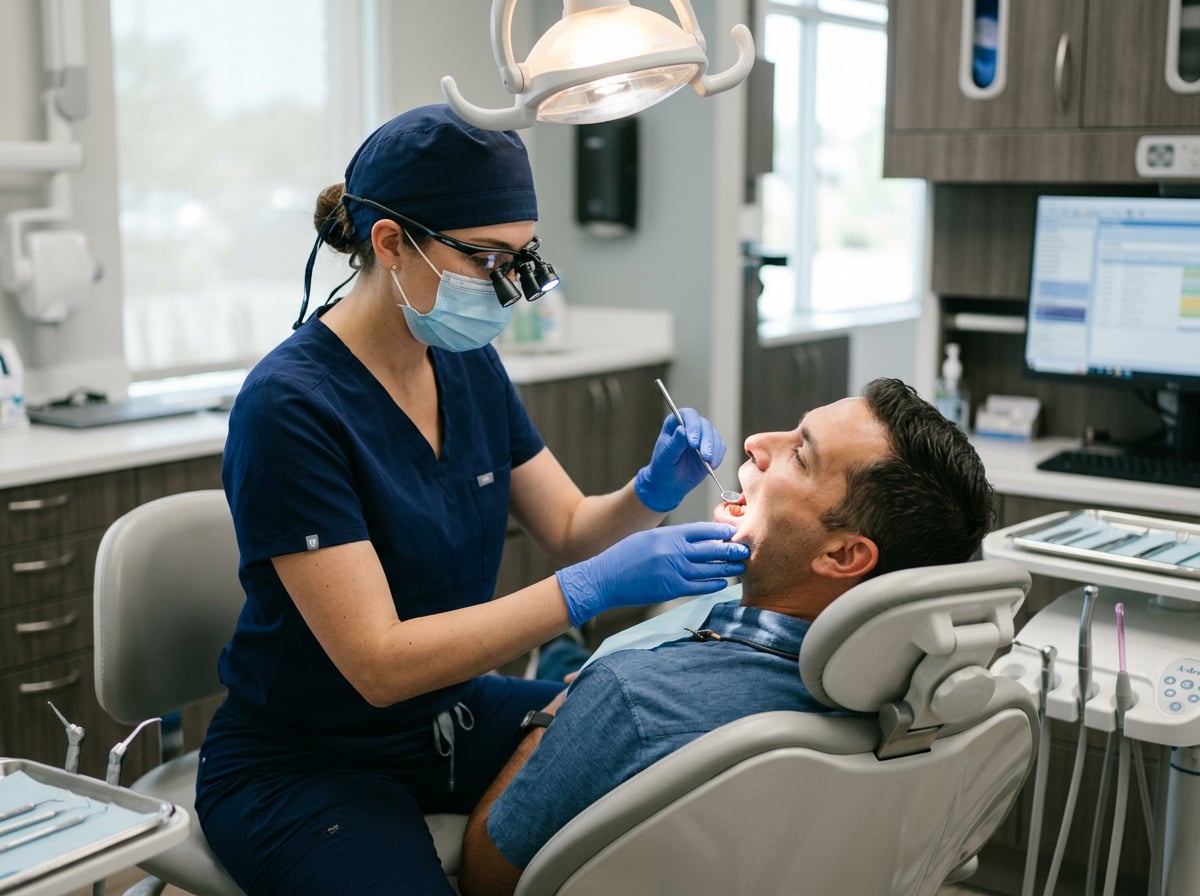
Most white spots are harmless, but some need a closer look. The American Cancer Society lists a white or red patch in the mouth, a sore that does not heal, and a lump or thickening among the possible warning signs of oral cancer. These are much more often harmless, but they should be checked.
If a patch does not have a clear explanation, a biopsy is the only way to know for sure what it is. It is a small, quick procedure, and in most cases the result is reassuring.
Treatment by cause

When to see a dentist
It can usually wait a few days if:
- You have a sore that looks like a canker sore and it is improving
- Your gums turned white right after whitening and are already fading
- You know you burned or scraped the spot, and it is healing
Book a visit this week if:
- A white spot has lasted more than two weeks
- It does not wipe off and has no clear cause
- There is a white or yellow bump near one tooth, especially with a bad taste
- You have creamy white patches that wipe off and leave red, sore areas
- The patch feels thick, hard or rough, or has red areas in it
Every oral cancer screening includes a careful look at your gums, tongue, cheeks and palate. If something needs a closer look, we explain the next step clearly. For other gum symptoms, see my posts on swollen gums around a back tooth and whether gingivitis can cause swollen lymph nodes.
Frequently asked questions
Are white spots on gums serious?
Usually not. Most white spots on the gums are canker sores, minor injuries, irritation from whitening or a rough tooth, thrush or a gum boil, all of which are treatable. A white patch that does not wipe off, has no clear cause, or lasts more than two weeks should be checked, because a small number need a biopsy.
Why is my gum white around one tooth?
A white area around one tooth often has a local cause. It may be a gum boil from an infection at that tooth’s root or gum pocket, irritation from a rough filling or crown edge, or whitening gel that sat against the gum. A dentist can check the tooth, often with an X-ray, to find the cause.
Can white spots on gums go away on their own?
Many do. Canker sores usually heal in one to two weeks, whitening irritation fades within a day or so, and minor burns or scrapes heal as the tissue recovers. A gum boil, thrush or leukoplakia usually needs treatment. If a spot has not improved within two weeks, have it checked.
Is a white bump on my gum an infection?
It can be. A white or yellow bump on the gum near one tooth, especially if it drains, tastes salty or keeps coming back, is often a gum boil from an infection at the tooth root or in the gum. It needs dental treatment of the source, not popping. A flat white sore with a red border is more likely a canker sore.
Can whitening strips turn gums white?
Yes. Whitening gels can briefly turn the gums white where they touched, often with some stinging. This is usually a mild, temporary irritation that fades within a day or so. Trimming strips so they do not overlap the gums, or using custom trays from your dentist, can help prevent it.
What does leukoplakia look like?
Leukoplakia is a white or grayish patch that cannot be wiped or scraped away. It may be flat and smooth, or thicker and rough, and it is usually painless. It is often linked to tobacco use. Because some patches can show precancerous changes, a dentist may recommend a biopsy.
Get that white spot checked
Most white spots on the gums are simple to sort out, and knowing for sure is worth a lot. If you are in or around Washington, PA, you can request an appointment at Enhanced Wellness or call us at (724) 225-5070. We look at the whole picture before recommending anything.
Sources
- MedlinePlus. Leukoplakia.
- MedlinePlus. Thrush (children and adults).
- MedlinePlus. Lichen planus.
- American Cancer Society. Signs and symptoms of oral cavity and oropharyngeal cancers.
- American Dental Association, MouthHealthy. Canker Sores.
- American Dental Association, MouthHealthy. Whitening.
White spot on your gums that will not go away?
Most white spots have simple, treatable causes, and a few deserve a closer look. Dr. Liza checks your gums, tongue, cheeks and palate carefully, explains what she sees, and recommends a biopsy only when it is truly needed.

Dr. Elizabeth Wakim, DDS, is the founder of Enhanced Wellness. She’s a compassionate and highly-regarded dentist with her own practice in Washington, Pennsylvania, known for providing modern, comprehensive dental care, botox and facial aesthetics with a focus on patient comfort and anxiety reduction, serving general, cosmetic, and pediatric dentistry needs.