Jaw Popping and Clicking: Why It Happens, When It’s Harmless, and When It’s TMJ
Does your jaw pop or click when you yawn, chew or open wide? Dr. Liza Wakim explains why it happens, why it is often harmless, the signs that point to a TMJ disorder, and what actually helps.
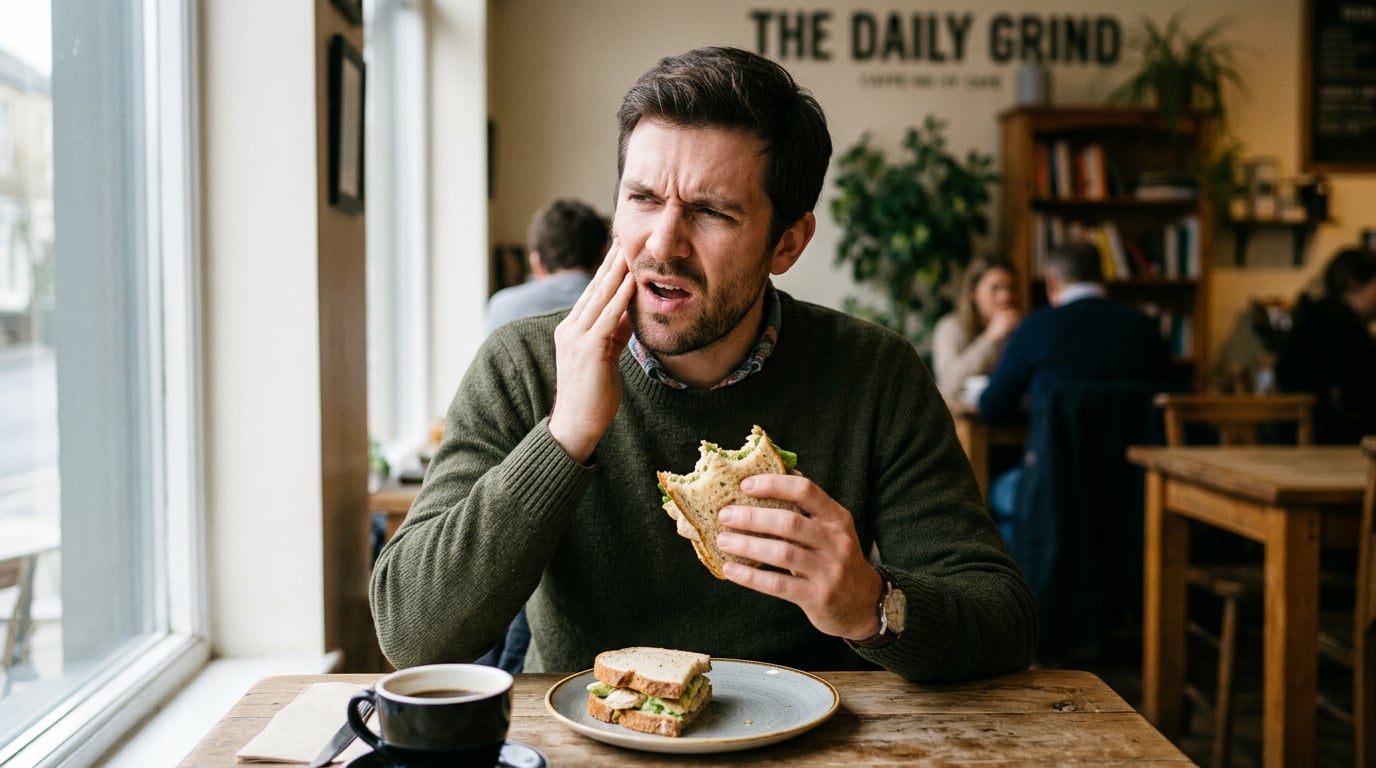
Few things are as distracting as a jaw that clicks every time you take a bite. Some people hear it, some feel it, and some notice that others at the dinner table can hear it too. The natural next question is whether something is wrong.
What I tell my patients is reassuring: a jaw that clicks without pain is very common and often needs no treatment at all. What matters is not the noise, but whether it comes with pain, locking, trouble opening or a change in your bite. In this post I will explain what is happening inside the joint and when it is worth getting checked.
The short version
- Jaw popping usually comes from the small cushioning disc in the jaw joint slipping slightly out of place and snapping back as you open.
- Painless clicking is very common and, for most people, a lifelong, harmless “noisy annoyance.”
- Pain, locking, limited opening or a bite that suddenly feels different are the signs worth having checked.
- Most jaw problems improve with simple, conservative care, such as habit changes, a night guard or a splint.
Why does my jaw pop or click?
Most jaw popping comes from the temporomandibular joint (TMJ), the hinge just in front of each ear. A small disc of cartilage cushions the joint. If that disc sits slightly forward, it can slip out of place when your mouth is closed and snap back into position as you open, making a pop or click. Clenching, grinding, gum chewing and old injuries can all play a role.
What’s happening inside the joint
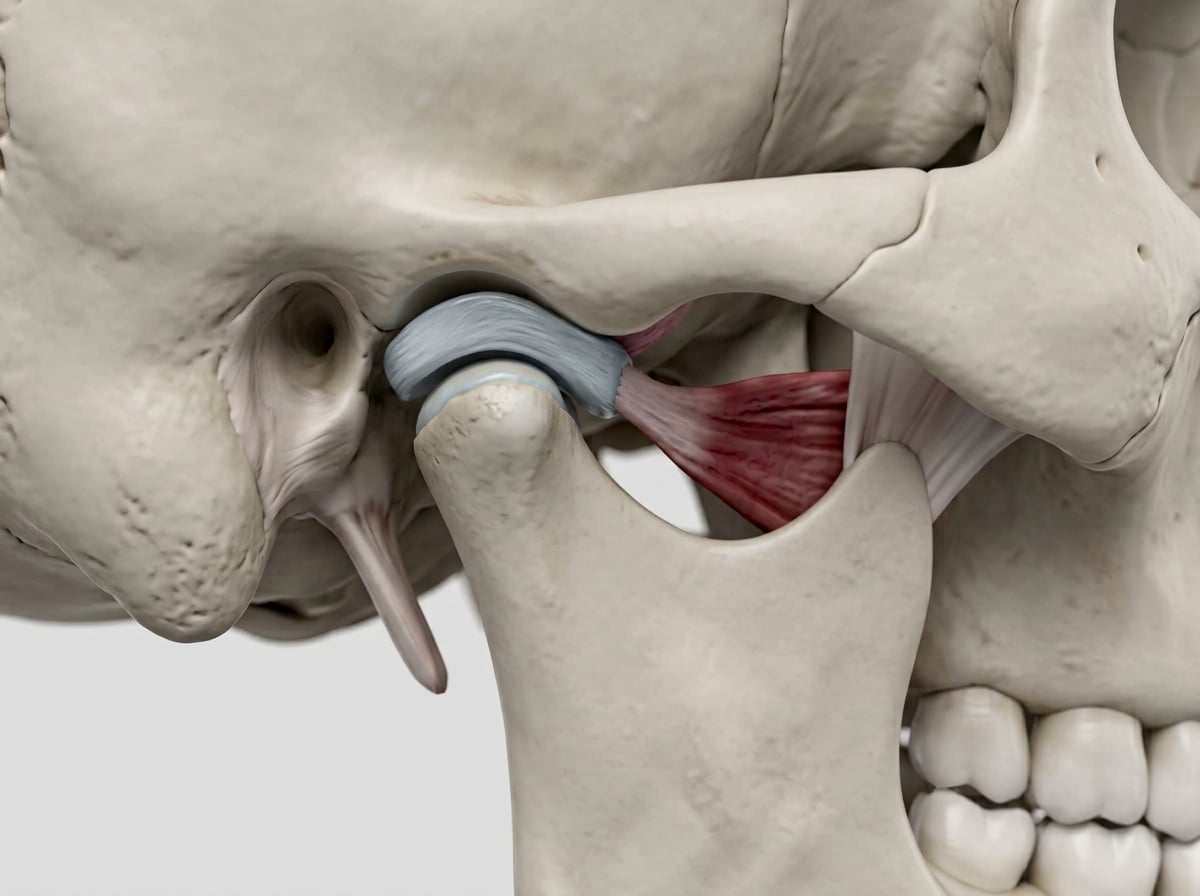
Each jaw joint is where the rounded end of your lower jaw, called the condyle, meets the skull. Between them sits a small, flexible disc that works like a shock absorber and helps the joint glide smoothly.
In the most common cause of clicking, called disc displacement with reduction, that disc sits a little too far forward when your mouth is closed. As you open, the condyle slides forward, catches up with the disc and pops back under it. That is the click. When you close, the disc may slip forward again, sometimes with a second, softer click.
This is extremely common. Disc displacement with reduction is one of the most common problems inside the jaw joint, and a large systematic review found that disc displacement affects an estimated 18% to 35% of the general population.
Other, less common sources of jaw noise include a rough or worn joint surface, which tends to cause a grating or grinding sound rather than a clean click, and the joint gliding slightly too far forward when you open very wide.
Common triggers: clenching, grinding, chewing gum, posture, injury
Researchers are still sorting out exactly why the disc shifts, but these factors are commonly involved:

- Clenching and grinding, especially at night, which load the joints for hours
- Frequent gum chewing or chewing on pens, ice or nails
- Opening very wide, such as big yawns or large sandwiches
- Jaw or face injury, including old ones from sports or accidents
- Head and neck posture, such as long hours hunched over a phone or desk
- Stress, which often shows up as daytime clenching you may not notice
If you clench or grind, my post on night guards for teeth grinding explains how to protect your teeth and joints.
Is jaw popping harmless?
For most people, yes. The same systematic review concluded that disc displacement with reduction is mostly a stable, pain-free condition that can last a lifetime, and described it as a “noisy annoyance” for most patients. Only a small minority of people lose the disc’s ability to pop back into place, and even then, symptoms often improve over months.
The authors also concluded that, because the natural course is usually favorable, active treatment is mainly warranted when there are symptoms. In other words, a painless click on its own usually does not need fixing. What changes the picture is pain, locking or trouble using your jaw.
Signs it’s a TMJ disorder worth treating
Temporomandibular disorders (TMD) are a group of conditions that cause pain and problems in the jaw joint and the muscles that move it. According to the National Institute of Dental and Craniofacial Research, common symptoms include jaw pain, pain that spreads to the face or neck, jaw stiffness, limited movement or locking, painful clicking or popping, and a change in how the upper and lower teeth fit together.
Here is how I think about clicking in the chair:
What helps: from self-care to treatment
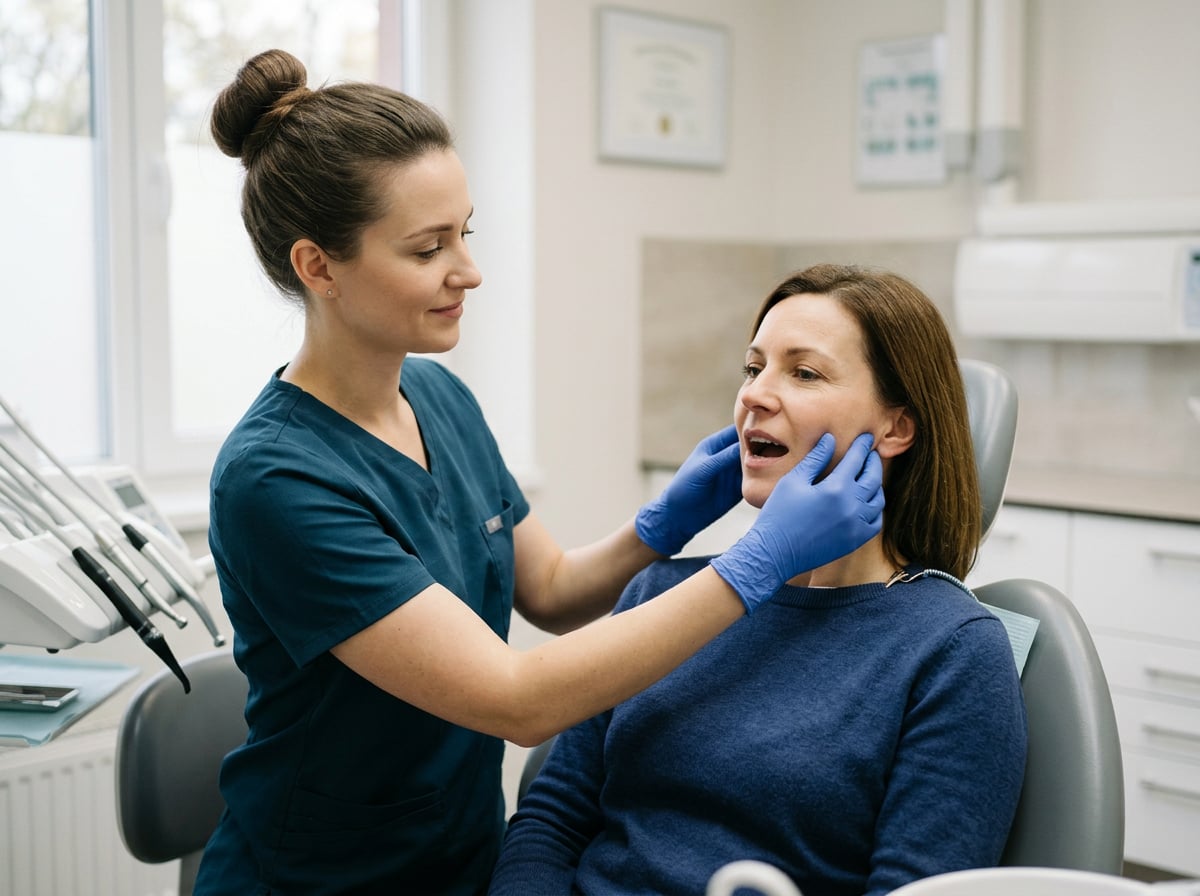
The NIDCR recommends starting with conservative, reversible treatments, because many TMD problems improve on their own or with simple care. Here is the usual order I work through with patients:
1. Self-care and habit changes
- Choose softer foods for a while, and cut food into smaller bites
- Avoid gum, chewing on pens or ice, and very wide yawns
- Notice daytime clenching and practice “lips together, teeth apart”
- Apply warmth to tight jaw muscles, and use an over-the-counter pain reliever as the label directs if you need one
- Gentle jaw stretches, if they feel comfortable
2. A night guard or splint
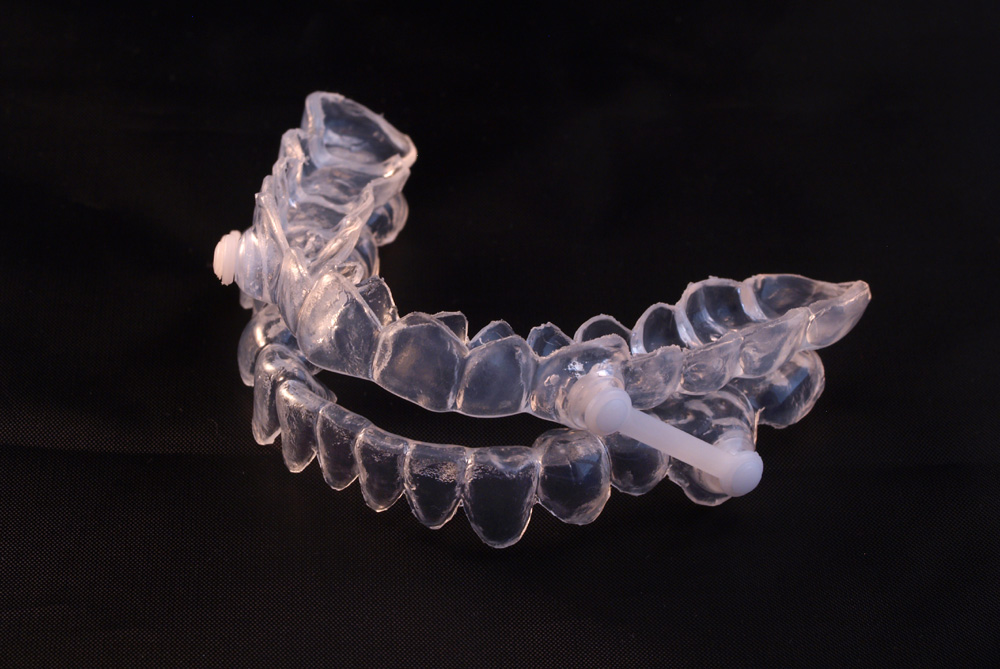
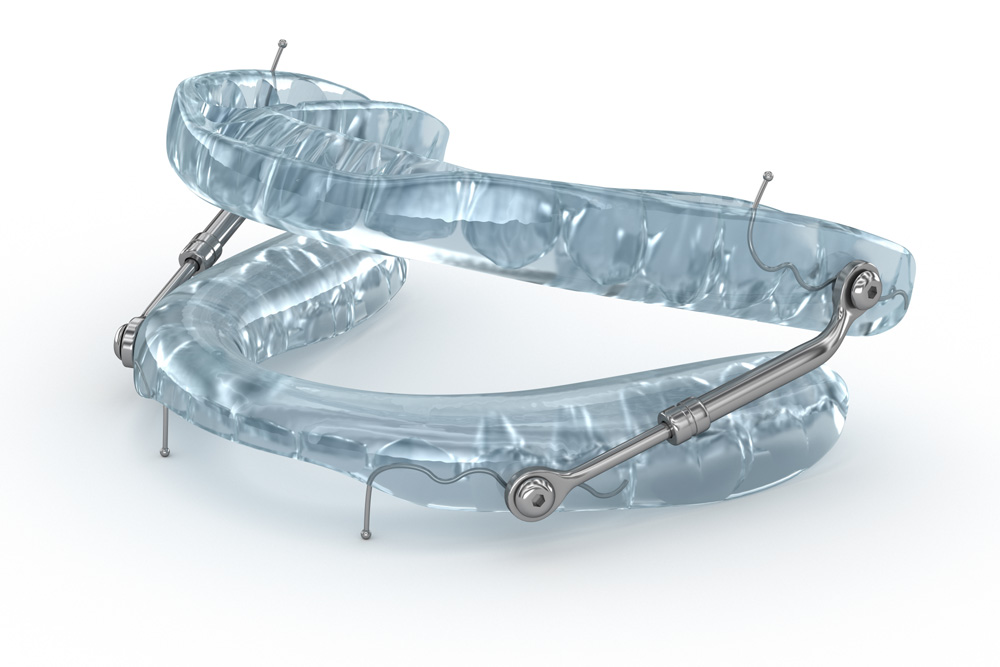
A custom night guard protects the teeth and can ease the load on the joints from nighttime clenching. A TMJ splint is designed more specifically to support the jaw position and reduce strain. My post on how TMJ splints work explains the difference.
3. Botox for overactive jaw muscles
For some people with heavy clenching and muscle pain, Botox can relax the jaw muscles. It is an off-label use, works best as part of a broader plan and does not “fix” a displaced disc. Learn more on our Botox page and in my post on masseter Botox.
4. Bite adjustments and other treatments
Permanent changes, such as reshaping teeth to change the bite, are generally not a first step. The NIDCR advises caution with irreversible treatments, and surgery is reserved for a small number of specific cases. Our TMD treatment page covers the options we offer.
If your jaw is flaring up right now, my post on TMJ flare-up relief has practical steps for the next few days.
When to see a dentist
Get seen promptly if your jaw gets stuck open or closed, or you cannot open your mouth enough to eat. If your jaw is locked after an injury, or you have swelling, fever or trouble breathing, seek urgent care.
Frequently asked questions
Is jaw clicking normal?
Painless jaw clicking is very common. It usually comes from the small disc in the jaw joint slipping slightly forward and popping back into place as you open. For most people it is a stable, lifelong noise that never causes problems. It is worth getting checked if it comes with pain, locking or trouble opening.
Why does my jaw click on one side?
It is common for only one joint to click, because the disc position and the load on each joint can differ. Chewing mostly on one side, sleeping on one side, an old injury or clenching more on one side can all play a role. One-sided clicking without pain usually is not a concern.
Can jaw popping go away on its own?
Sometimes. Jaw popping can come and go, and it may quiet down when you reduce clenching, gum chewing or wide opening. In many people, though, a painless click simply stays for years without causing problems. If clicking suddenly stops and you cannot open as wide, see a dentist, because that can mean the disc is no longer popping back.
Should I worry if my jaw pops when I chew?
Usually not, if it does not hurt. Popping when chewing is often the disc moving in and out of place. Take a closer look if it comes with pain, tired jaw muscles, headaches, locking or a change in your bite. Softer foods and smaller bites can make chewing more comfortable while you find out what is causing it.
Can a night guard stop jaw clicking?
A night guard or splint does not always stop the click, but it can reduce the strain from nighttime clenching and grinding, which often eases jaw pain and muscle tension. It also protects your teeth. Whether a night guard or a more specific TMJ splint is right depends on your exam.
Is jaw popping a sign of TMJ?
Jaw popping comes from the TMJ, the jaw joint, but popping alone does not mean you have a TMJ disorder. A TMJ disorder usually involves pain, stiffness, locking, limited opening or a change in your bite. If your jaw only clicks and nothing else is wrong, treatment is often not needed.
Get your jaw checked
Whether your jaw is just noisy or starting to hurt, a quick exam can tell you which it is and what, if anything, needs to be done. If you are in or around Washington, PA, you can request an appointment at Enhanced Wellness or call us at (724) 225-5070. Every jaw is different, and we always start with the most conservative option that fits.
Sources
- National Institute of Dental and Craniofacial Research. TMD (temporomandibular disorders).
- Temporomandibular joint disc displacement with reduction: a review of mechanisms and clinical presentation. J Appl Oral Sci. 2019.
- Naeije M, et al. Disc displacement within the human temporomandibular joint: a systematic review of a “noisy annoyance”. J Oral Rehabil. 2013;40(2):139-158.
Jaw clicking, popping or aching?
A noisy jaw is often harmless, but pain, locking or a changing bite deserve a look. Dr. Liza checks your jaw joints, muscles, teeth and bite together, and always starts with the simplest, most conservative option that fits.

Dr. Elizabeth Wakim, DDS, is the founder of Enhanced Wellness. She’s a compassionate and highly-regarded dentist with her own practice in Washington, Pennsylvania, known for providing modern, comprehensive dental care, botox and facial aesthetics with a focus on patient comfort and anxiety reduction, serving general, cosmetic, and pediatric dentistry needs.