Why Your Dentist Asks About Your Medical History Every Single Visit

“I filled this out last time — has anything really changed?”
I understand why that form feels repetitive, especially if you’re coming in for something as routine as a cleaning. But the honest answer is that a lot can change in six months, and some of what changes matters far more to your dental treatment than most patients would assume. A new blood pressure medication, a new diagnosis, a supplement you started taking because a friend recommended it — any of these can genuinely affect how I treat you that day. Let me walk through the real reasons this question gets asked every single time, not as a formality, but because the answer occasionally changes what happens next in the chair.
Why “nothing’s changed” is exactly what we need to verify, not assume
Medical and dental care are more connected than most patients realize, and the connection runs in very concrete, practical directions — not just the abstract “oral health affects overall health” idea, but specific interactions that change what’s safe to do on a given day. A condition or medication that seemed irrelevant to your teeth can matter enormously once we’re about to numb a tooth, extract one, or clean below the gumline. The form isn’t there to double-check your memory. It’s there because the answer sometimes changes the plan.
Local anesthesia isn’t one-size-fits-all
Most dental anesthetic contains a small amount of epinephrine, which helps it work faster and last longer by narrowing blood vessels at the injection site. For most patients, this is a complete non-issue. But for patients with certain uncontrolled cardiovascular conditions, or those on specific medications, the amount and type of anesthetic needs to be adjusted, and in some cases an epinephrine-free option is used instead. This is exactly why a new blood pressure diagnosis or a new heart medication is relevant information, even for something as simple as numbing a tooth for a filling.

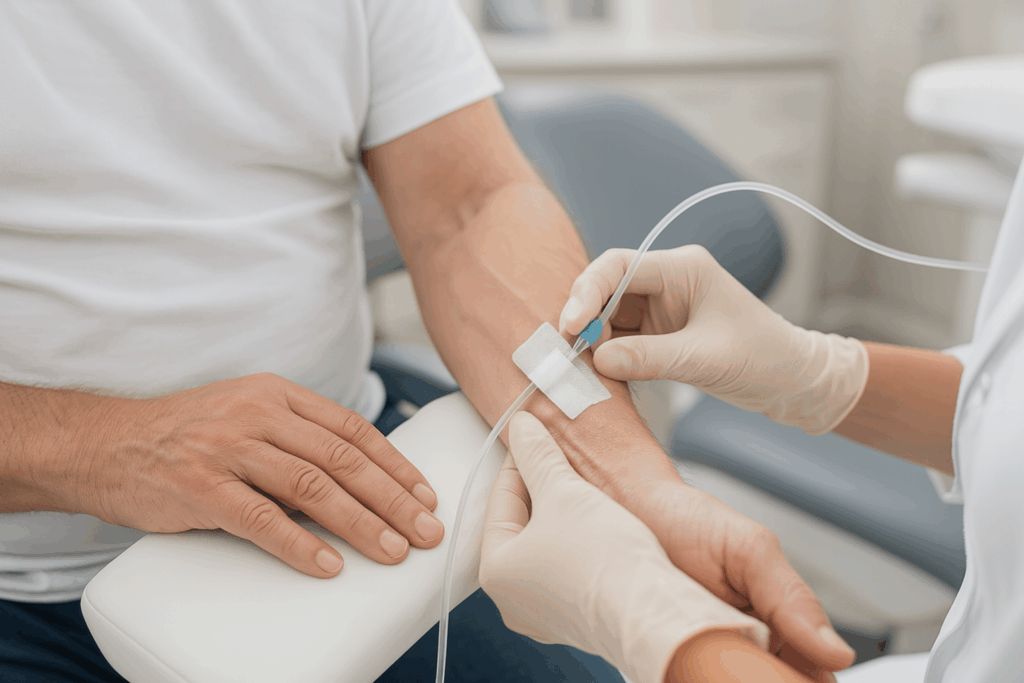
Certain medications can also interact directly with how well anesthesia works in the first place. Some anxiety and depression medications can make it more difficult to achieve full numbness with a standard dose, which is useful for your dentist to know before you’re in the chair rather than discovering it mid-procedure. Recreational stimulant use has a similar, more pronounced effect on how the body responds to local anesthesia, which is part of why that history matters even when it feels unrelated to a routine filling.
Blood thinners change how we manage bleeding
If you’re on a blood thinner — whether for atrial fibrillation, a history of blood clots, or after a cardiac procedure — that changes how we approach anything involving bleeding: extractions, deep cleanings below the gumline, gum surgery, or biopsies. In most cases, patients stay on their blood thinner rather than stopping it, since the risk of a clot or stroke from stopping usually outweighs the bleeding risk from the dental procedure, but the approach to controlling bleeding during and after treatment is adjusted specifically because we know going in. This is a coordinated decision, sometimes made together with your physician, not something we want to be improvising in the moment because we didn’t know.
Worth Knowing
Patients are sometimes tempted to stop a blood thinner on their own before a dental appointment, assuming it’s the safer choice. In most cases, this is actually backwards — the clotting risk from stopping the medication is usually higher than the bleeding risk from the procedure, and any decision to adjust a blood thinner before dental treatment should be made with your prescribing physician, not on your own.
Osteoporosis medications and a rare but serious risk
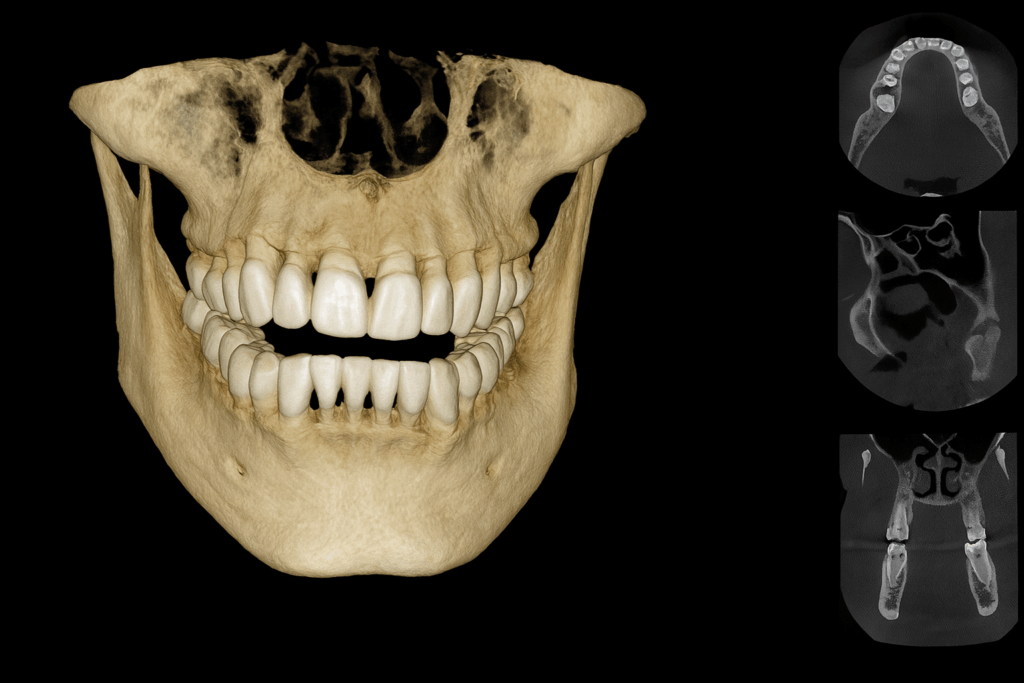
This is one of the more important, and more commonly misunderstood, examples of why medication history matters. Bisphosphonates and similar bone-strengthening medications, commonly prescribed for osteoporosis, carry a rare but serious risk called medication-related osteonecrosis of the jaw (MRONJ) — a condition where the jawbone fails to heal properly after a dental procedure, most often an extraction. According to the American Dental Association, patients at increased risk include those on higher doses or longer durations of these medications, and the risk is meaningfully higher in patients taking high-dose versions of these drugs for cancer treatment compared to the lower oral doses typically used for osteoporosis. Dental extractions and other invasive procedures that disturb the jawbone are the most consistently identified trigger.
This doesn’t mean patients on these medications can’t have needed dental work — the current guidance from oral and maxillofacial surgeons doesn’t recommend stopping the medication before a procedure, since it stays in bone tissue for years regardless. What it means is that knowing you’re on one of these medications changes how a procedure is planned and what precautions are taken — sometimes favoring a root canal over an extraction when either would otherwise be a reasonable option, for instance — and it’s exactly the kind of detail that’s easy to forget to mention if you’re not specifically asked every time, especially if you started the medication years ago and no longer think of it as something your dentist needs to know.
Did You Know
Research on patients taking high-dose antiresorptive medications for cancer treatment has found jaw osteonecrosis developing at cumulative rates of roughly 9% at one year and nearly 30% at three years following tooth extraction — a stark reminder of why extractions in these patients are planned with extra care. The risk with the lower oral doses used for osteoporosis is considerably smaller, but it’s not zero, which is exactly why this history needs to be current, not assumed.
Certain heart conditions require antibiotics before treatment
For a small, specific group of patients — those with a prosthetic heart valve, a history of infective endocarditis, or certain congenital heart conditions — some dental procedures require a dose of antibiotics beforehand to reduce the risk of bacteria from the mouth reaching the heart. The current guidance from the American Heart Association is narrower than it used to be, reserving this recommendation specifically for the highest-risk patients rather than a broad group, but for the patients who do qualify, this precaution genuinely matters and needs to happen before, not after, treatment begins. Specifically, prophylaxis is recommended for procedures that involve manipulating the gum tissue, the area around the root tip of a tooth, or perforating the lining of the mouth — which covers routine cleanings and fillings involving the gumline, not just surgery.
This is exactly the kind of detail that’s easy to lose track of over the years. A patient who had a heart valve replaced a decade ago may not think to mention it at a routine cleaning if it isn’t specifically asked about, simply because the connection to a teeth cleaning isn’t obvious. But a routine cleaning is precisely one of the procedures where this precaution applies, which is why the question gets asked rather than assumed based on what’s already in the chart from years ago.
Why honesty here matters more than comfort
I bring this up because I know some of what’s on that form feels uncomfortable to disclose — recreational drug use, a mental health diagnosis, a medication tied to a condition you’d rather not discuss. Your dental record is confidential in exactly the same way your medical record is, and the reason we ask isn’t curiosity — it’s that the information genuinely changes what’s safe. A patient who leaves something off the form because it feels embarrassing or irrelevant isn’t protecting their privacy in any way that matters; they’re just removing information that could have prevented a real complication. I’d always rather know and adjust the plan than find out the hard way mid-procedure.
How this fits into your broader dental care
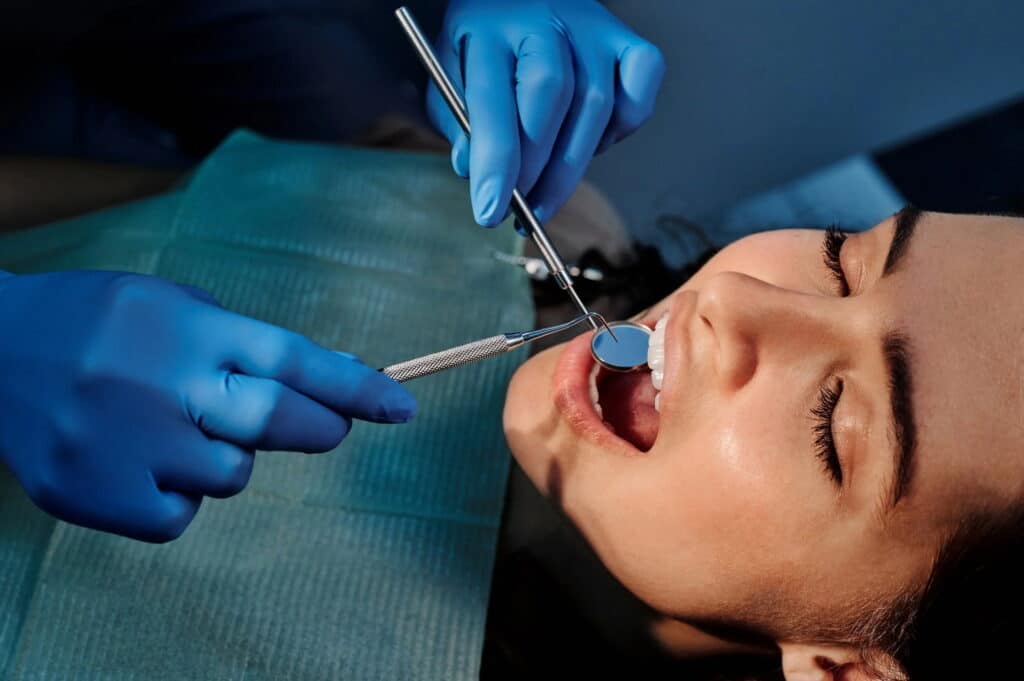
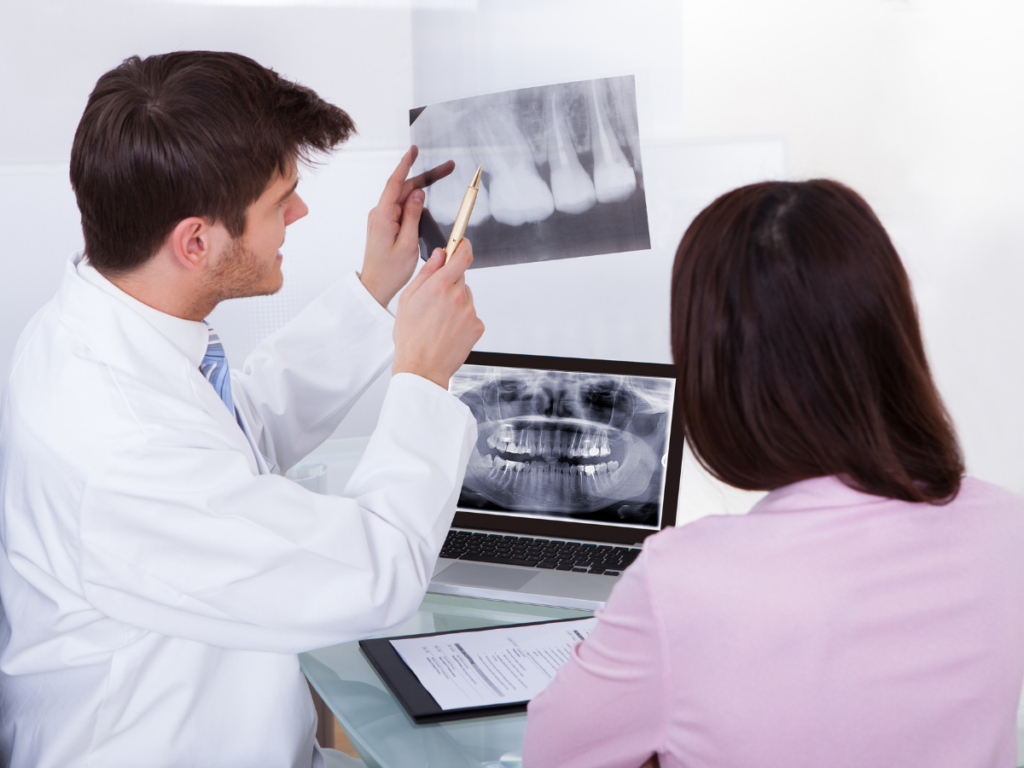
This is also part of why a comprehensive dental exam is more than a quick look in your mouth — it includes a real review of what’s changed since your last visit, not just a glance at your teeth. The medical history conversation and the clinical exam work together, because the same visit that catches early decay or gum disease is also the visit where we make sure the treatment plan actually fits the person sitting in the chair that day, not just the person we treated six months or a year ago.
Other conditions that quietly change the plan
Diabetes, particularly when blood sugar isn’t well controlled, affects healing time and infection risk after any invasive procedure, which can change both the timeline and the aftercare instructions for something like an extraction or gum surgery.
Pregnancy changes which imaging and medications are appropriate, and knowing the trimester specifically helps determine what can wait and what shouldn’t.
A weakened immune system, whether from a medical condition or its treatment, changes infection risk calculations for any procedure and sometimes calls for additional precautions or antibiotics that wouldn’t otherwise be necessary.
A new allergy, even one that seems unrelated to dentistry, is relevant if it involves a medication or material that might come up during treatment.
What’s worth mentioning even if we don’t ask directly
Herbal supplements and over-the-counter products. Patients often don’t think to mention these because they don’t feel like “real” medication, but several common supplements affect bleeding or interact with anesthesia in ways that are worth knowing about in advance.
Recent hospitalizations or new diagnoses, even ones that feel unrelated to your teeth, since they often come with new medications or precautions that matter.
Recreational drug use, which some patients understandably feel uncomfortable disclosing, but which can genuinely interact with local anesthetics and sedation in ways that affect your safety during treatment.
Any changes since your last update, even ones that feel minor — a new blood pressure prescription, a dosage change, starting or stopping a medication for any reason.
A quick checklist before your next visit

It’s worth actually thinking through these before you sit down, rather than trying to remember on the spot:
- Any new prescription medications, including dosage changes to existing ones
- Any new over-the-counter medications, vitamins, or herbal supplements you’ve started taking regularly
- Any new diagnoses, even ones that feel unrelated to your teeth
- Any hospitalizations, surgeries, or significant medical appointments since your last visit
- Any new allergies or reactions you’ve experienced, to anything
- Whether you’re pregnant or think you might be
Running through this list takes under a minute, and it’s genuinely more useful to your dentist than trying to recall it accurately in the moment when you’re asked.
Final Thought
That repetitive-feeling medical history form isn’t bureaucratic box-checking — it’s one of the more important safety steps in your visit, and it’s worth taking seriously even when it feels like nothing’s changed. A new medication, a new diagnosis, or a supplement you started on your own can genuinely affect what’s safe to do that day, from how we numb a tooth to whether antibiotics are needed beforehand to whether a routine extraction needs extra precautions. If you’re ever unsure whether something is worth mentioning, the safer assumption is that it probably is — it takes a few seconds to bring up, and it’s exactly the kind of detail that keeps routine dental care actually routine, rather than turning into a complication no one saw coming.
Washington, PA & Pittsburgh
New medication or health change since your last visit?
Dr. Wakim reviews your full medical history at every appointment to make sure your treatment plan is actually safe for where you are today.

Dr. Elizabeth Wakim, DDS, is the founder of Enhanced Wellness. She’s a compassionate and highly-regarded dentist with her own practice in Washington, Pennsylvania, known for providing modern, comprehensive dental care, botox and facial aesthetics with a focus on patient comfort and anxiety reduction, serving general, cosmetic, and pediatric dentistry needs.