Bone Grafting for Dental Implants: What It Actually Involves
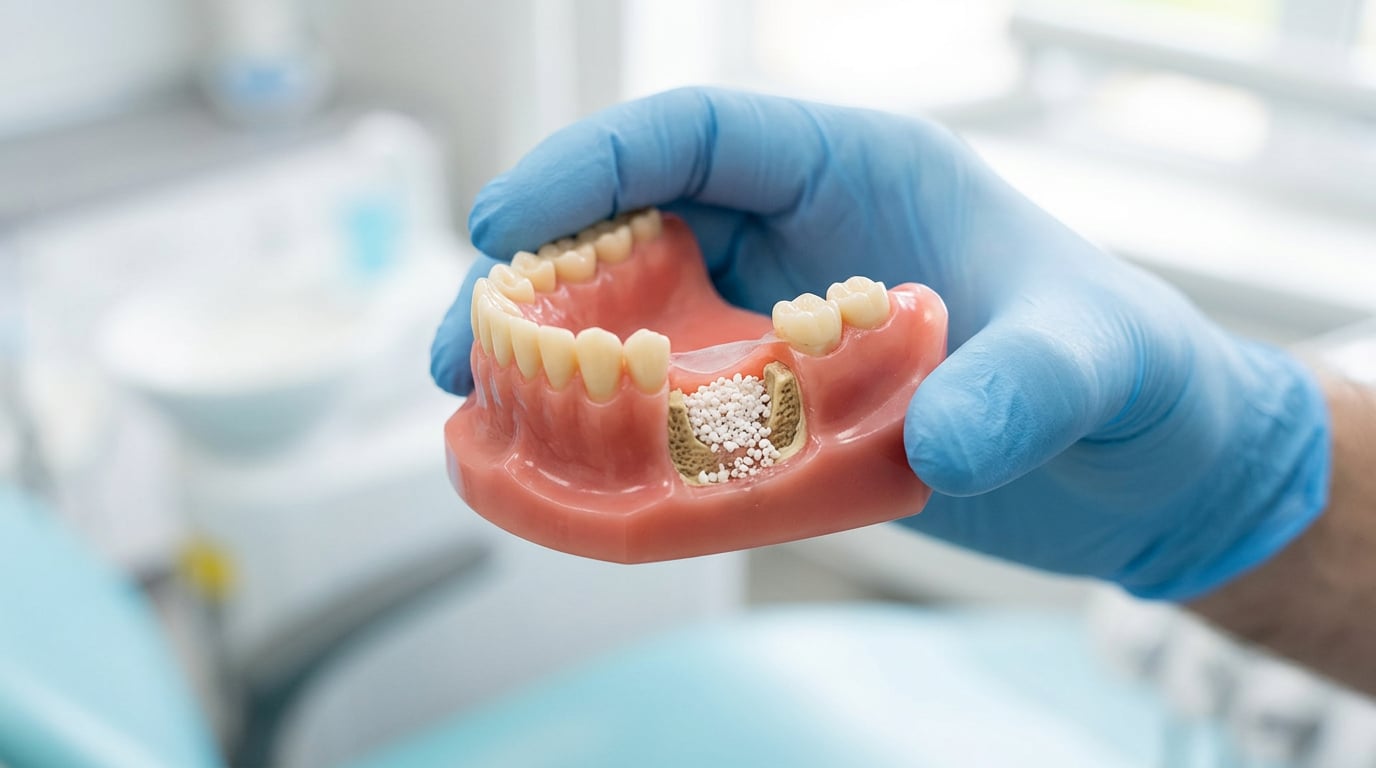
“Bone graft” tends to sound a lot more intimidating than the actual procedure usually is. I’ve watched plenty of patients brace themselves the moment that phrase comes up in a consultation, picturing something closer to orthopedic surgery than a routine step in getting a dental implant. The reality is more modest than most people expect, and understanding why it’s needed in the first place tends to take most of the anxiety out of it. Let me walk through what’s actually happening in your jaw, what the different graft materials actually are, and what the procedure and recovery genuinely involve.
Why bone grafting is needed at all
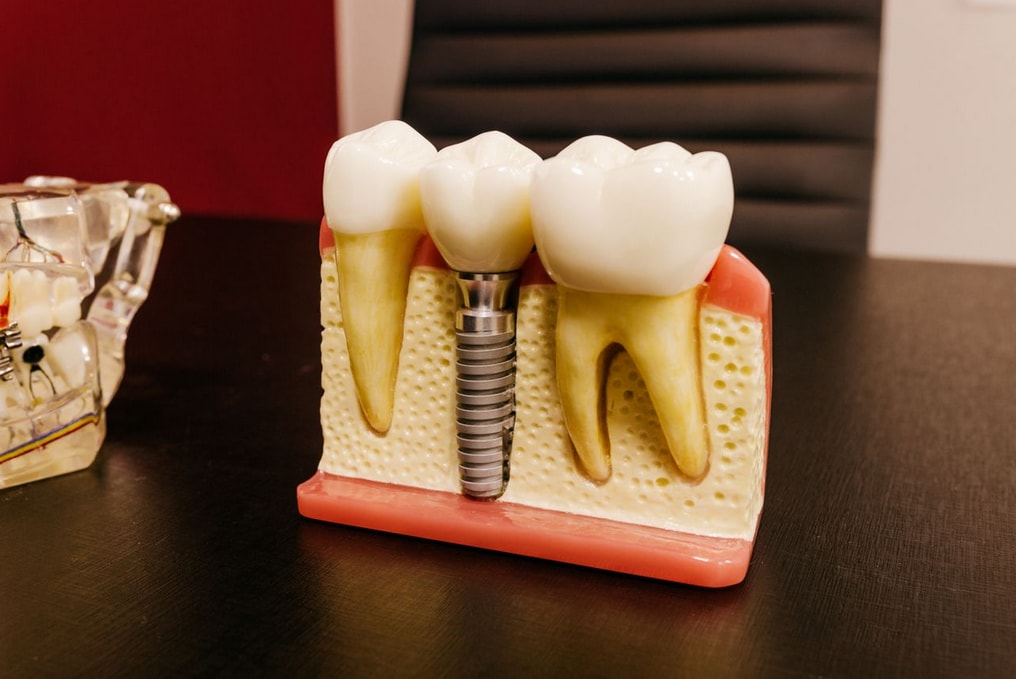
Your jawbone isn’t a static structure — it stays dense and full because the roots of your teeth constantly stimulate it through the forces of biting and chewing. Once a tooth is lost, that stimulation disappears, and the bone that used to surround the root begins to resorb, with the most significant loss typically happening within the first several months after the tooth is gone. Left alone for years, this process can leave a ridge too thin or too short to anchor an implant securely, which is exactly the gap bone grafting is designed to fill. This is also why waiting a long time after losing a tooth before pursuing an implant often means more bone has been lost than if the same decision had been made sooner — not a reason to rush a decision that isn’t ready, but useful context for why “I’ll deal with it eventually” sometimes means a more involved procedure later than it would have been at the time.
Tooth loss isn’t the only cause. Long-standing gum disease, an old infection, trauma, and even the pressure from a denture worn for years can all leave a jaw with less bone volume than an implant needs. None of this is a reflection of anything you did wrong — it’s simply what bone does in the absence of the structure it used to support.
The four types of graft material, and what they actually are
Autograft uses bone taken from another site in your own body, typically the chin, the back of the lower jaw, or occasionally the hip for larger reconstructions. Because it’s living tissue from your own body, it carries your own cells and natural growth signals, which is why it’s often referred to as the traditional benchmark. The trade-off is a second surgical site, meaning a bit more healing and discomfort than the other options.
Allograft is processed human bone from a screened, regulated tissue bank. All cellular material is removed during processing, leaving behind a mineral scaffold that your own bone gradually grows into and replaces. This avoids a second surgical site entirely, with a small, carefully managed risk profile due to the rigorous screening involved.
Xenograft uses processed bone from an animal source, most commonly bovine or porcine, treated to leave only the mineral scaffold behind. It integrates more slowly than autograft or allograft in most cases, but it’s widely used and well tolerated, particularly for smaller defects.
Alloplast is a lab-made synthetic bone substitute, often based on hydroxyapatite, a mineral naturally found in bone. It avoids any donor tissue entirely and is a common choice for smaller grafting needs.
In many cases, a graft actually combines more than one of these materials — using your own bone alongside a donor or synthetic material to balance healing speed, availability, and the size of the defect being treated. Your dentist’s recommendation typically weighs the size of the area needing bone, how quickly you’d like to move toward implant placement, and whether avoiding a second surgical site is a priority for you specifically, rather than defaulting to a single “best” material for every patient.
Did You Know
A retrospective study tracking 112 implants placed in previously grafted bone found a 95.5% implant survival rate, with bone graft success itself reaching 92.8%. Among the different graft materials studied, patients’ own bone (autograft) showed the strongest performance — but all the material types studied produced genuinely reliable outcomes.
When it’s specifically a sinus lift
For implants planned in the upper back jaw, the sinus cavities sit close to the roof of the mouth, and years of bone loss in this area can leave too little vertical bone between the mouth and the sinus for a standard implant. A sinus lift is a specific type of graft that gently raises the sinus membrane and packs grafting material into the space created underneath it, building enough bone height to support an implant that wouldn’t otherwise have anywhere secure to anchor. It sounds more dramatic than it typically is in practice — for most patients, it’s a well-established, predictable procedure with a strong track record, and it’s specifically because the upper back jaw is naturally one of the first areas to lose meaningful bone height after teeth are lost in that region, given its proximity to the sinus.
What the actual procedure and recovery involve
The procedure itself is done under local anesthesia, sometimes with sedation depending on the extent of grafting needed and your own comfort preferences. Grafting material is placed at the site needing more bone, and the area is closed to allow healing to begin. Depending on the size of the defect and the type of material used, healing typically takes around four to six months before there’s enough new, integrated bone to support an implant — though smaller grafts sometimes allow the implant to be placed at the same time as the graft itself, rather than as a separate, later procedure.
Recovery in the days immediately following grafting generally involves some swelling and mild discomfort, managed with standard pain medication, and a softer diet for a period while the area heals. Most patients are back to their normal routine within a few days, even though the deeper integration process continues quietly for months afterward.
Worth Knowing
Smoking and uncontrolled diabetes are two of the most consistently identified factors that reduce bone graft success, since both interfere with the blood flow and healing capacity the graft depends on. If either applies to you, addressing it — even temporarily around the time of surgery — meaningfully improves the odds of the graft integrating successfully.
Avoiding pressure on the grafted area — no chewing directly on that side, avoiding smoking, and following any specific hygiene instructions around the surgical site — matters more during this window than most patients expect, since the graft is at its most vulnerable before it’s fully integrated with your existing bone.
What can actually go wrong
Bone grafting has a strong track record, but it’s worth understanding the realistic risks rather than assuming it’s entirely without them. Graft failure — where the material doesn’t integrate as expected — is uncommon but does happen, more often in smokers, in patients with uncontrolled diabetes, or when post-operative instructions aren’t closely followed. Infection at the graft site is a less common but real risk, which is part of why antibiotics are frequently prescribed around the time of surgery. Some patients experience temporary numbness or altered sensation near the graft site, which typically resolves as swelling subsides. None of these are common outcomes for a well-planned graft in a healthy patient, but they’re worth knowing rather than being surprised by if something doesn’t go entirely to plan.
How the graft materials actually compare
The right choice for you depends on the size of the defect, your own preference around a second surgical site, and your dentist’s assessment of what will integrate most predictably for your specific situation.
Questions that come up often
“Will people be able to tell I had a bone graft?” No — once healed, a bone graft is invisible both to others and generally to you, aside from the improved foundation it provides for the implant that follows.
“Is a bone graft painful?” Most patients describe the discomfort as comparable to a tooth extraction, manageable with standard pain medication, and significantly improved within a few days.
“Can the graft fail?” It’s uncommon, but possible, particularly in smokers or patients with poorly controlled diabetes. This is exactly why addressing those factors before surgery, where possible, meaningfully improves the odds.
“Do I need a bone graft for every implant?” No. Many patients have entirely adequate bone and never need one. Grafting is specific to cases where imaging shows insufficient volume or density at the planned implant site.
“How do I know which material is right for me?” This depends on the size and location of the defect, and your own preference around avoiding a second surgical site. It’s a conversation worth having directly with your dentist based on your specific imaging, not a generic answer that applies to everyone.
Do you actually need a graft?
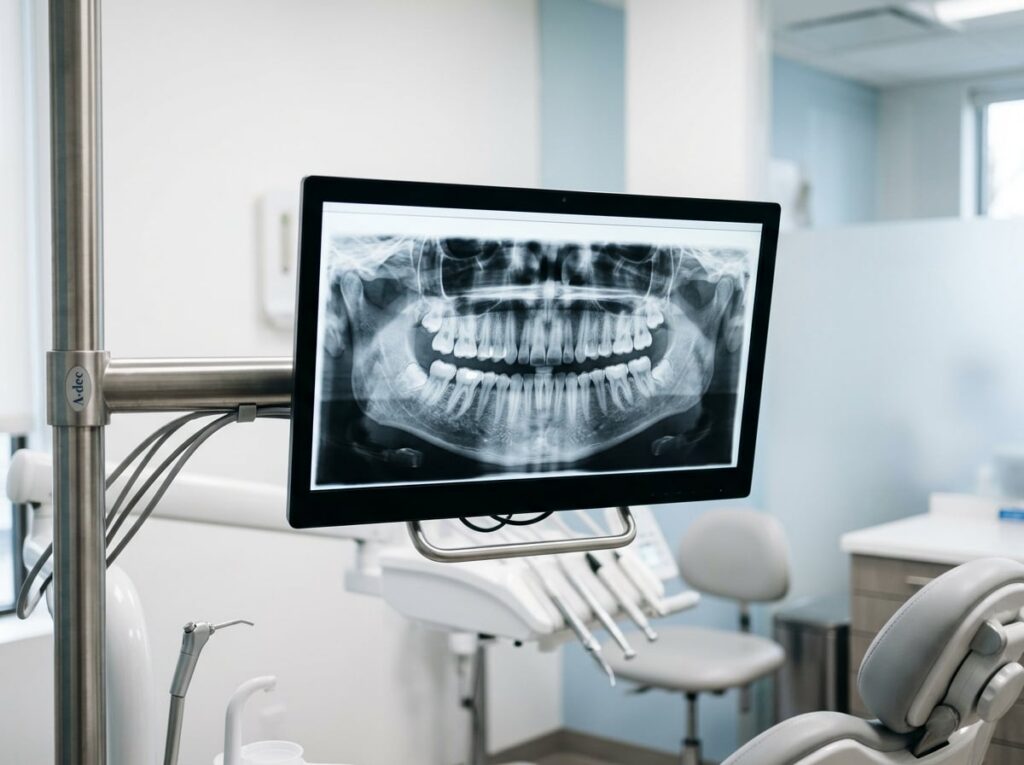
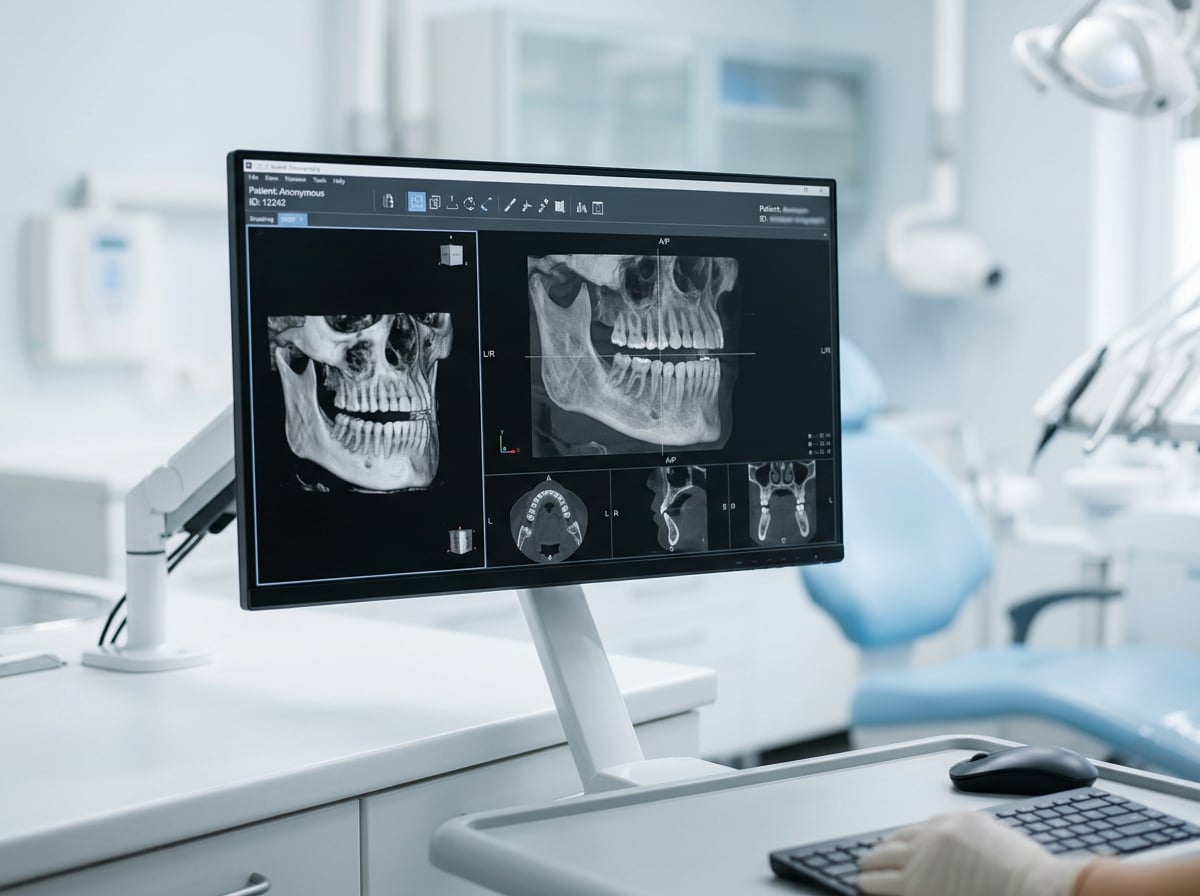
Not always, even in cases where a patient assumes they will. Some implant approaches, particularly angled placement techniques used in full-arch restorations, are specifically designed to make use of the denser bone that’s often still present even in a jaw that’s lost significant volume elsewhere, sometimes avoiding the need for a graft entirely. This is exactly why a real evaluation with proper 3D imaging matters more than an old assumption about your bone — the only way to know whether grafting is genuinely necessary for your case is a current, thorough look at your actual anatomy, not a general rule applied to everyone the same way.
What to ask at your consultation
“Which type of graft material do you recommend for my case, and why?” A good answer should reference the size of your specific defect and your own preferences, not a single default material used for everyone.
“Will the implant be placed at the same time as the graft, or afterward?” This affects your overall timeline meaningfully, and it’s worth understanding upfront rather than assuming.
“What can I do to improve the odds of successful healing?” Beyond quitting smoking or managing blood sugar if either applies, there are often specific, practical steps for your situation worth knowing in advance.
Final Thought
Bone grafting sounds far more intimidating than it typically is in practice — it’s a well-established, predictable step that rebuilds what tooth loss quietly took away, using material and techniques with a strong, well-documented track record. If you’ve been told in the past that you don’t have enough bone for an implant, that’s worth revisiting with current imaging rather than treating as a permanent verdict, since grafting — or in some cases, an implant approach that doesn’t require it at all — may be exactly the option that changes the answer. The procedure itself is far more routine than the phrase “bone graft” tends to suggest, and for most patients, it’s simply one predictable step on the way to a result that’s worth it.
Washington, PA & Pittsburgh
Wondering if you need a bone graft for an implant?
Dr. Wakim can evaluate your actual bone structure with 3D imaging and walk you through exactly what your case would involve.

Dr. Elizabeth Wakim, DDS, is the founder of Enhanced Wellness. She’s a compassionate and highly-regarded dentist with her own practice in Washington, Pennsylvania, known for providing modern, comprehensive dental care, botox and facial aesthetics with a focus on patient comfort and anxiety reduction, serving general, cosmetic, and pediatric dentistry needs.