Dental Implant vs. Bridge: How I Help Patients Choose Between Them
Implant or bridge? Dr. Liza Wakim walks through how she helps patients choose — based on bone health, adjacent teeth, timeline, and long-term goals.
Losing a tooth — or being told one needs to come out — is the kind of news that stops people in their tracks. What comes next, understandably, is a lot of questions. And one of the first ones I hear in almost every conversation after an extraction or tooth loss is this: Do I need an implant, or can I get a bridge?
Both are legitimate, time-tested solutions for replacing a missing tooth. Both restore function and appearance. And both have been around long enough that there’s good clinical evidence behind them. The question isn’t which one is better in the abstract — it’s which one is better for you, specifically, given the condition of your surrounding teeth, your bone structure, your timeline, and your goals.
Here’s how I walk patients through that decision.
What each option actually is
Before comparing them, it helps to be clear on what you’re comparing.
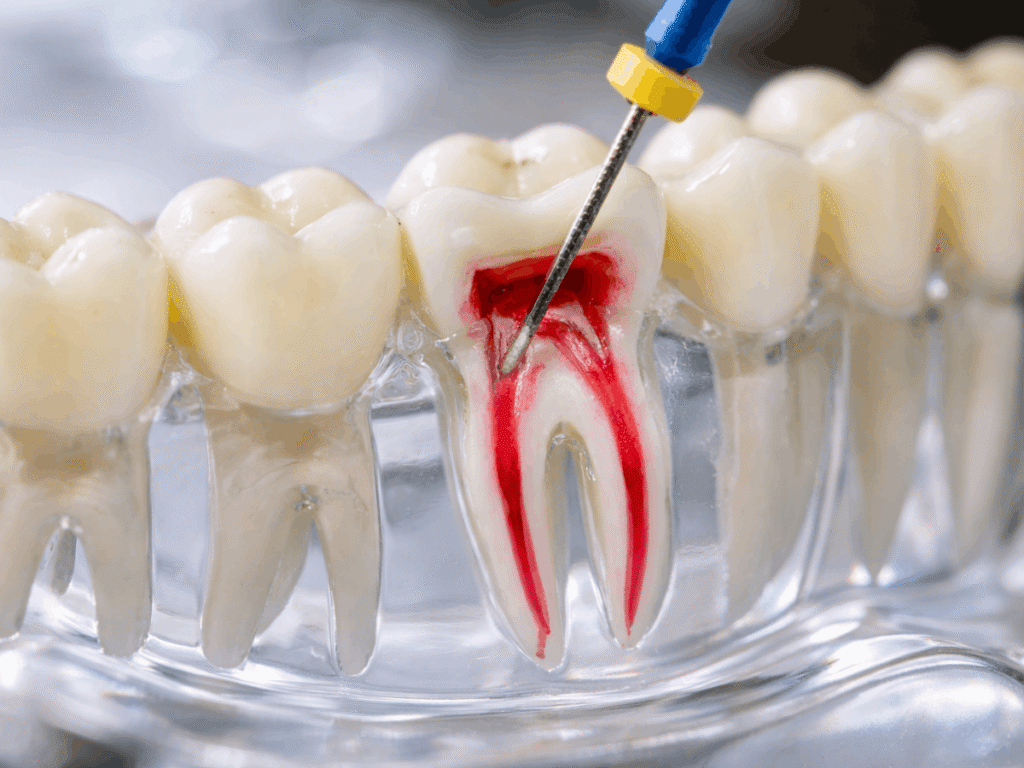
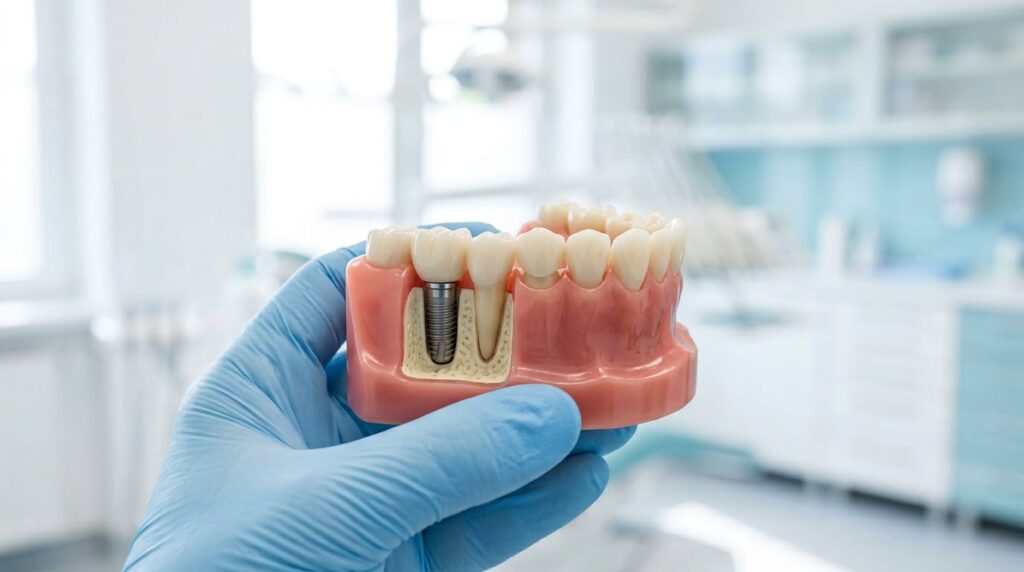
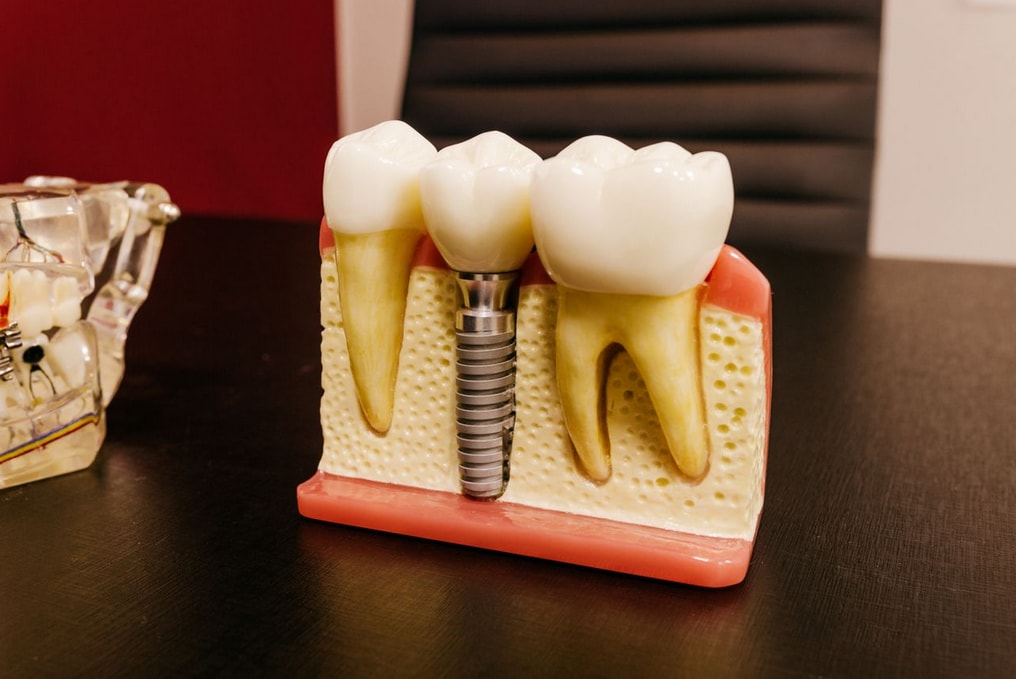
A dental implant is a titanium post that’s surgically placed into the jawbone where the tooth root once was. Once the post integrates with the bone — a process called osseointegration that typically takes three to six months — a custom crown is attached on top. The result is a standalone replacement tooth that doesn’t involve the adjacent teeth at all.
A dental bridge is a fixed prosthetic that spans the gap left by a missing tooth by anchoring to the teeth on either side of the space. Those neighboring teeth — called abutment teeth — are prepared by removing a layer of enamel so the bridge can be cemented over them. The bridge itself consists of two crowns on the abutment teeth with an artificial tooth (called a pontic) suspended between them, literally bridging the gap.
Both look like natural teeth when well-made. Both are fixed — meaning they stay in your mouth, unlike a removable partial denture. The differences are in the structure, the process, what happens to the surrounding teeth, and what the long-term picture looks like.
The case for a dental implant
In most cases where a patient is a good candidate, I lean toward recommending an implant. Not because it’s more expensive or more technically involved — but because it’s the replacement option that most closely replicates what was there before.
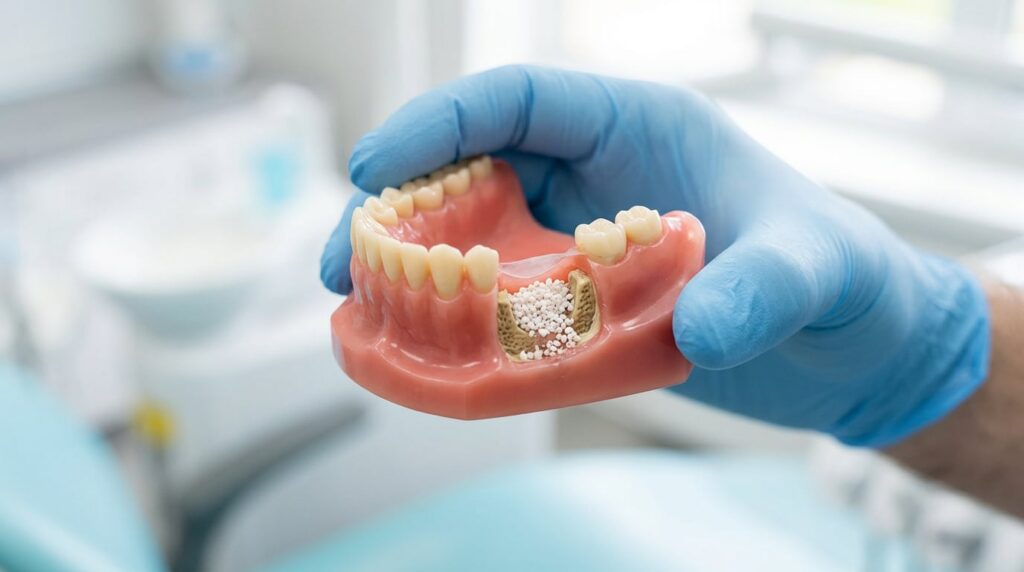
It preserves the jawbone. This is the factor patients most often don’t know about going in. When a tooth root is lost, the jawbone beneath it gradually resorbs — it shrinks, because it’s no longer receiving the stimulation from biting and chewing that keeps it dense. A bridge sits on top of the gumline and does nothing to address this. An implant post, embedded in the bone, provides that stimulation and halts or significantly slows bone loss. Over many years, this makes a meaningful difference in facial structure and the stability of surrounding teeth.
It doesn’t affect adjacent teeth. A bridge requires permanently altering the two healthy teeth on either side of the gap — removing enamel, placing crowns — to create the anchoring structure. If those teeth are healthy and intact, this is a real tradeoff. An implant stands alone. The neighboring teeth are untouched.
It lasts longer. A well-placed, well-maintained implant can last decades — many last a lifetime with only the crown requiring eventual replacement. Bridges, by contrast, typically need replacement after 10 to 15 years, and when they fail, they can take the abutment teeth with them.
The case for an implant is strongest when the neighboring teeth are healthy (no reason to crown them), when there is sufficient bone volume to support the post, and when the patient is medically cleared for a surgical procedure and willing to work within the longer timeline.
The case for a dental bridge
Bridges have been the standard of care for replacing missing teeth for decades — and they remain a genuinely good solution in the right circumstances.
The timeline is faster. A bridge can typically be completed in two to three appointments over a few weeks. An implant requires the surgical placement, a healing period of several months while the post integrates with the bone, and then the crown placement. For patients who need a solution quickly — or who aren’t comfortable with a multi-month process — a bridge delivers results on a shorter timeline.
There’s no surgery involved. Implant placement is minor oral surgery, performed under local anesthesia, but it’s still surgery. Patients who have medical conditions that make surgery more complicated — certain blood thinners, uncontrolled diabetes, some autoimmune conditions — may not be ideal implant candidates, or may require additional medical clearance. A bridge avoids the surgical component entirely.
Bone volume isn’t a factor. Implants require adequate bone density and volume to anchor the post securely. Patients who have experienced significant bone loss in the area — which can happen when a tooth has been missing for some time, or after certain types of extractions — may not have enough bone for an implant without a bone graft procedure first. A bridge doesn’t depend on bone volume.
The adjacent teeth may already need crowns. If the teeth on either side of the gap are already significantly restored — large fillings, existing crowns, significant decay or damage — the calculus changes. Crowning them as part of a bridge doesn’t represent a loss of healthy tooth structure if that structure is already compromised. In those cases, a bridge may be the more pragmatic solution.
The factors I look at before making a recommendation
When a patient comes in facing this decision, the recommendation I make depends on a specific set of clinical factors — not a default.
Bone volume and density. I assess whether there’s sufficient bone to support an implant. If not, I discuss whether a bone graft is appropriate and realistic given the patient’s situation.
The health of the adjacent teeth. Healthy, unrestored neighbors argue strongly for an implant. Compromised neighbors shift the calculation.
Medical history. Certain conditions affect implant candidacy — active smoking significantly impacts healing, as do uncontrolled systemic diseases. I ask about these before recommending a surgical procedure.
Timeline and patient preference. Some patients genuinely cannot wait six months for a result. Others prefer to avoid surgery. These are legitimate preferences that factor into a treatment recommendation — I’m not here to override what a patient values.
Cost and coverage. Implants typically cost more upfront than bridges. Dental insurance coverage for implants has improved but is still inconsistent. For some patients, the financial picture is a meaningful part of the decision, and I’d rather have that conversation honestly than pretend cost doesn’t matter.
What I tell most patients
If you are a good candidate for an implant — medically, anatomically, and in terms of timeline — it is usually the better long-term investment. Not just because it lasts longer, but because it protects the bone, leaves the neighboring teeth untouched, and solves the problem most completely.
But a bridge placed well, in the right clinical situation, is a very good restoration. It has served patients for generations. If your situation calls for it — or if you choose it with full understanding of the tradeoffs — that’s a perfectly legitimate path.
What I want every patient leaving this conversation to have is exactly that: full understanding. A replacement tooth is something you’ll live with for years. The time spent choosing the right one is time well spent.
A quick comparison
| Dental implant | Dental bridge | |
|---|---|---|
| Structure | Titanium post in jawbone topped with a custom crown | Crowns on adjacent teeth with artificial tooth suspended between |
| Adjacent teeth | Untouched — implant stands alone Advantage |
Require enamel removal and permanent crowning |
| Bone preservation | Stimulates jawbone, prevents resorption Advantage |
Does not address bone loss beneath the gap |
| Timeline | 3–6 months for osseointegration, then crown placement | 2–3 appointments over a few weeks Advantage |
| Surgery required | Yes — minor oral surgery under local anesthesia | No Advantage |
| Lifespan | Decades — often a lifetime with crown replacement Advantage |
10–15 years before replacement typically needed |
| Bone requirement | Sufficient density and volume required | Not a factor Advantage |
| Cost | Higher upfront investment | Lower upfront cost Advantage |
Ready to talk through your options?
If you’ve recently lost a tooth or are anticipating an extraction, I’m happy to sit down with you, look at the full picture, and give you a clear recommendation — not the most expensive option, but the right one for your specific situation. Serving Washington, PA and the greater Pittsburgh area.
Washington, PA & Pittsburgh
Not sure whether an implant or bridge is right for you?
Dr. Liza will assess your bone health, your surrounding teeth, and your goals — and give you a straight recommendation based on what will actually serve you best long-term.

Dr. Elizabeth Wakim, DDS, is the founder of Enhanced Wellness. She’s a compassionate and highly-regarded dentist with her own practice in Washington, Pennsylvania, known for providing modern, comprehensive dental care, botox and facial aesthetics with a focus on patient comfort and anxiety reduction, serving general, cosmetic, and pediatric dentistry needs.