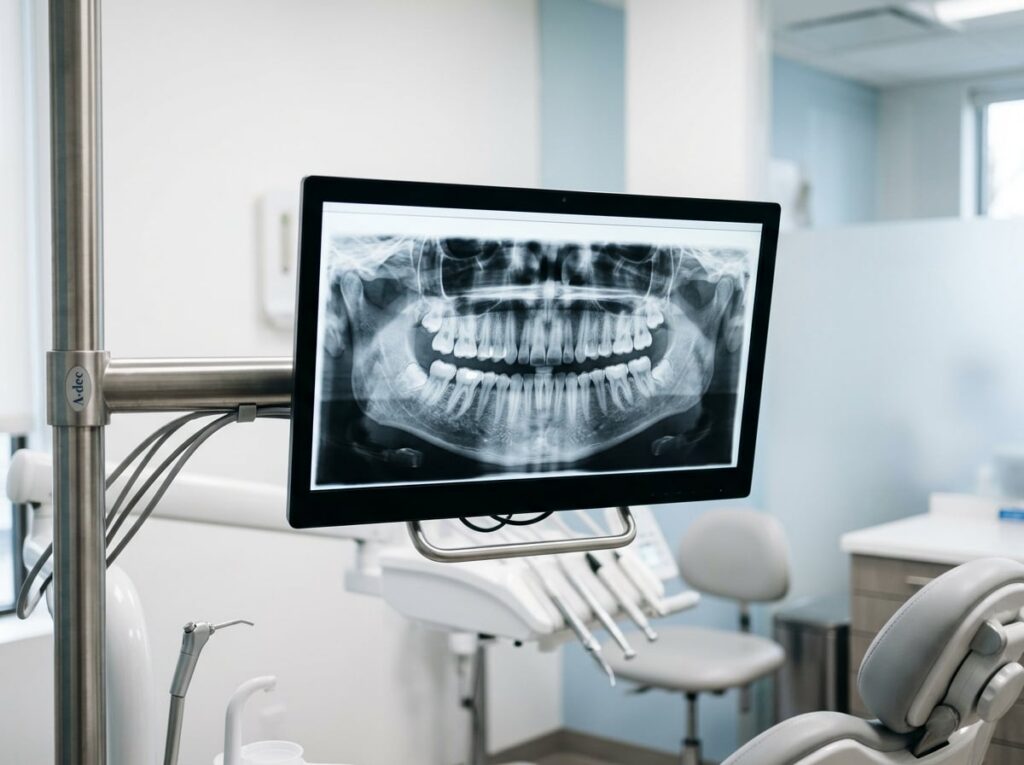
Single-Tooth Implant vs. Bridge: How to Actually Decide
Losing a single tooth puts most patients in front of the same decision: implant or bridge. Both genuinely work. Both have real research behind them. And the honest answer to “which one is better” is that it depends on specifics about your mouth and your priorities more than either option being universally correct. I’d rather walk you through the actual trade-offs than hand you a one-line recommendation, because the right answer genuinely differs from patient to patient, sometimes for reasons that have nothing to do with which option sounds more advanced or modern. Let me walk through what each actually involves, where the real trade-offs are, and how to think through which one actually fits your situation.
What each option actually involves
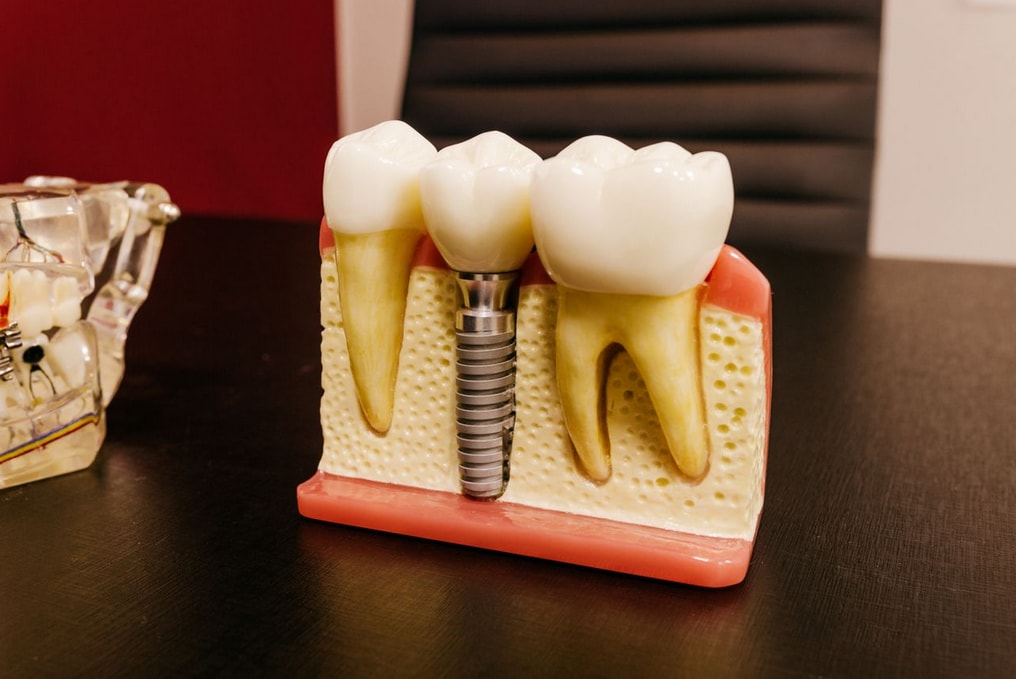
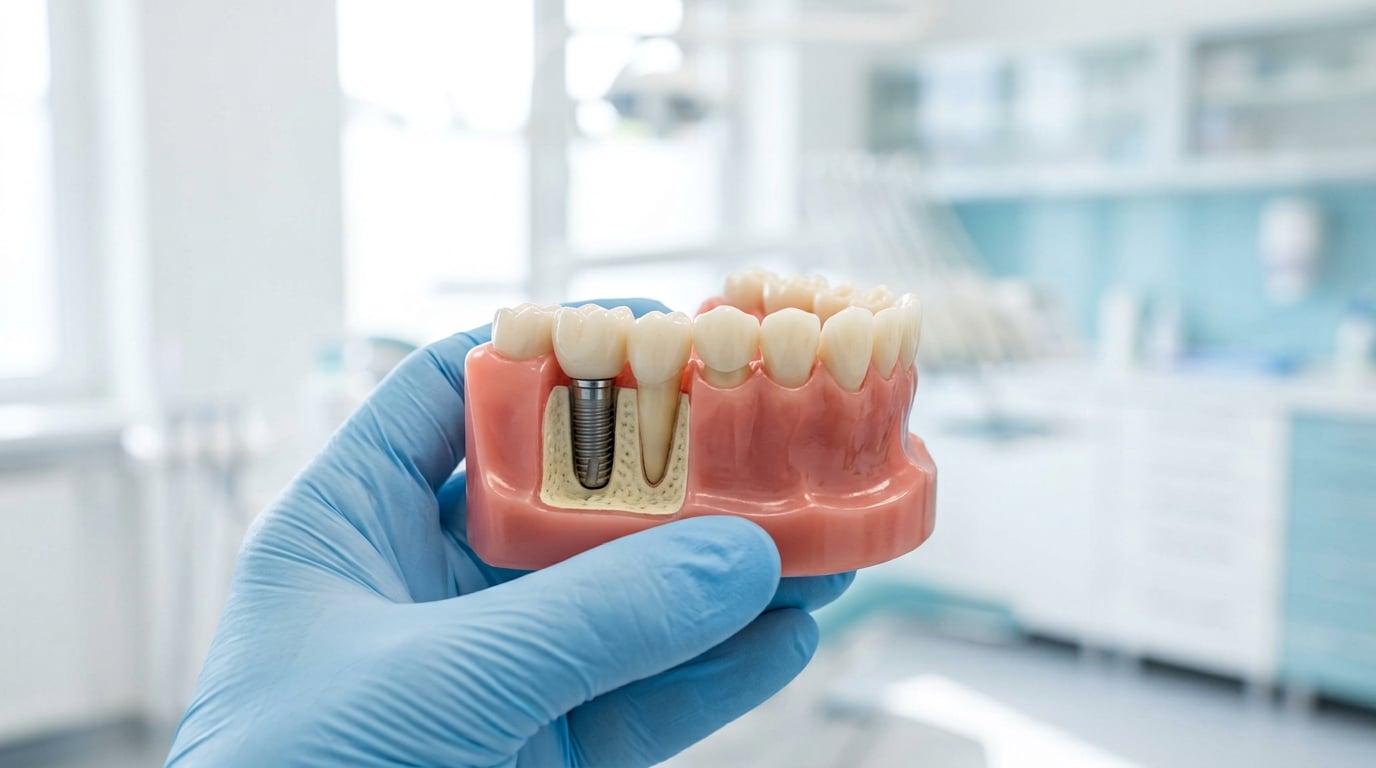
A single-tooth implant replaces the entire tooth, root included. A titanium post is placed directly into the jawbone where the tooth used to be, and over several months it fuses with the surrounding bone through a process called osseointegration. Once integrated, a crown is attached on top, functioning independently of the teeth on either side. The full process typically spans a few months from placement to final crown, though a temporary tooth is often in place throughout that window so you’re not without a visible tooth in the meantime.

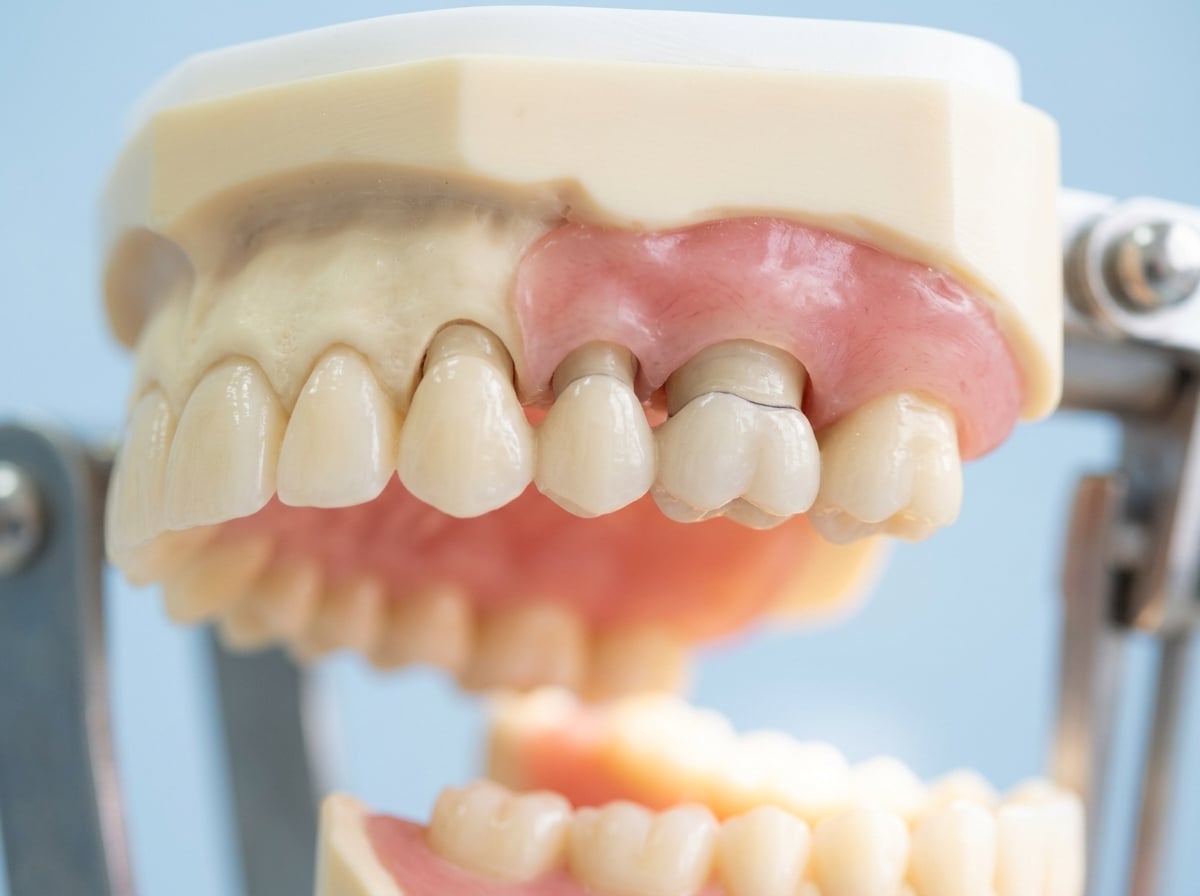
A dental bridge replaces only the visible portion of the missing tooth, anchored by the two neighboring teeth. Those adjacent teeth are reshaped and covered with crowns, and a connected artificial tooth spans the gap between them, permanently relying on those two teeth for support. A bridge is typically completed over two to three visits across a few weeks, considerably faster than the implant timeline.
That structural difference — one option standing independently, the other depending on the teeth beside it — is really the foundation of almost every other trade-off between them.
The adjacent tooth question
This is the trade-off I spend the most time discussing with patients, because it’s the part that’s easy to underweight in the moment. A bridge requires permanently altering two healthy teeth, even if neither one has any decay or damage of its own, purely to create the support structure the bridge needs. Once those teeth are reshaped and crowned, that’s not reversible — you’re committing two additional teeth to the restoration, not just addressing the one that’s missing.
An implant doesn’t touch the neighboring teeth at all. It stands on its own, anchored in bone rather than borrowed support from teeth that were otherwise fine. For a patient with two healthy, untouched teeth flanking the gap, this is often the single biggest factor tipping the decision toward an implant — you’re not converting two intact teeth into two crowned ones to fix a problem with a third.
Did You Know
Comparative research on tooth-supported bridges versus implant-supported restorations has found meaningfully different outcomes depending on the patient’s periodontal history — prosthetic success for tooth-supported bridges dropped from 86.7% in patients with no gum disease history to 45.5% in patients with one, while implant-supported success dropped from 90% to 33.3% under the same comparison. Your gum health history matters enormously to both options, not just one.
What the longevity data actually shows
Implants generally post stronger long-term numbers. Multiple studies report implant survival in the 90% to 98% range at the 10-year mark, and the titanium post itself, once integrated, is frequently described as capable of lasting a lifetime — the crown on top is the part more likely to eventually need attention. Bridges are commonly cited in the 72% to 90% survival range over the same period, with an average functional lifespan often quoted around 10 to 15 years before replacement becomes necessary, frequently due to decay developing under the bridge at one of the supporting teeth or a fracture in one of the crowned abutments.
That said, this isn’t an automatic, unconditional win for implants in every study. Some direct comparisons of tooth-supported versus implant-supported restorations have found closer, or even reversed, results in specific patient groups — one clinical study found tooth-supported bridges achieving 100% survival compared to 87.5% for implant-supported restorations over 5 to 15 years, with prosthetic success notably higher in patients over 60. The honest takeaway is that averages favor implants, but individual circumstances — your gum health, your age, the specific teeth involved — can shift which option actually performs better for you specifically. This is exactly why a general statistic quoted in a blog post, including this one, is a starting point for a conversation rather than a substitute for an evaluation of your own mouth.
Worth Knowing
Neither option is a “set it and forget it” solution. Bridges are vulnerable to decay developing at the supporting teeth underneath the connected span, and implants depend on healthy gum tissue to avoid peri-implant disease. Both require consistent oral hygiene and regular professional maintenance to actually reach their best-case lifespan — the material alone doesn’t determine the outcome.
When a bridge might genuinely be the better choice
The adjacent teeth already need crowns. If both neighboring teeth have large fillings, existing crowns, or damage that would reasonably call for crowns regardless of the missing tooth, a bridge accomplishes two goals with one restoration rather than three separate procedures.
You want to avoid oral surgery, or aren’t a candidate for one right now. A bridge doesn’t require a surgical procedure or a healing period the way implant placement does, which matters for patients with certain medical conditions, on certain medications, or who simply prefer to avoid a surgical step.
You need a faster timeline. A bridge is typically completed within a few weeks across two or three visits, while an implant’s full timeline — placement, integration, and final crown — usually spans several months.
There isn’t enough bone, and grafting isn’t something you want to pursue. While bone grafting can often solve this, some patients would rather move forward with a bridge than add a grafting procedure and additional healing time to their timeline.
When an implant is the better choice
Both adjacent teeth are healthy and untouched. This is the scenario where the case for an implant is strongest — there’s no reason to convert two intact teeth into crowned ones when an independent option exists.
You’re thinking in decades, not years. If long-term value and minimizing the chance of needing another restoration down the line matter most to you, the data generally favors the implant, particularly once you factor in the real possibility of a bridge needing full replacement once or more over a few decades.
You want to preserve the underlying bone. An implant replaces the tooth root, which keeps the jawbone in that area stimulated and stable. A bridge doesn’t address the bone at all, since nothing is placed where the root used to be, and that bone continues to gradually resorb underneath the bridge over time.
How they typically compare on appearance
Both options, done well, can look genuinely indistinguishable from a natural tooth, so appearance alone rarely decides this for most patients. Where a difference sometimes shows up is at the gumline: because a bridge’s connector sits against the gum tissue rather than emerging from it the way a natural tooth or an implant does, some patients notice a subtle difference in how light interacts with that area up close. An implant crown, emerging directly from the gum the way a natural tooth does, tends to replicate that transition slightly more naturally. For most patients this is a minor, hard-to-notice distinction rather than a deciding factor, but it’s worth knowing about if aesthetics in the smile zone are a top priority for you.
What about cost?
An implant almost always costs more upfront than a bridge — the surgical placement, the healing period, and the final crown add up to a higher initial investment than a bridge’s two crowns and connector. But cost-effectiveness research modeling the full lifetime cost of both options, including maintenance, complications, and the likelihood of eventual replacement, has generally found implants to be the more economical choice over a long enough time horizon, specifically because they’re less likely to need replacement or generate complications at neighboring teeth. The upfront number isn’t the whole financial picture — it’s worth asking your dentist to walk through the realistic total cost of each option over 10, 20, and 30 years, not just the number on the initial treatment plan.
Questions worth asking at your consultation
“Do my adjacent teeth already need any work?” This single answer often shifts the decision more than any other factor — if they’re already candidates for crowns, a bridge stops looking like it’s “sacrificing” healthy structure.
“What’s my actual bone volume at the missing tooth site?” This determines whether an implant is straightforward, requires grafting first, or whether a bridge sidesteps that question entirely for now.
“What’s the realistic total cost over 10, 20, and 30 years, not just today?” Ask your dentist to actually walk through this rather than comparing only the upfront treatment plan numbers.
“What happens if this restoration fails down the line?” Understanding the fallback plan for each option — replacing a bridge, or addressing a failed implant — is worth knowing before you commit to either path.
“Given my gum health history specifically, which option’s data actually applies to me?” As the research above shows, periodontal history changes the odds for both options substantially, so your personal history matters more than the general averages.
| Factor | Single-tooth implant | Dental bridge |
|---|---|---|
| Impact on adjacent teeth | None — stands independently Advantage |
Requires reshaping and crowning two healthy teeth |
| Typical timeline | Several months, placement to final crown | A few weeks across 2–3 visits Faster |
| 10-year survival | Generally 90%–98% in most studies | Generally 72%–90%, varies by study Case dependent |
| Preserves jawbone | Yes — replaces the tooth root Advantage |
No — bone under the gap continues to resorb |
| Requires surgery | Yes | No Advantage |
| Best for | Healthy adjacent teeth; long-term priorities | Adjacent teeth already needing crowns; faster timeline |
How they actually compare
There’s no universally correct answer between a single-tooth implant and a bridge — there’s a better answer for your specific mouth, timeline, and priorities. If your neighboring teeth are healthy and you’re thinking long-term, an implant is usually the stronger choice. If those teeth already need work, your timeline is tight, or surgery isn’t something you want to pursue right now, a bridge remains a legitimate, well-studied option rather than a lesser one. What the research makes clear is that your own gum health history, the condition of your adjacent teeth, and your available bone volume matter more to the actual outcome than which option sounds more modern. The conversation worth having with your dentist is specific to your case — not a generic rule applied the same way to every patient.
Washington, PA & Pittsburgh
Trying to decide between an implant and a bridge?
Dr. Wakim can walk you through what actually fits your specific mouth, timeline, and budget — not a one-size-fits-all recommendation.

Dr. Elizabeth Wakim, DDS, is the founder of Enhanced Wellness. She’s a compassionate and highly-regarded dentist with her own practice in Washington, Pennsylvania, known for providing modern, comprehensive dental care, botox and facial aesthetics with a focus on patient comfort and anxiety reduction, serving general, cosmetic, and pediatric dentistry needs.