Bump on the Roof of Your Mouth? Torus Palatinus and the Other Causes a Dentist Checks For
Felt a hard lump on the roof of your mouth with your tongue? Dr. Liza Wakim explains torus palatinus, the other common causes of palate bumps, and the signs that mean a bump needs a closer look.

It is a moment many people never forget: your tongue brushes the roof of your mouth and finds a hard bump that you are sure was not there before. Within minutes, you are searching online and worrying about the worst.
Here is what I tell my patients: most bumps on the roof of the mouth are harmless. The most common hard one, a torus palatinus, is simply extra bone that many people have had for years without noticing. In this post I will walk you through how to tell a torus from the other common causes, when a bump needs removing, and the red flags that mean you should get it checked.
The short version
- The most common hard bump on the roof of the mouth is a torus palatinus, a harmless bony growth in the middle of the palate.
- Tori are painless, covered in normal pink tissue, grow very slowly if at all, and usually need no treatment.
- Soft or sore bumps are more often a burn, a canker sore, irritation behind the front teeth or an infection from a tooth.
- A bump that lasts more than two weeks, grows, bleeds, ulcerates or causes numbness should be checked.
What is a bump on the roof of your mouth?
A bump on the roof of your mouth is most often a torus palatinus, a harmless, hard bony growth along the middle of the palate. Other common causes include a burn from hot food, a canker sore, swelling of the small bump behind your front teeth, a minor injury, or an infection draining from an upper tooth. Most are harmless and temporary.
The roof of the mouth has two parts: the hard palate at the front, which has bone underneath, and the soft palate further back. A normal hard palate has small ridges behind the front teeth, called rugae, and a small bump just behind the two front teeth called the incisive papilla. Both are supposed to be there.
Torus palatinus: the most common hard bump
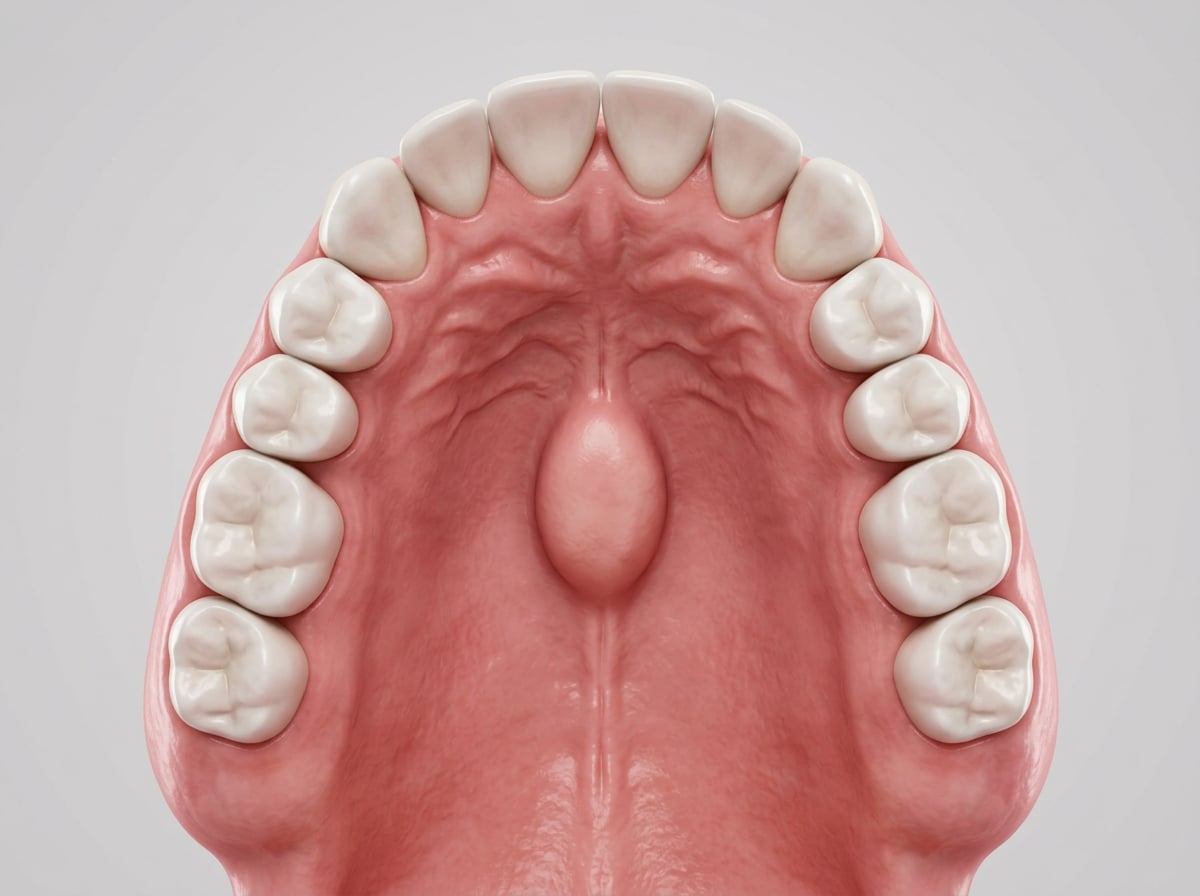
A torus palatinus is a benign bony outgrowth that sits along the midline of the hard palate. It can be small and smooth, or larger with several lobes, but it is always covered by normal-looking pink tissue.
Who gets it. Tori are relatively common, although how common varies a lot between studies and populations. They are seen more often in women and in people of Asian ancestry, and they can run in families.
Does it grow? Tori usually grow very slowly, often over many years, or not at all. Many people have had theirs since their teens and only notice it as an adult. In one published case, a woman had a 3 cm torus that had been present since her teenage years without causing symptoms.
Tori are often first spotted at a routine dental exam, and the person is surprised to learn it has been there for years.
Other causes of a bump on the roof of your mouth
- Burns (“pizza burn”). Hot cheese, coffee or soup can burn the palate, leaving a sore, swollen or peeling area that usually heals within days.
- Swollen incisive papilla. The small bump right behind your front teeth can become swollen and tender if it is irritated by hard or sharp food, or a burn.
- Canker sores. Shallow, painful white or gray sores with a red border. According to the ADA, they usually heal on their own in one to two weeks.
- Injury. Chips, crusty bread or a fork can scrape the palate and cause a sore spot or a small blood blister.
- Infection from an upper tooth. An abscess at the root of an upper tooth can drain toward the palate and form a soft, sometimes tender swelling. My post on gum boils explains how these drainage bumps work.
- Mucocele or blocked salivary gland. The palate has many tiny salivary glands. A blocked one can form a small, soft, bluish or clear bubble.
- Less common growths. Rarely, a bump can be a benign or malignant growth. These usually do not behave like a torus, and that is what the red flags below are for.

Does torus palatinus need to be removed?
Usually not. A torus is harmless, so most people leave it alone for life. Removal is considered when it gets in the way, for example:
Removal is a minor surgical procedure in which the extra bone is smoothed down. It is a planned treatment, not an emergency. If you think yours is getting in the way, ask your dentist whether removal makes sense and who would perform it; our oral and maxillofacial surgery page explains the surgical services available.
When a bump could be serious: red flags
Most palate bumps are benign, but some signs should always be checked. The American Cancer Society lists warning signs of oral cancer that include a sore that does not heal, a lump or thickening, a white or red patch, bleeding, pain, numbness, and loose teeth. These signs are much more often caused by something harmless, but they deserve a professional look.
The two-week guideline is a helpful rule of thumb. A burn or canker sore should be clearly improving well before then.
When to see a dentist
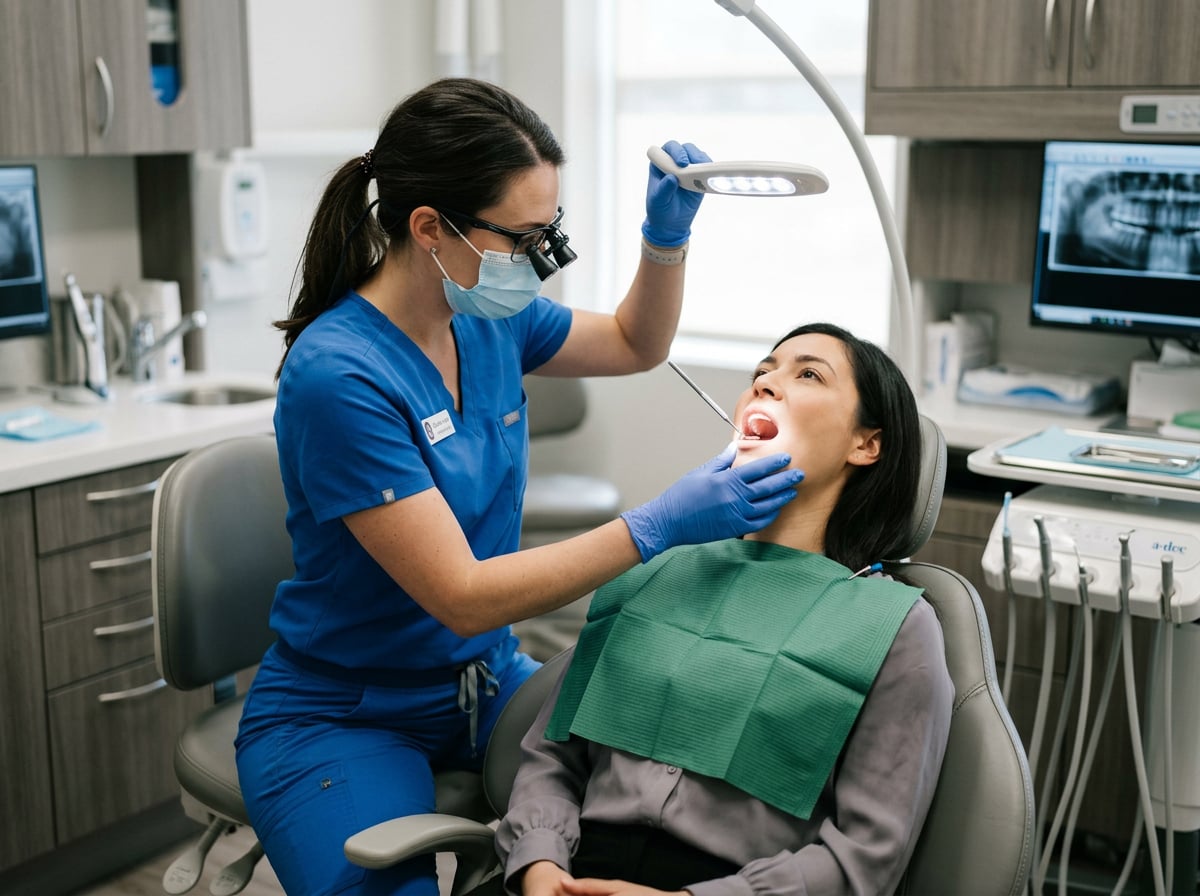
What a screening involves. An oral cancer screening is quick and painless. Your dentist looks at and feels the roof of your mouth, tongue, cheeks, gums, throat and neck, and asks about how long the bump has been there and whether it has changed. If something looks unusual, the next step may be a short follow-up visit or a referral for a biopsy. My post on oral cancer screening devices explains the extra tools some offices use.
Frequently asked questions
Is torus palatinus cancer?
No. A torus palatinus is a benign, harmless bony growth, not cancer, and it is not considered a precancerous condition. It is hard, painless and covered in normal pink tissue. A bump that is growing quickly, ulcerated, bleeding or causing numbness behaves differently and should be checked by a dentist.
Does torus palatinus go away?
No. Because it is made of bone, a torus does not shrink or go away on its own. Most stay the same size or grow very slowly over many years. It only needs treatment if it gets in the way of a denture, keeps getting injured or affects eating or speaking.
What causes torus palatinus?
The exact cause is not fully known. Genetics play a role, since tori often run in families, and they are more common in women and in people of Asian ancestry. Some researchers have also linked them to forces from chewing and clenching, but this is not proven.
Why do I suddenly have a bump on the roof of my mouth?
A bump that appears suddenly is most often a burn from hot food, a canker sore, irritation of the small bump behind the front teeth, a minor injury or an infection from an upper tooth. A torus, on the other hand, has usually been there for years and is only noticed suddenly. If a new bump has not improved within two weeks, get it checked.
Is a bump on the roof of my mouth normal?
Often, yes. The ridges behind your front teeth, the small bump just behind them and a torus in the middle of the palate are all normal findings. A bump that is painful, growing, bleeding, ulcerated, numb or lasting more than two weeks is not typical and should be looked at.
Can a dentist remove a torus?
Yes, a torus can be removed with a minor surgical procedure when it needs to be, most often to make room for a denture or because it keeps getting injured. Depending on its size and location, removal may be done by a dentist or an oral surgeon. Most tori never need to be removed.
Let’s take a look at that bump
A quick exam usually settles the question, and it is much better than worrying. If you are in or around Washington, PA, you can request an appointment at Enhanced Wellness or call us at (724) 225-5070. Every exam includes a careful check of the roof of your mouth.
Sources
- Vaduganathan M, Marciscano AE, Olson KR. Torus palatinus. Proc (Bayl Univ Med Cent). 2014;27(3):259.
- Prevalence of Torus Palatinus and Association with Dental Arch Shape in a Multi-ethnic Cohort. Homo. 2020;71(4):273-280.
- American Cancer Society. Signs and symptoms of oral cavity and oropharyngeal cancers.
- American Dental Association, MouthHealthy. Canker Sores.
Found a bump on the roof of your mouth?
Most palate bumps are harmless, and a quick exam is the fastest way to know for sure. Dr. Liza checks the roof of your mouth, tongue, cheeks and gums at every visit, and will tell you plainly whether a bump needs follow-up or can be left alone.

Dr. Elizabeth Wakim, DDS, is the founder of Enhanced Wellness. She’s a compassionate and highly-regarded dentist with her own practice in Washington, Pennsylvania, known for providing modern, comprehensive dental care, botox and facial aesthetics with a focus on patient comfort and anxiety reduction, serving general, cosmetic, and pediatric dentistry needs.