The Right Way to Brush and Floss (Most People Get At Least One Step Wrong)
Almost every patient who sits in my chair tells me the same thing when I ask about their routine: “I brush twice a day and I floss… most days.” And almost every time, when I actually watch how they do it, I find at least one habit that’s working against them without their realizing it.
That’s not a criticism — nobody teaches adults how to brush and floss. We’re taught as kids, we form a routine by around age seven or eight, and then most of us never revisit the technique again for the rest of our lives. Toothbrush technology changes, the research changes, but the habit stays frozen in place. So let me walk through what actually matters, where I see people go wrong most often, and what a genuinely effective routine looks like.
What “good oral hygiene” actually requires
Strip away the marketing and the routine is simpler than it looks. The American Dental Association’s core recommendation is brushing twice a day for two minutes with a soft-bristled brush and fluoride toothpaste, held at a 45-degree angle to the gumline, plus cleaning between the teeth once a day. That’s the whole foundation. Everything else — which toothbrush, which floss, which mouthwash — is a layer on top of that foundation, not a replacement for it.
The part that trips people up isn’t usually knowing the rule. It’s the execution.
The brushing mistakes I see constantly
Brushing too hard. This is, by a wide margin, the most common mistake I see, and it’s almost always driven by good intentions — people assume more pressure means a cleaner mouth. It doesn’t. Plaque is a soft, sticky biofilm; it doesn’t require force to remove, it requires time and the right angle. Excess pressure with a toothbrush wears down enamel at the gumline and contributes directly to gum recession over time. If you’re gripping your toothbrush tightly and scrubbing, that’s a habit worth breaking today, not eventually.
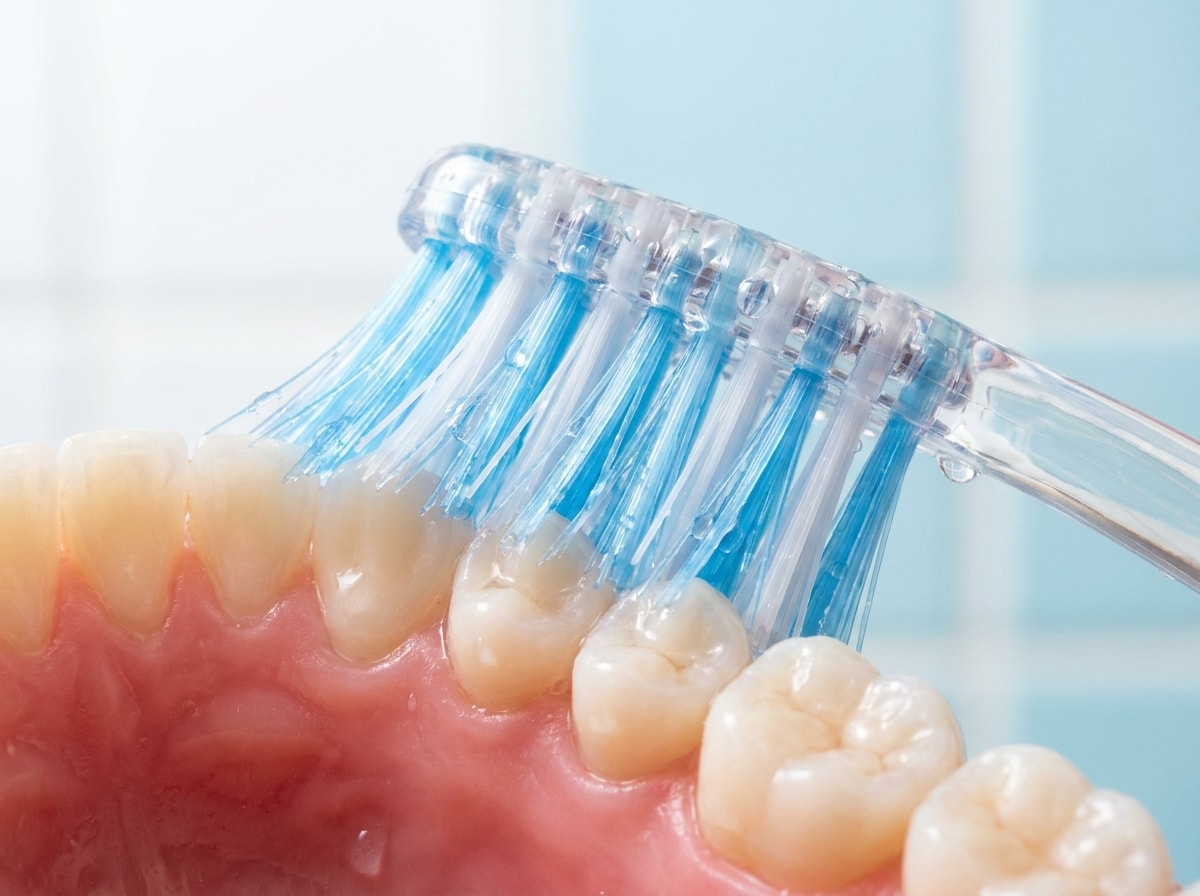
Using the wrong angle. The ADA recommends holding the brush at roughly a 45-degree angle to the gumline, not flat against the tooth surface, with short back-and-forth strokes. A flat angle cleans the visible surface of the tooth reasonably well but misses the area right at the gumline, which is exactly where plaque causes the most damage.
Rushing. Two minutes feels longer than people expect, and most patients, when I’ve actually timed them, brush closer to 30 to 45 seconds. That’s not close to enough to clean all the surfaces of every tooth. A cheap timer, a phone stopwatch, or an electric brush with a built-in timer solves this instantly.
Brushing immediately after acidic food or drink. Coffee, citrus, soda, and wine temporarily soften enamel. Brushing right after softens the risk of actually abrading that weakened enamel. Waiting around 30 minutes lets saliva neutralize the acid first.
Skipping the inner surfaces. Most people thoroughly clean the surfaces they can see in the mirror — the outer, front-facing surfaces — and rush through or skip the tongue-side surfaces entirely, simply because they’re harder to see and reach.
Holding onto a worn-out brush. Bristles that are splayed or matted clean significantly less effectively, even if you can’t tell just by looking. The ADA’s guidance is to replace a toothbrush every three to four months, sooner if the bristles look worn.
Did You Know
A major Cochrane systematic review analyzing 56 clinical trials found that electric toothbrushes with an oscillating-rotating motion reduced plaque by 21% and gingivitis by 11% compared to manual brushing over the long term. The gap isn’t about the manual brush being ineffective — it’s that the powered motion helps compensate for the technique and timing mistakes most people make without realizing it.
What correct technique actually looks like, step by step
Most patients have never actually been walked through the technique itself, just told to “brush twice a day.” Here’s what I show patients in the chair:
Start at a 45-degree angle. Tilt the brush so the bristles point toward the gumline, not straight into the tooth surface. This lets the bristle tips reach just under the gum margin, where plaque accumulates fastest.
Use short, gentle strokes — not long scrubbing motions. Move the brush back and forth in strokes about the width of a single tooth. Long, sweeping strokes across multiple teeth feel efficient but actually clean less effectively per tooth and increase the temptation to press harder.
Work in sections, not randomly. Divide your mouth into quadrants — upper right, upper left, lower right, lower left — and spend roughly 30 seconds on each. This is the easiest way to actually hit two minutes without guessing, and it prevents the common pattern of over-cleaning the front teeth (which you see in the mirror) while rushing through the back molars (which you don’t).
Tilt vertically for the back of your front teeth. The inner surfaces of your upper and lower front teeth are curved and don’t respond well to a flat brushing angle. Turn the brush vertically and use gentle up-and-down strokes to reach this surface properly.
Don’t forget the chewing surfaces. The flat, grooved tops of your molars trap food and bacteria in their pits and fissures. A few short strokes across each chewing surface, brush angled flat against the tooth, completes the routine.
Finish with a light pass over the tongue. Bacteria on the tongue’s surface contribute meaningfully to bad breath. A gentle brush or a dedicated tongue scraper, moving from back to front, takes only a few seconds and is easy to skip if you’re not in the habit.
Is mouthwash actually necessary?
Patients ask about this often enough that it’s worth a direct answer: for most patients with a good brushing and interdental cleaning routine, mouthwash is optional, not essential. It doesn’t replace mechanical plaque removal — nothing physically disrupts biofilm the way brushing and interdental cleaning do. Where it does add value is for patients who need extra help with a specific issue: a fluoride rinse for elevated cavity risk, an antimicrobial rinse for gum inflammation, or a dry-mouth-specific formula for patients whose medications reduce saliva flow. If you’re already brushing and cleaning between your teeth well, a general cosmetic mouthwash mostly just adds fresh breath — pleasant, but not a substitute for anything above.
Does that mean you need an electric toothbrush?
Not necessarily. What the research actually shows is more nuanced than “electric wins.” A manual toothbrush, used correctly, for the full two minutes, at the right angle, with a soft-bristle head, still removes plaque effectively — the research comparing the two isn’t a case of one being adequate and the other not. Where electric brushes earn their advantage is in compensating for inconsistency: built-in timers enforce the full two minutes, and the powered motion does some of the technique work for you, which is genuinely useful for anyone who grinds through brushing quickly, has limited hand dexterity, wears braces, or has a history of brushing too hard. The honest answer is that the best toothbrush is the one that gets used correctly and consistently — for some patients that’s electric, and for plenty of my patients with excellent technique, a manual brush works just as well.
Is flossing with string floss actually the best option?
This is one of the more surprising things for patients to hear: traditional string floss, while better than nothing, is not the top performer among interdental cleaning tools in the current research, and its benefit is heavily dependent on technique. A recent analysis of flossing studies found that floss’s plaque-removal benefit, when compared to toothbrushing alone, shrinks substantially after just a few months and becomes statistically insignificant by six months in some trials — largely because most people don’t floss with the precise technique used in controlled studies. Separately, network meta-analyses comparing interdental cleaning devices have consistently ranked interdental brushes and water flossers above string floss for reducing gum bleeding, with floss ranking near the bottom of the field.
None of that means floss is useless — it means technique matters enormously, and for a lot of patients, a different tool actually produces better real-world results because it’s easier to use correctly and more people stick with it. This is exactly the kind of decision worth tailoring to you specifically rather than defaulting to whatever’s cheapest at the pharmacy.
How the interdental cleaning options actually compare
Worth Knowing
The American Dental Association recommends cleaning between your teeth once daily — but research reviewed by the ADA itself notes that “flossing” is often used as shorthand for interdental cleaning generally, and that many people who dislike string floss give up on interdental cleaning altogether rather than switching tools. If floss isn’t a habit that sticks for you, switching to an interdental brush or water flosser is a legitimate upgrade, not a shortcut.
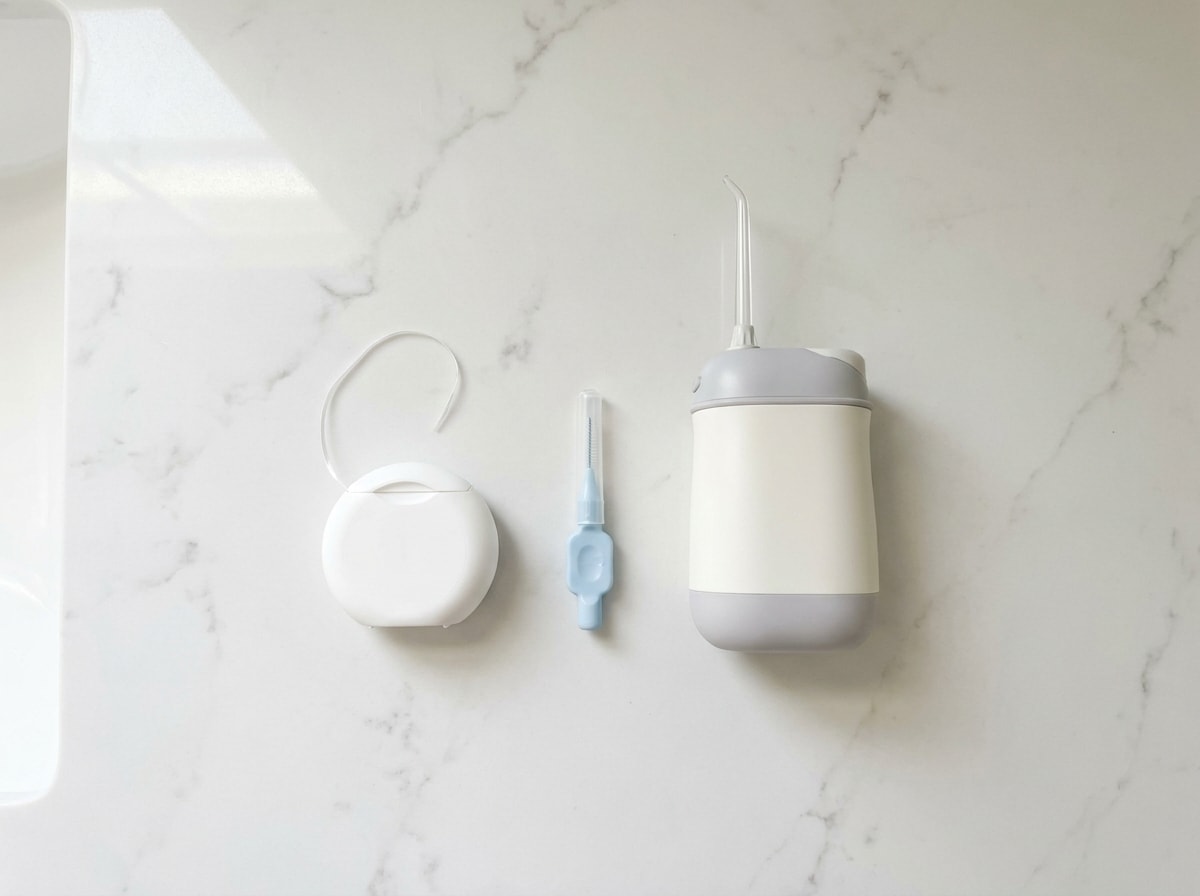
Here’s how the three most common options stack up, since the right one really does depend on your teeth, your dexterity, and what you’ll actually use consistently.
| Tool | Evidence for effectiveness | Ease of correct use | Best for |
|---|---|---|---|
| String floss | Effective when technique is precise, but benefit fades quickly with imperfect technique | Steepest learning curve — many people never use it quite correctly | Tightly spaced teeth with good manual dexterity |
| Interdental brush | Ranks above string floss in multiple studies for reducing gum bleeding Advantage |
Simple, forgiving technique — easy to use correctly on the first try | Larger gaps between teeth, braces, bridges, or implants |
| Water flosser | Ranks alongside interdental brushes as one of the top performers for reducing bleeding Advantage |
Very easy technique, though it requires a countertop unit and a bit more time | Patients with braces, implants, or anyone who consistently skips floss Case dependent |
Regardless of which tool you land on, the goal is the same: disrupting the plaque that builds up between teeth, where a toothbrush — manual or electric — physically cannot reach.
Putting together a routine that actually works
Brush twice daily for two full minutes, holding the brush at a 45-degree angle to the gumline, using gentle pressure and short strokes, covering the outer, inner, and chewing surfaces of every tooth. If you tend to rush, an electric brush with a timer removes the guesswork entirely.
Clean between your teeth once a day, using whichever tool you’ll actually use correctly and consistently — string floss, an interdental brush, or a water flosser are all legitimate choices.
Don’t rinse immediately after brushing. Spit out the excess toothpaste but leave a thin layer on your teeth rather than rinsing it away with water — this lets the fluoride keep working on your enamel for longer.
Replace your toothbrush every three to four months, or immediately if the bristles look splayed or matted.
Don’t brush right after acidic foods or drinks. Give it about 30 minutes so your enamel has time to reharden first.
When good technique isn’t the whole story
If you’re doing all of the above consistently and you’re still seeing bleeding when you brush or floss, persistent bad breath, or gums that look inflamed, that’s no longer a technique problem — it’s worth having evaluated directly, because it can point toward gum disease that home care alone won’t resolve. Bleeding gums in particular are one of the most under-reacted-to symptoms I see; patients often assume it means they need to brush more gently or floss less, when in most cases it actually means the opposite — the tissue is inflamed and needs more consistent cleaning, not less, alongside a professional evaluation to see how far that inflammation has progressed. That’s exactly the kind of thing I check for at every routine cleaning and periodontal maintenance visit, and it’s a big part of why I don’t consider brushing and flossing a replacement for regular professional care — they work together, not as substitutes for each other. If it’s been more than six months since your last visit, a comprehensive exam is the fastest way to find out whether what you’re doing at home is actually working the way you think it is.
The bottom line
Good oral hygiene isn’t about buying the most expensive toothbrush or the fanciest floss — it’s about consistent technique, applied twice a day, for the full two minutes, plus genuine daily cleaning between your teeth with a tool you’ll actually use correctly. Small adjustments to angle, pressure, and timing make a bigger difference than almost any product upgrade. If you’re not sure whether your current technique is actually effective, that’s an easy thing to check together at your next visit — I’d much rather show you in two minutes than have you guess for another ten years.

Dr. Elizabeth Wakim, DDS, is the founder of Enhanced Wellness. She’s a compassionate and highly-regarded dentist with her own practice in Washington, Pennsylvania, known for providing modern, comprehensive dental care, botox and facial aesthetics with a focus on patient comfort and anxiety reduction, serving general, cosmetic, and pediatric dentistry needs.