TMJ Massage: 5 Self-Massage Techniques for Jaw Pain, and When Massage Is Not Enough
Jaw sore and tight after a long day or a night of clenching? Dr. Liza Wakim shares five simple TMJ self-massage techniques you can try tonight, what the research shows, and when massage is not enough.
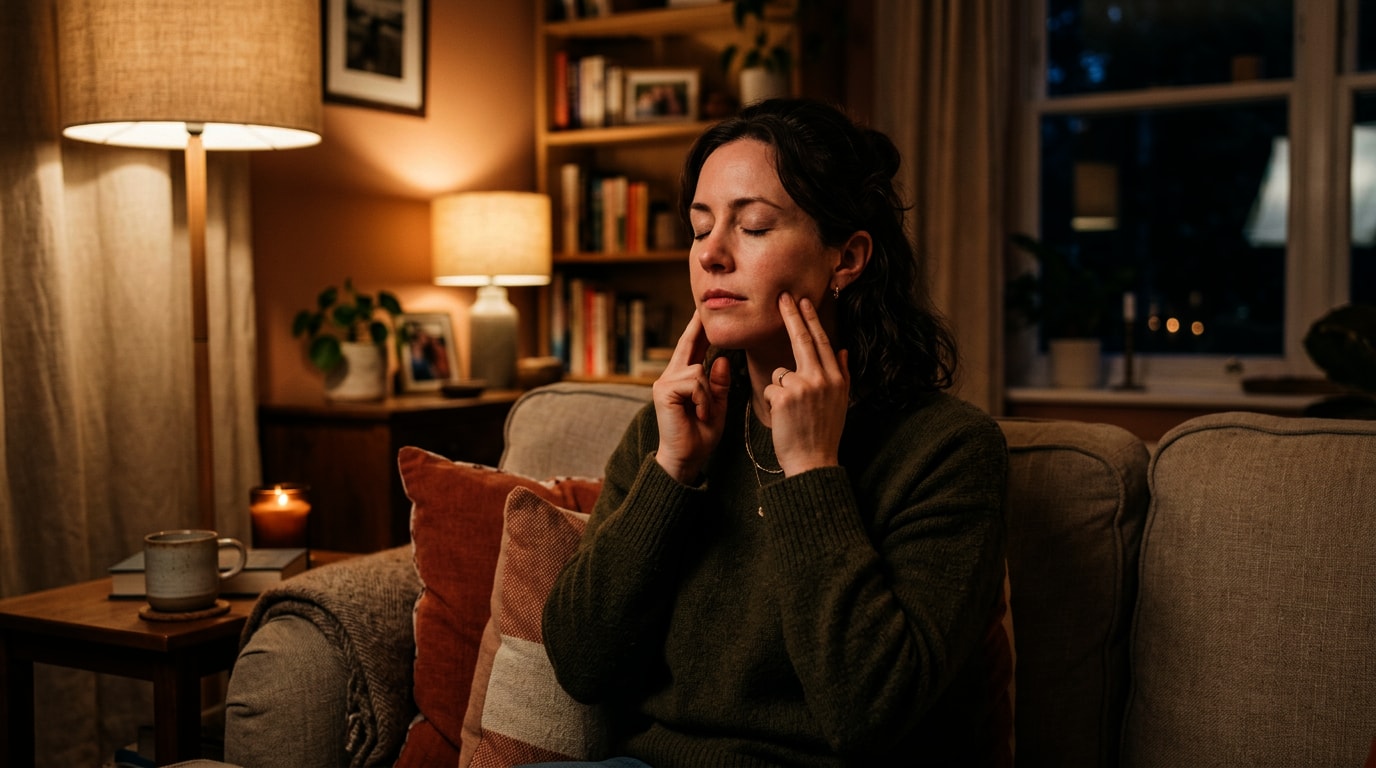
When I examine a patient with jaw pain, one of the first things I do is gently press on the muscles of the jaw and temples. Very often, that is where the pain lives: tight, tender, overworked muscles from clenching, grinding or stress. The good news is that you can reach many of those same muscles with your own fingertips.
In this post I will show you which muscles to work on, five simple self-massage techniques, and how massage fits into a bigger plan when the pain keeps coming back.
The short version
- Gentle self-massage of the jaw and temple muscles can ease TMJ-related muscle pain and tightness for many people.
- Work slowly, with light to moderate pressure, for a few minutes once or twice a day.
- Massage should feel relieving, not painful. Stop if it makes your pain worse.
- If pain keeps coming back, locks your jaw or limits opening, massage alone is not enough. See a dentist.
Can massage help TMJ pain? What the research shows
Many TMJ problems are really muscle problems. The National Institute of Dental and Craniofacial Research recommends starting with conservative, reversible self-care, and massage fits right into that approach.
The research is encouraging, with some caveats:
- A 2024 randomized trial found that massage therapy reduced pain and improved jaw function in people with TMD.
- A 2023 systematic review of manual therapy for TMD found that hands-on techniques, including massage, can reduce pain and improve mouth opening, although study quality varies and more research is needed.
In other words: massage is a reasonable, low-risk first step for muscle-related jaw pain, but it is not a cure for every jaw problem.
Find the right muscles: masseter, temporalis and the neck
These are the muscles I check during a TMD exam, and the ones you can safely reach yourself:
- Masseter: the thick chewing muscle at the back corner of your jaw. Place your fingertips just in front of your earlobes and clench your teeth; the firm bulge you feel is the masseter.
- Temporalis: a fan-shaped muscle on the side of your head, at the temples and just above the ears. Clench again with your fingertips on your temples and you will feel it tighten.
- Neck and upper shoulders: tension here often travels with jaw tension, especially if you sit hunched over a screen.
The jaw joint itself sits just in front of the ear opening. You can feel it move if you place a fingertip there and open and close slowly.
5 TMJ self-massage techniques
Before you start, wash your hands, sit comfortably, let your teeth part slightly and relax your tongue. Use your fingertips with light to moderate pressure. It should feel like a “good ache,” never sharp pain.
A full routine takes about five minutes. Many people find it helps to do it once or twice a day, especially before bed if they clench at night. These are general guidelines; if your dentist or physical therapist gives you a specific routine, follow theirs.
What about massaging inside the mouth? Some providers use gentle techniques inside the mouth to reach deeper jaw muscles. Those are best done by, or taught by, a trained professional. For self-care, stick to the outside of the face and neck.
Massage tools: do they help?
Your fingertips are usually the best tool, because you can feel exactly how much pressure you are using. A soft massage ball or a small, gentle handheld roller can be fine for the cheeks and neck if you prefer. I would avoid using a strong percussion massage gun on your jaw or face: the area is small, close to bone, nerves and the joint, and too much force can make a sore muscle worse.
Add-ons: heat, gentle stretches, posture and daytime clenching
Massage works best alongside a few simple habits:
- Warmth: a warm, moist compress on the jaw for 10 to 15 minutes before massage can help tight muscles relax.
- Gentle stretches: slowly open your mouth as far as is comfortable, hold briefly and close. Stop if it clicks painfully or hurts.
- “Lips together, teeth apart”: check in during the day. Your teeth should not touch except when chewing or swallowing.
- Posture: keep screens at eye level and avoid propping your chin on your hand.
- Soft foods and no gum during a flare-up.
My post on TMJ flare-up relief has more steps for the first few days of a flare, and jaw popping and clicking explains joint noises.
When massage is not enough: splints, Botox and physical therapy
If your jaw pain keeps coming back despite good self-care, it is time to look at the cause. The NIDCR summary of TMD treatments emphasizes starting with conservative, reversible options and avoiding permanent changes as a first step. Here is the usual order I work through:
Our TMD treatment page explains the options we offer, including coordinating referrals when physical therapy makes sense, and our Botox page covers Botox for jaw tension.
When to see a dentist
Get seen promptly if your jaw locks open or closed, you cannot open enough to eat, or the pain followed an injury. Seek urgent care for jaw pain with chest pain, shortness of breath, fever or facial swelling.
Frequently asked questions
How often should I massage my jaw for TMJ?
Many people find a short, gentle routine of about five minutes once or twice a day helpful, especially before bed if they clench at night. Consistency matters more than pressure. If your dentist or physical therapist gives you a specific routine, follow theirs, and stop if massage makes the pain worse.
Can massage make TMJ worse?
It can if the pressure is too firm or you massage an area that is very inflamed. Self-massage should feel relieving, like a mild, good ache, not sharp pain. If your pain increases, your jaw locks, or clicking becomes painful after massage, stop and have your jaw checked by a dentist.
Should I massage inside my mouth?
For self-care, it is best to stick to the outside of the face and neck. Some trained providers use gentle techniques inside the mouth to reach deeper jaw muscles, but these are best done or taught by a professional, so you use the right pressure and avoid irritating sensitive tissue.
Does a massage gun help TMJ?
A strong percussion massage gun is not a good fit for the jaw or face. The area is small and close to bone, nerves and the joint, and too much force can make sore muscles worse. Your fingertips, a soft massage ball or a gentle roller are safer choices for the jaw and neck.
How long until massage helps?
Some people feel relief right after a session, especially with warmth beforehand. For lasting improvement, give a consistent routine a few weeks alongside habit changes like soft foods and not clenching. If your jaw pain keeps returning or is not improving after a couple of weeks, see a dentist.
Can a massage therapist treat TMJ?
A massage therapist or physical therapist with experience in jaw problems can help relax tight jaw and neck muscles, and research suggests manual therapy can reduce TMD pain. It works best as part of a plan that also looks at the cause, such as clenching or grinding, which a dentist can evaluate.
When your jaw needs more than massage
If your jaw keeps hurting, a TMD exam can find out why and build a plan that fits. If you are in or around Washington, PA, you can request an appointment at Enhanced Wellness or call us at (724) 225-5070.
Sources
- Efficacy of massage therapy for temporomandibular disorders: a randomized controlled trial. BMC Sports Sci Med Rehabil. 2024.
- Manual therapy for temporomandibular disorders: a systematic review. Life. 2023.
- National Institute of Dental and Craniofacial Research. TMD (temporomandibular disorders).
- National Institute of Dental and Craniofacial Research. Summary of treatment for TMDs.
Jaw pain that keeps coming back?
Massage can ease a tight jaw, but recurring pain usually has a cause worth finding. Dr. Liza checks your jaw muscles, joints, teeth and bite, and starts with the simplest, most conservative plan that fits.

Dr. Elizabeth Wakim, DDS, is the founder of Enhanced Wellness. She’s a compassionate and highly-regarded dentist with her own practice in Washington, Pennsylvania, known for providing modern, comprehensive dental care, botox and facial aesthetics with a focus on patient comfort and anxiety reduction, serving general, cosmetic, and pediatric dentistry needs.