Yellow Teeth: 9 Reasons Teeth Turn Yellow and What Actually Whitens Them
Wondering why your teeth look yellow even though you brush every day? Dr. Liza Wakim explains nine common causes, what whitening can and cannot fix, and when bonding or veneers are the honest answer.

Yellow teeth are one of the most common reasons people come to me for cosmetic dentistry, and also one of the most misunderstood. Many patients brush carefully, avoid coffee and still feel their teeth look dull. Others have tried every whitening product and are frustrated that nothing changes.
The key is understanding why your teeth are yellow, because that decides what will actually work. In this post I will walk you through the causes and the options, honestly.
The short version
- Surface stains from coffee, tea, wine and tobacco usually respond well to whitening.
- Yellowing from inside the tooth, like thinning enamel, medications or genetics, is harder to whiten.
- Some yellow is natural: teeth are not meant to be pure white.
- When whitening cannot reach the cause, bonding or veneers may be the better option.
Why teeth turn yellow: extrinsic vs. intrinsic
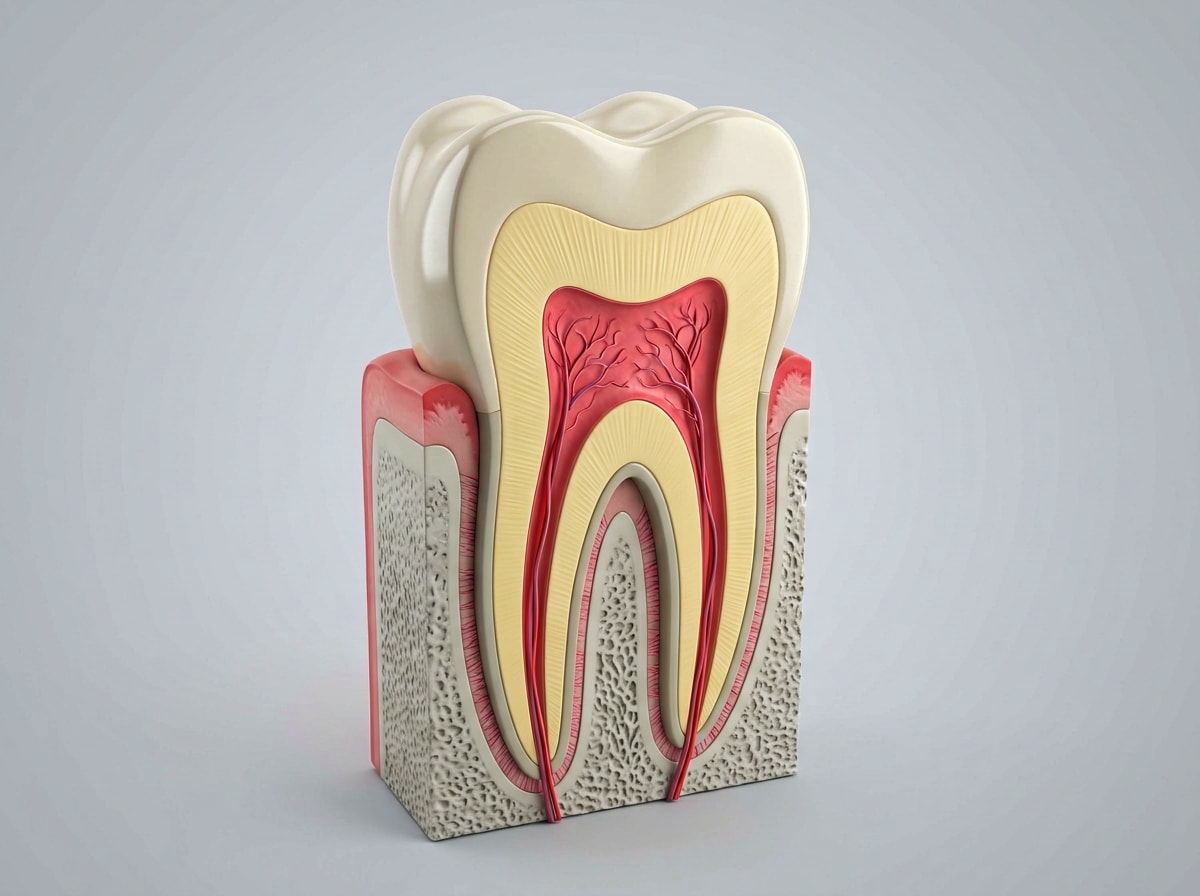
The Cleveland Clinic groups tooth discoloration into two types:
9 common causes of yellow teeth
- Coffee, tea and red wine. Dark pigments cling to the enamel surface over time.
- Tobacco and vaping. Tar and nicotine leave yellow-brown stains that build up quickly.
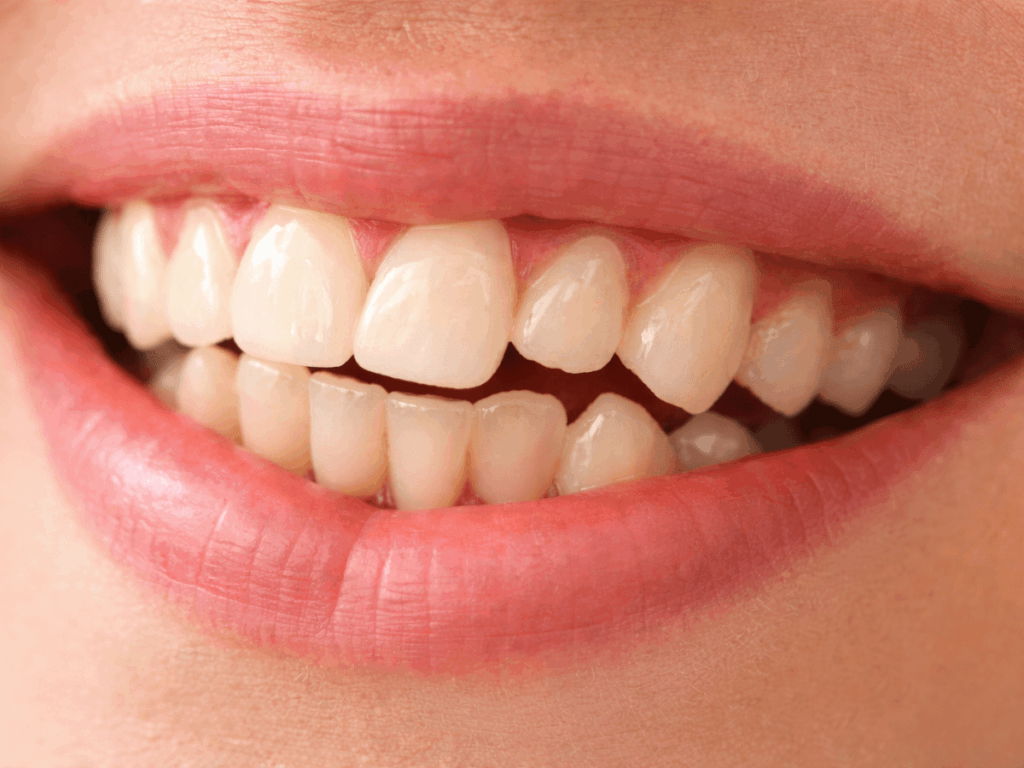
- Age and enamel thinning. As enamel wears thinner, the naturally yellower dentin underneath shows through.
- Genetics. Some people simply have thinner or more translucent enamel, or naturally darker dentin.
- Medications. Some antibiotics taken in childhood, such as tetracycline, can cause intrinsic staining.
- Fluorosis. Too much fluoride while teeth are forming can cause white or brownish spots and mottling.
- Trauma. An injured tooth can darken over time, sometimes because the nerve inside has been damaged.
- Plaque and tartar. Buildup along the gumline looks yellow and makes teeth look dull.
- Dry mouth. Less saliva means stains and plaque stick more easily.
Are yellow teeth unhealthy?
Not necessarily. Natural teeth have some yellow tone, and slightly yellow teeth can be perfectly healthy. Yellow becomes a health concern when it comes from plaque and tartar buildup, decay, or a tooth that has darkened after an injury. If one tooth is noticeably darker than the rest, or you see brown or black spots, have it checked. My post on dental cavity images shows what early decay can look like.
What works: whitening options compared
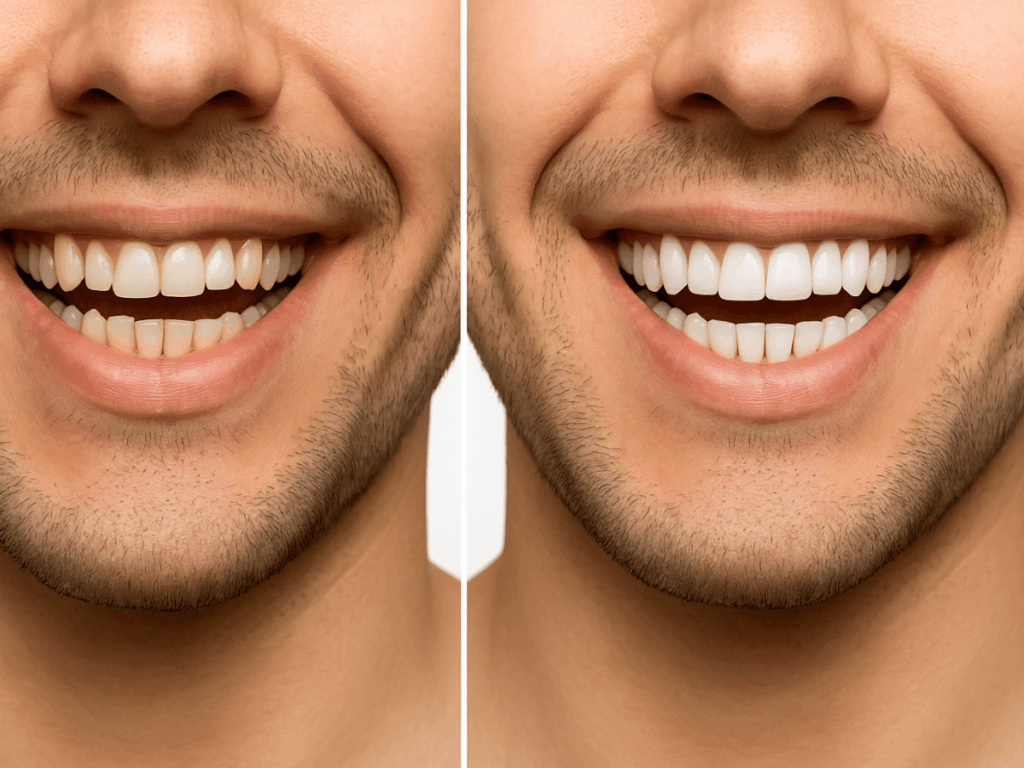
The ADA explains that whitening toothpastes remove surface stains with mild abrasives or chemicals, while bleaching products use peroxide to lighten the tooth color itself.
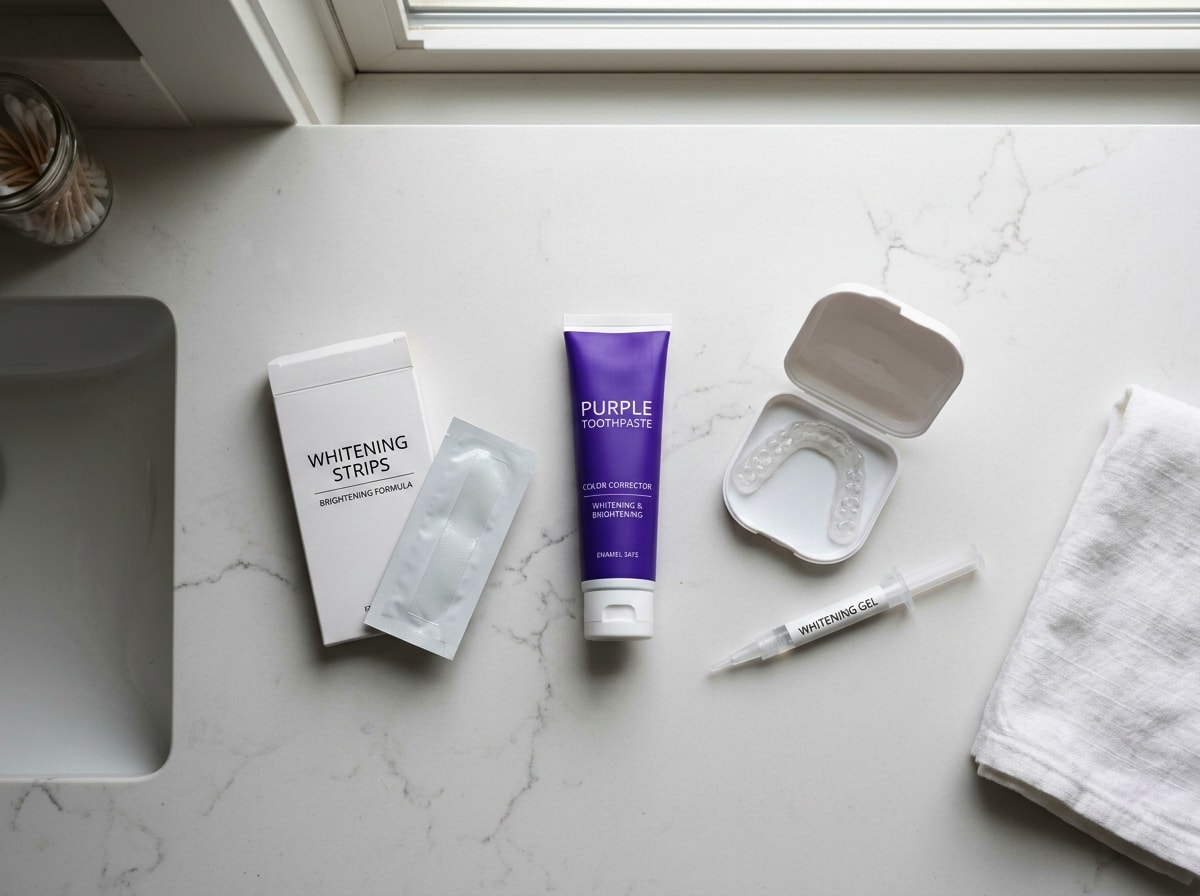
The ADA’s MouthHealthy guide recommends talking to your dentist before whitening, especially if you have sensitivity, crowns or fillings on front teeth, or gum disease. My post on whether teeth whitening is safe for enamel explains what viral whitening hacks leave out. Learn about our professional teeth whitening.
When whitening won’t work: bonding and veneers
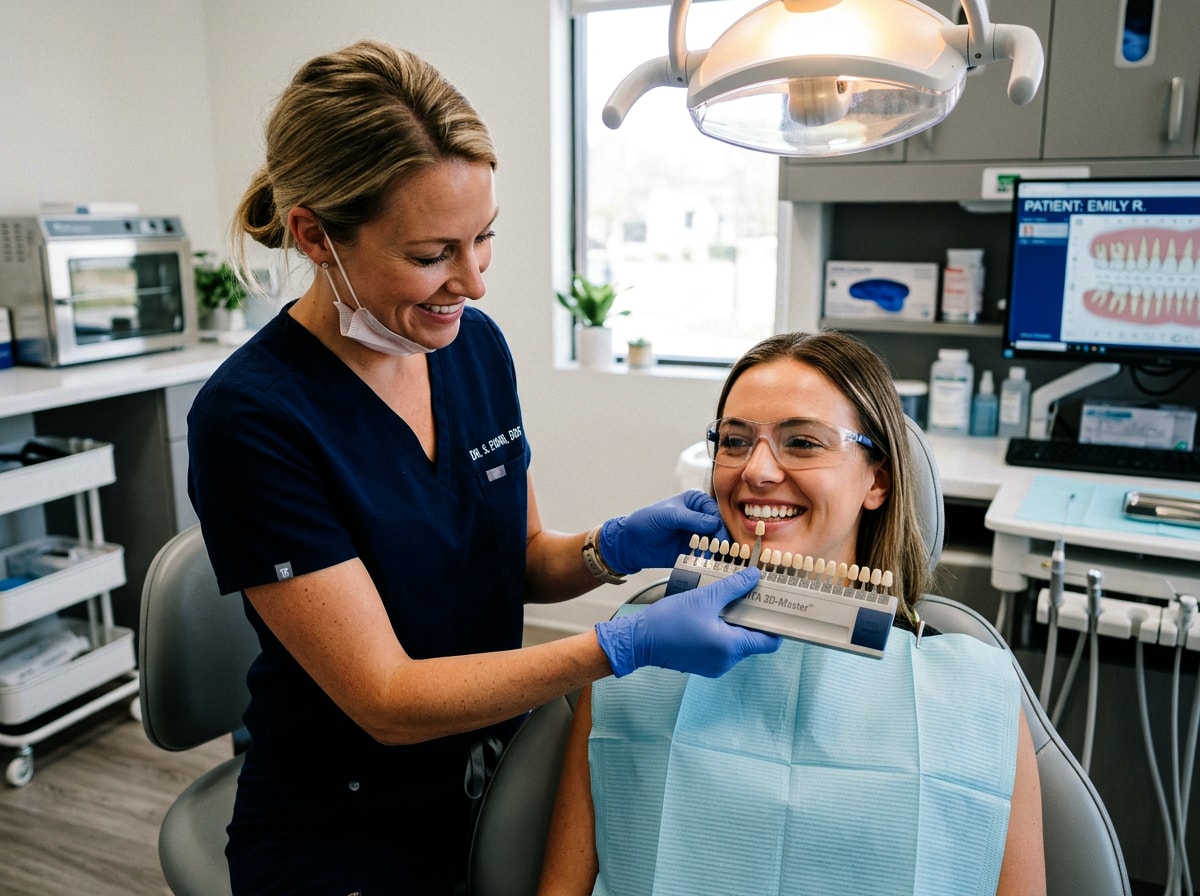
Whitening only lightens natural tooth structure. It will not change:
- Fillings, crowns or veneers, which keep their original color
- Deep intrinsic stains from some medications, fluorosis or trauma
- Thin, translucent enamel, where aggressive whitening can make teeth look grayer rather than whiter
In these cases, composite bonding can cover discoloration on a few teeth, and veneers can transform the color and shape of several teeth at once. Sometimes the best plan combines whitening first, then bonding or veneers to match.
How to keep teeth from yellowing
- Brush twice a day and floss daily to keep plaque from building up
- Rinse with water after coffee, tea or wine
- Use a straw for iced coffee or tea
- Quit smoking or vaping
- Keep up with professional cleanings, which remove surface stains and tartar
When to see a dentist
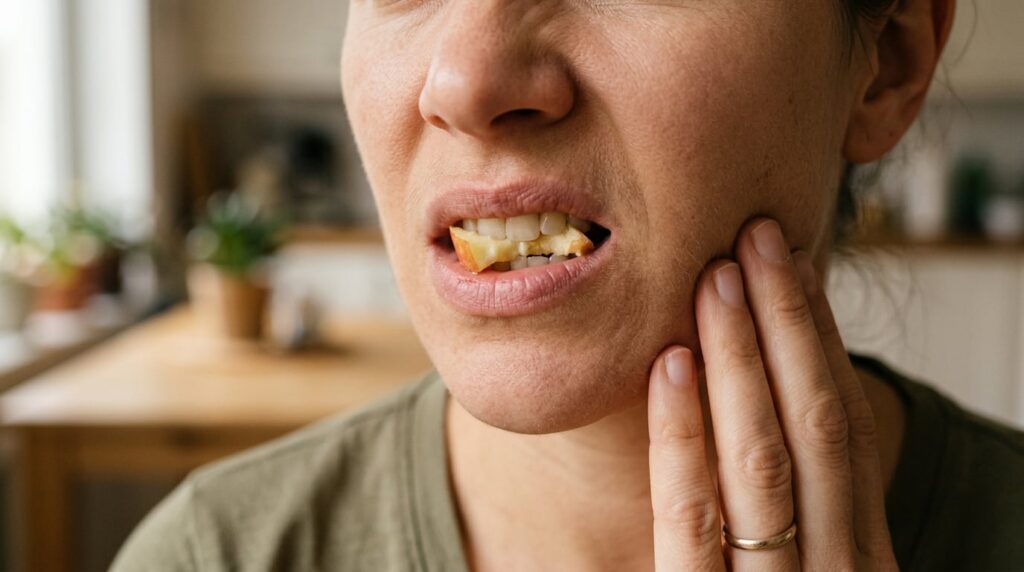
Book a visit if one tooth is noticeably darker than the others, you see brown or black spots, your teeth are sensitive, or you want to whiten and are not sure what will work for your teeth.
Frequently asked questions
Why are my teeth yellow even though I brush?
Brushing removes plaque and some surface stains, but it cannot change the inner color of your teeth. Yellow can come from naturally thinner enamel, age, genetics, medications or stains that build up over time from coffee, tea or tobacco. A dentist can tell which type you have and what will work.
Are yellow teeth healthier than white teeth?
Not exactly. Natural teeth have some yellow tone, and slightly yellow teeth can be perfectly healthy. Very white teeth are not healthier, and over-whitening can cause sensitivity. Health depends on enamel, gums and the absence of decay, not shade.
Does purple toothpaste really work?
Purple toothpaste uses a purple tint to color-correct yellow tones, which can make teeth look brighter for a short time. The effect is optical and temporary. It does not remove stains or change the tooth’s actual color the way peroxide whitening does.
Can yellow teeth become white again?
Often, yes, especially when the yellow comes from surface stains. Professional whitening can lighten teeth by several shades. Yellow from thin enamel, medications or fluorosis may not whiten fully, and bonding or veneers may be better options.
Is professional whitening safe?
Professional whitening is considered safe when done under a dentist’s supervision. Temporary sensitivity and gum irritation are the most common side effects. Your dentist checks for cavities, gum problems and existing restorations first, so the results are even and safe.
What drinks stain teeth the most?
Coffee, tea, red wine, cola and dark juices are among the most common staining drinks. Rinsing with water afterward, using a straw for cold drinks, and regular professional cleanings help reduce staining.
Find out what will brighten your smile
If you are in or around Washington, PA, you can request a consultation at Enhanced Wellness or call us at (724) 225-5070. Results vary, and we will recommend the option that fits your teeth.
Sources
- Cleveland Clinic. Tooth discoloration.
- American Dental Association. Whitening.
- American Dental Association, MouthHealthy. Teeth whitening.
Ready for a brighter smile?
Dr. Liza finds out why your teeth look yellow first, then recommends the option that will actually work for you, whether that is professional whitening, bonding or veneers.

Dr. Elizabeth Wakim, DDS, is the founder of Enhanced Wellness. She’s a compassionate and highly-regarded dentist with her own practice in Washington, Pennsylvania, known for providing modern, comprehensive dental care, botox and facial aesthetics with a focus on patient comfort and anxiety reduction, serving general, cosmetic, and pediatric dentistry needs.