Dermal Fillers at a Dental Practice: Why It Makes More Sense Than You’d Think
Why get dermal fillers at a dental practice? Dr. Liza Wakim — AAFE-certified — explains why dentists are uniquely qualified for facial injectables, what treatments she offers, and what patients should know.
When patients find out that I offer dermal filler treatments at Enhanced Wellness, the reaction is usually one of two things. Either they’re pleasantly surprised — “I didn’t know dentists did that” — or they’re mildly skeptical — “why would I get fillers at a dentist?”
Both reactions are understandable. Dermal fillers have long been associated with med spas, plastic surgeons, and dermatology offices. The idea of getting them at a dental practice feels, to some people, like a category mismatch.
I’d like to explain why it isn’t — and why, for a lot of patients, a dentist with the right training and credentials is actually one of the better choices for facial injectable treatments.
What dermal fillers are and what they do
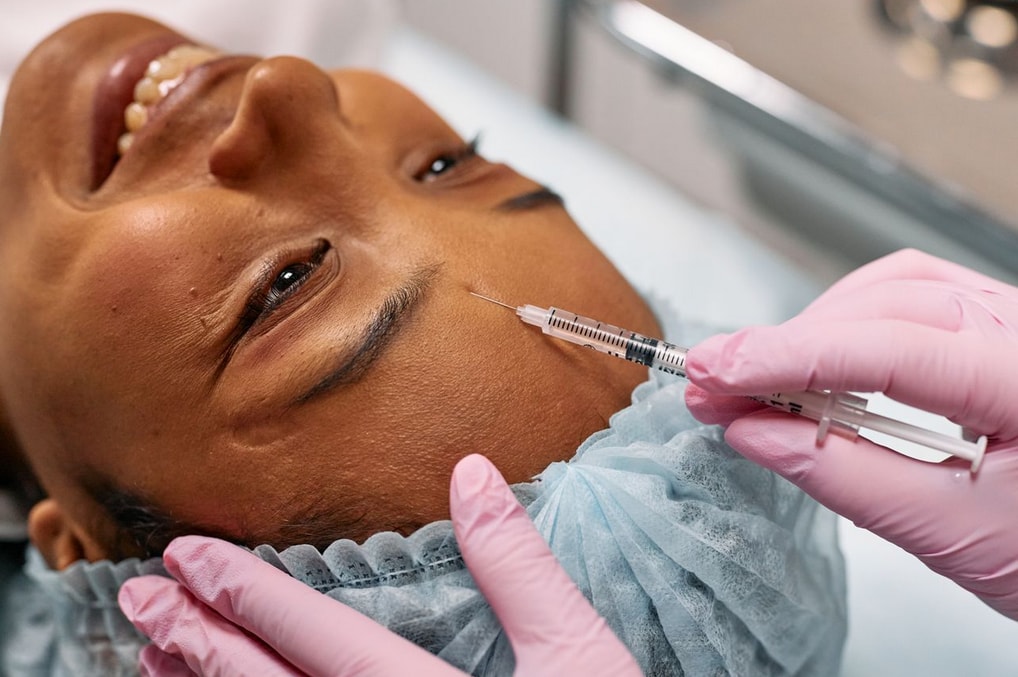
All treatments begin with a consultation. Dr. Wakim uses hyaluronic acid fillers — fully reversible with hyaluronidase if needed.
Dermal fillers are injectable substances — most commonly hyaluronic acid — used to restore volume, smooth lines, and enhance contour in the face. Unlike Botox, which works by relaxing muscle movement, fillers work by physically adding volume beneath the skin.
Common applications include restoring volume to the cheeks and midface, softening nasolabial folds (the lines that run from the nose to the corners of the mouth), enhancing lip volume and definition, reducing hollowness under the eyes, and defining the chin and jawline.
Hyaluronic acid fillers — brands like Juvederm and Restylane — are the most widely used because they’re biocompatible, produce natural-feeling results, and are reversible with an enzyme called hyaluronidase if a result isn’t what the patient hoped for. They typically last six months to two years depending on the product, the area treated, and individual metabolism.
Why the face is a dentist’s domain
Here’s the core of the argument, and I want to make it plainly: dentists spend their entire careers working in and around the face.
The anatomy of the face — the muscles, the nerves, the blood vessels, the tissue planes, the relationships between structures — is foundational to dental training and practice. Every time I administer local anesthesia, I’m navigating facial nerve anatomy. Every time I plan a cosmetic dental treatment, I’m thinking about how the teeth relate to the lips, the smile line, the gumline, the overall facial proportions. The face isn’t a separate domain from dentistry — it’s the environment dentistry operates in.
This matters for injectable treatments because facial anatomy is where the risk lives. The complications that make headlines in aesthetic medicine — vascular occlusion, nerve injury, product placed in the wrong tissue plane — are almost always the result of inadequate anatomical knowledge. A provider who doesn’t know where the facial artery runs, how deep the supratrochlear vessels sit, or which tissue planes carry risk for injection doesn’t have the foundation to inject safely.
Dentists who pursue additional training in facial aesthetics bring a level of anatomical fluency to these procedures that’s genuinely unusual — and genuinely relevant.
My specific training and certification
Offering injectable treatments isn’t something I decided to do casually. I pursued certification through the American Academy of Facial Esthetics — the AAFE — which provides structured training in facial anatomy, injection technique, complication avoidance and management, and the aesthetic principles that guide good outcomes. It’s the same certification I hold for Botox, and it represents a specific commitment to doing this work at a clinical standard rather than just picking up a skill.
I also practice in a dental office — which means I have access to local anesthetic, emergency protocols, and the clinical infrastructure to manage complications that a standalone med spa may not. This isn’t something patients usually think about, but it’s worth knowing.
How dental and facial aesthetics work together
One of the things I find most rewarding about offering both dental and facial aesthetic treatments is how naturally they complement each other.
A patient who comes in for a smile makeover is thinking about their teeth. But a great smile doesn’t exist in isolation — it exists in the context of a face. The lips that frame the teeth, the volume in the cheeks that gives the midface its structure, the overall balance between upper and lower face — all of these affect how a smile reads aesthetically.
For some patients, the most impactful thing I can do for their smile is address the dentistry. For others, the combination of excellent dental work and targeted facial aesthetics — lip filler to restore volume that makes the smile pop, cheek filler to restore midface structure, jaw slimming to balance the lower face — produces a result that neither treatment alone would achieve.
This isn’t upselling. It’s thinking about the face holistically, which is exactly what my Pankey Institute training taught me to do. Understand what the patient values. Build a plan around that. Don’t treat teeth in isolation if the patient’s goal is an overall result.
What treatments I offer and what to expect
At Enhanced Wellness, I offer hyaluronic acid filler treatments for the following areas:
Lips — volume, definition, symmetry, and reducing fine lines around the lip border. Lip filler is the most requested filler treatment I do, and it’s one where the dental context is particularly relevant: I understand lip anatomy, lip movement, and the relationship between lips and teeth in a way that shapes how I approach these treatments.
Cheeks and midface — restoring volume that depletes with age, lifting the midface, and creating structural definition that supports the surrounding facial features.
Nasolabial folds — softening the lines that deepen with volume loss and repeated facial movement.
Chin — adding definition and projection to improve lower face balance.
Under-eye area (tear trough) — a more technically demanding treatment that addresses hollowness and shadow beneath the eyes, appropriate for selected patients.
Jawline definition — in combination with or separately from jaw slimming Botox.
All treatments begin with a thorough consultation where I assess the face, discuss what the patient wants to achieve, and give an honest recommendation — including when I think filler isn’t the right tool for a particular concern.
Procedures are performed with topical anesthetic and in many cases dental block anesthesia — which is something most med spas can’t offer, and which makes filler treatments considerably more comfortable for patients who are sensitive to injections.
The honest things patients should know
Fillers are not permanent, but they’re not trivial. Hyaluronic acid fillers are reversible, which provides a meaningful safety net. But they’re still medical procedures with real risks — bruising, swelling, asymmetry, and in rare cases vascular complications. Choosing a provider with strong anatomical training and proper clinical infrastructure reduces these risks significantly.
Natural results require restraint. The filler outcomes that look bad — the overfilled lips, the pillow faces — are the result of too much product, placed without sufficient attention to overall facial balance. I use conservative doses, assess the result carefully before adding more, and prioritize looking like yourself — but better — over dramatic change.
It’s not just for older patients. Volume loss is a feature of aging, but younger patients seek fillers for different reasons — lip enhancement, chin definition, under-eye correction — that have nothing to do with aging reversal. I see patients across a wide age range for these treatments.
Results vary. How long filler lasts, how it integrates with the tissue, and how the result evolves over time differs between patients. I give realistic expectations during the consultation rather than guaranteeing specific outcomes I can’t control.
Is this right for you?
If you’ve been curious about dermal fillers but weren’t sure whether a dental practice was the right setting — I hope this gives you a clearer picture of why it might actually be the right one.
If you’re already a patient at Enhanced Wellness and have thought about facial aesthetics but never raised it — feel free to bring it up at your next appointment, or reach out to schedule a dedicated aesthetic consultation. These are separate conversations from dental care, and there’s no obligation attached to asking.
I serve patients in Washington, PA and the greater Pittsburgh area. If you want to understand what’s possible for your specific face and goals, come in and let’s talk.
Washington, PA & Pittsburgh
Curious about facial fillers at Enhanced Wellness?
Dr. Liza offers a dedicated aesthetic consultation — separate from dental care — to discuss your goals and give you an honest picture of what’s possible for your specific face.

Dr. Elizabeth Wakim, DDS, is the founder of Enhanced Wellness. She’s a compassionate and highly-regarded dentist with her own practice in Washington, Pennsylvania, known for providing modern, comprehensive dental care, botox and facial aesthetics with a focus on patient comfort and anxiety reduction, serving general, cosmetic, and pediatric dentistry needs.