Pericoronitis: Why Your Gum Is Swollen Around One Back Tooth (and What Actually Fixes It)
A puffy, painful gum around one back tooth is usually a wisdom tooth problem. Dr. Liza Wakim explains why it happens, how it is treated, and when it becomes an emergency.

If one spot of gum way in the back of your mouth has turned puffy, sore and hard to bite on, you are in good company. It is one of the most common reasons younger adults call my office, and it usually comes with a few worried questions: Is this an infection? Will it go away? Do I need my wisdom teeth out?
In this post I will walk you through what I tell my patients chairside: what is most likely going on, what you can safely do tonight, how a dentist actually fixes it, and the warning signs that mean you should not wait.
The short version
- A swollen, sore gum behind your last molar is most often pericoronitis, an infection under the gum flap over a wisdom tooth.
- Warm salt-water rinses and careful brushing can ease a mild flare, but they do not remove the flap that traps food.
- Most cases are treated by cleaning the area. Antibiotics are saved for infections that are spreading.
- Trouble swallowing, trouble opening your mouth, facial swelling or fever means you need care today.
Why is my gum swollen around one tooth in the back?
The most common reason is pericoronitis: an infection of the gum flap that partly covers a wisdom tooth as it comes in. Food and bacteria get trapped under that flap, and the gum swells, aches and may taste bad. It is most common in people in their late teens and twenties, when wisdom teeth erupt.
If you have already had your wisdom teeth removed, or the swelling is around a different tooth, something else is likely going on. I cover those other causes further down.
What is pericoronitis?
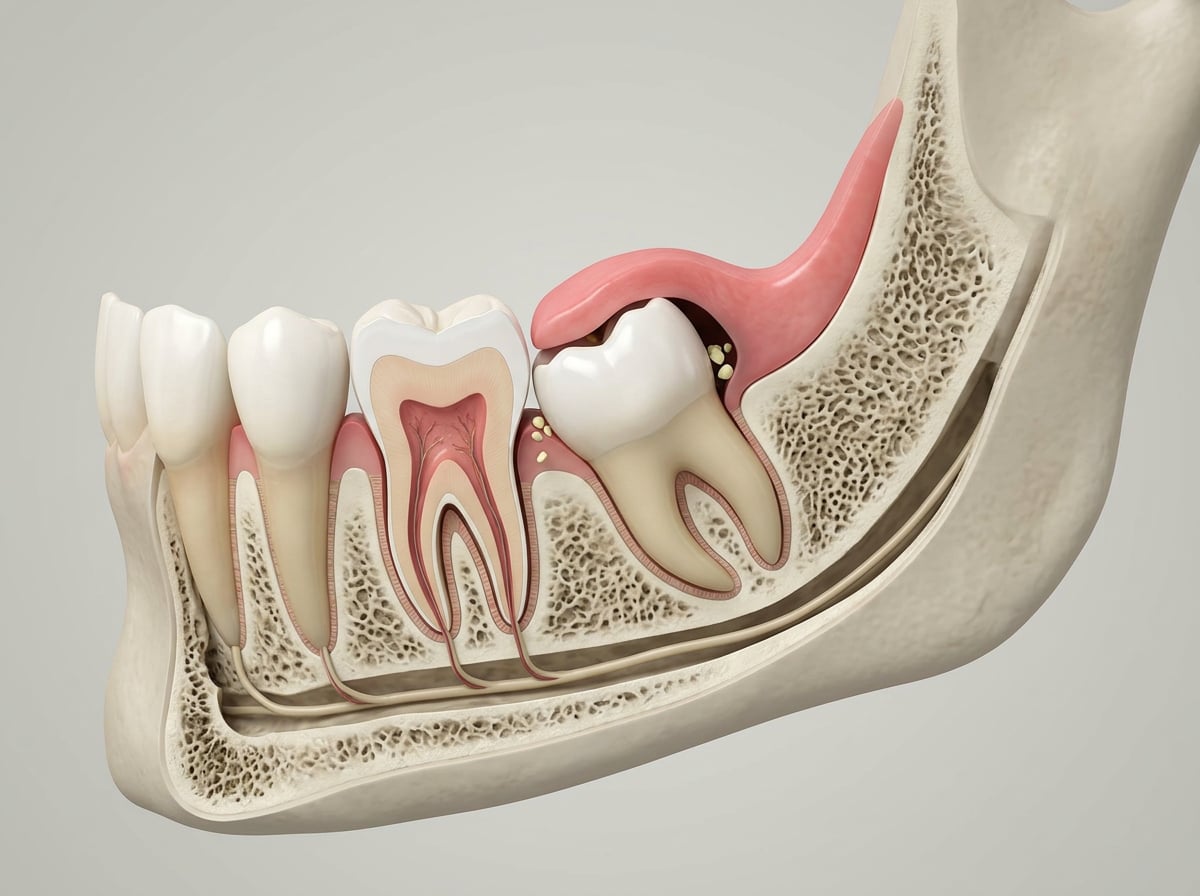
Pericoronitis is inflammation and infection of the gum tissue around a tooth that has only partly broken through. “Peri” means around and “coronal” refers to the crown of the tooth. According to StatPearls on the NIH bookshelf, it can happen with any erupting tooth but is most often linked to the lower wisdom teeth.
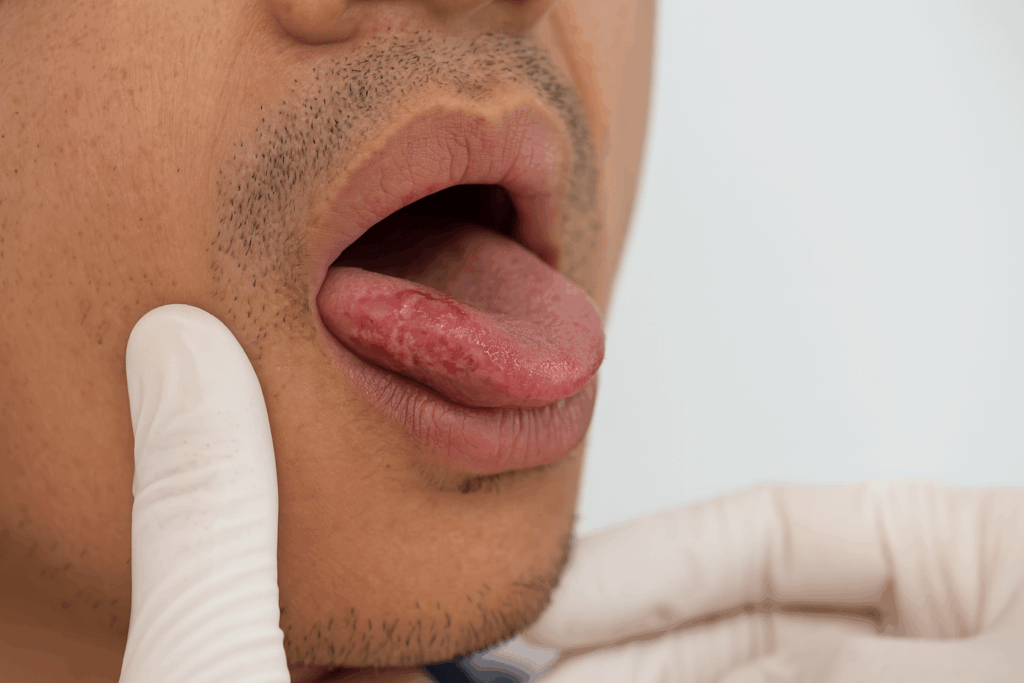
The piece of gum sitting over the tooth has a name: the operculum. When I look in a patient’s mouth with pericoronitis, that little flap is usually red, puffy and tender, and sometimes I can see pus underneath it.
Why wisdom teeth are the usual culprit
Wisdom teeth tend to come in between the ages of 17 and 25, often into a jaw that does not have quite enough room for them. When a tooth stalls halfway, it leaves a small pocket between the tooth and the gum flap.
That pocket is almost impossible to clean with a toothbrush. Food packs in, bacteria multiply, and the tissue becomes infected. To make it worse, the upper tooth can bite down on the swollen flap every time you chew, which keeps irritating it.
The same StatPearls review notes that stress, a cold or other upper respiratory infection, and anything that lowers your immune defenses can trigger or worsen a flare. If your flares seem to line up with a stressful week or a cold, that pattern is worth mentioning at your visit.
Acute vs. chronic pericoronitis
- Acute pericoronitis comes on quickly, with more intense pain and swelling over a day or two.
- Chronic pericoronitis is a lower-grade, on-and-off soreness that can drag on for months, with a bad taste or mild ache that comes and goes.
Both have the same root cause. Chronic cases are easy to ignore, but they are a sign the trap under the flap is still there.
Symptoms: from mild soreness to a spreading infection
Pericoronitis usually starts small and local, then gets worse with chewing and over time. Here is the range of what patients notice, from mild to serious:
Those serious symptoms matter. StatPearls explains that untreated pericoronitis can spread into the spaces of the head and neck, and that difficulty swallowing, limited opening and facial swelling can signal that spread. That is a same-day problem, and I explain exactly what to do in the “When to see a dentist” section below.
If you have noticed a tender lump under your jaw along with the sore gum, that is your lymph nodes reacting to the infection. I wrote more about that connection in Can Gingivitis Cause Swollen Lymph Nodes?
Swollen back gum but no wisdom teeth? Other causes
Not every swollen gum in the back of the mouth is pericoronitis. If your wisdom teeth are already gone, or the swelling sits next to a fully erupted molar, these are the causes I check for:
The StatPearls review also lists less common look-alikes, such as benign gum growths. That is one more reason a quick exam and X-ray beat guessing.
What you can safely do at home tonight
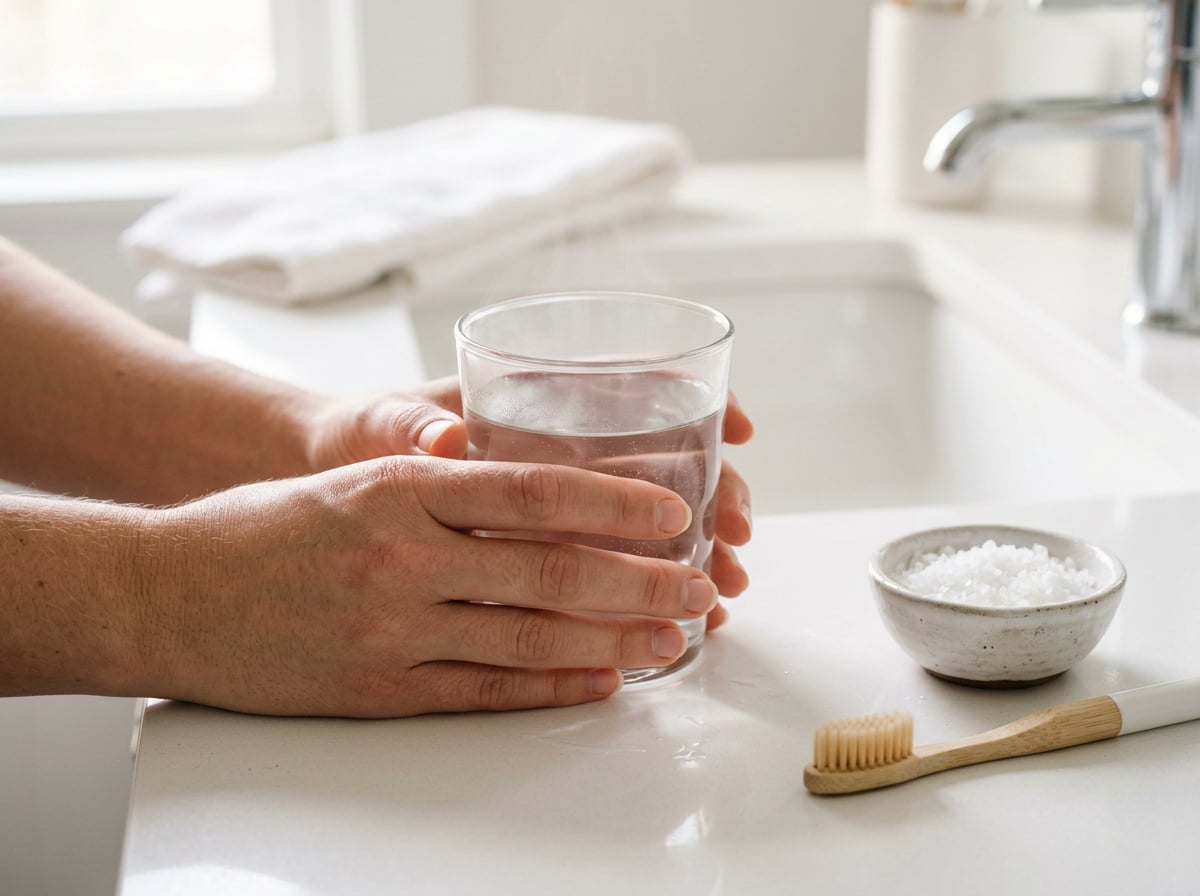
Home care can calm a mild flare and make you more comfortable until you are seen. It does not remove the flap or the trapped space, so think of it as first aid, not a fix.
- Rinse gently with warm salt water after meals to flush out food and debris. Professional guidance uses sterile solutions such as saline to irrigate the space under the flap; a salt-water rinse is the at-home version.
- Keep brushing the area. Use a soft brush and angle it toward the back of the last tooth, even though it is tender. Research summarized by StatPearls ties more plaque to more pericoronitis, so letting the area go makes it worse.
- Use an over-the-counter pain reliever as directed on the label, if it is safe for you. Anti-inflammatory pain relievers (NSAIDs) are the recommended first choice for pericoronitis pain. Ask your pharmacist or doctor if you are unsure which is right for you.
- Chew on the other side and stick to softer foods for a few days.
If your symptoms are getting worse instead of better after a day or two of home care, it is time to call.
How a dentist treats pericoronitis
Treatment has two jobs: calm the current infection, then decide what to do about the flap and the tooth so it does not keep coming back. Here is how I approach it.
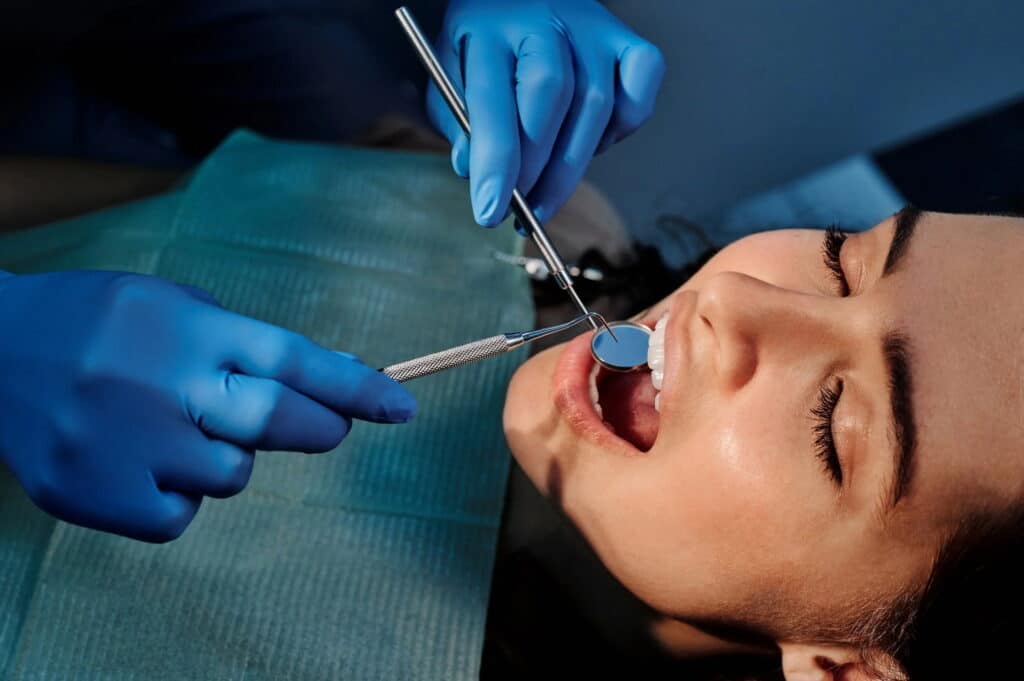
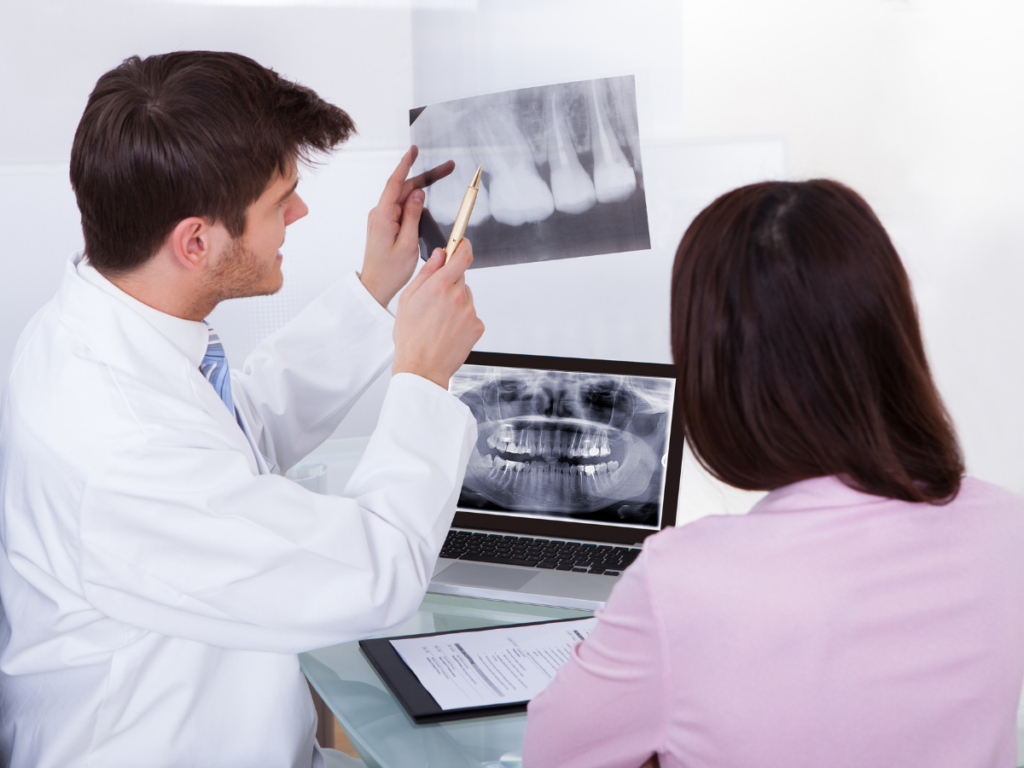
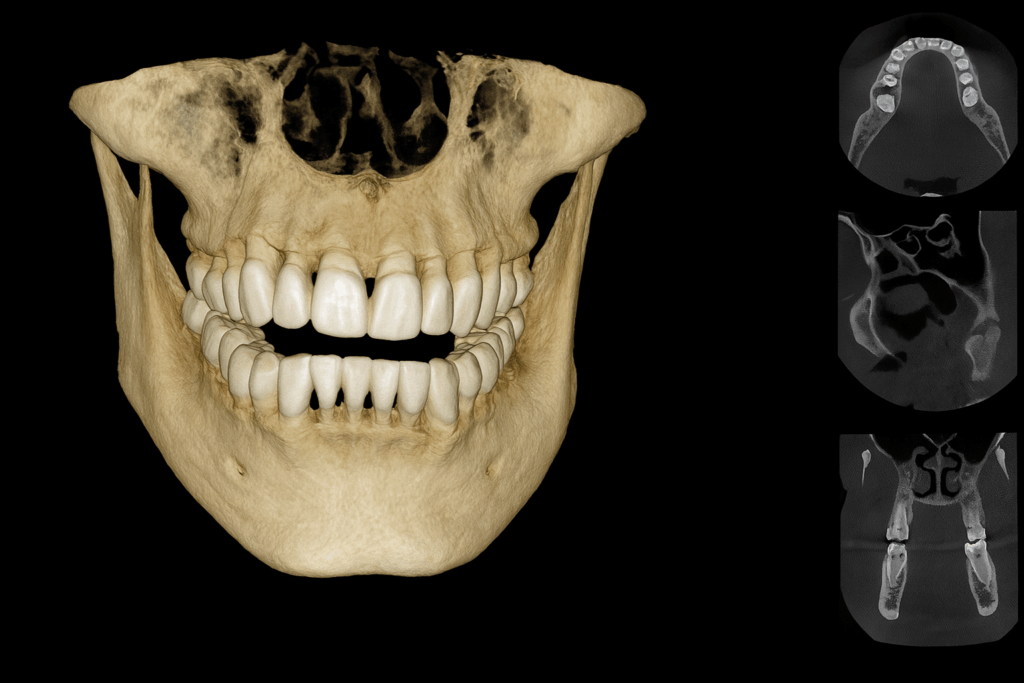
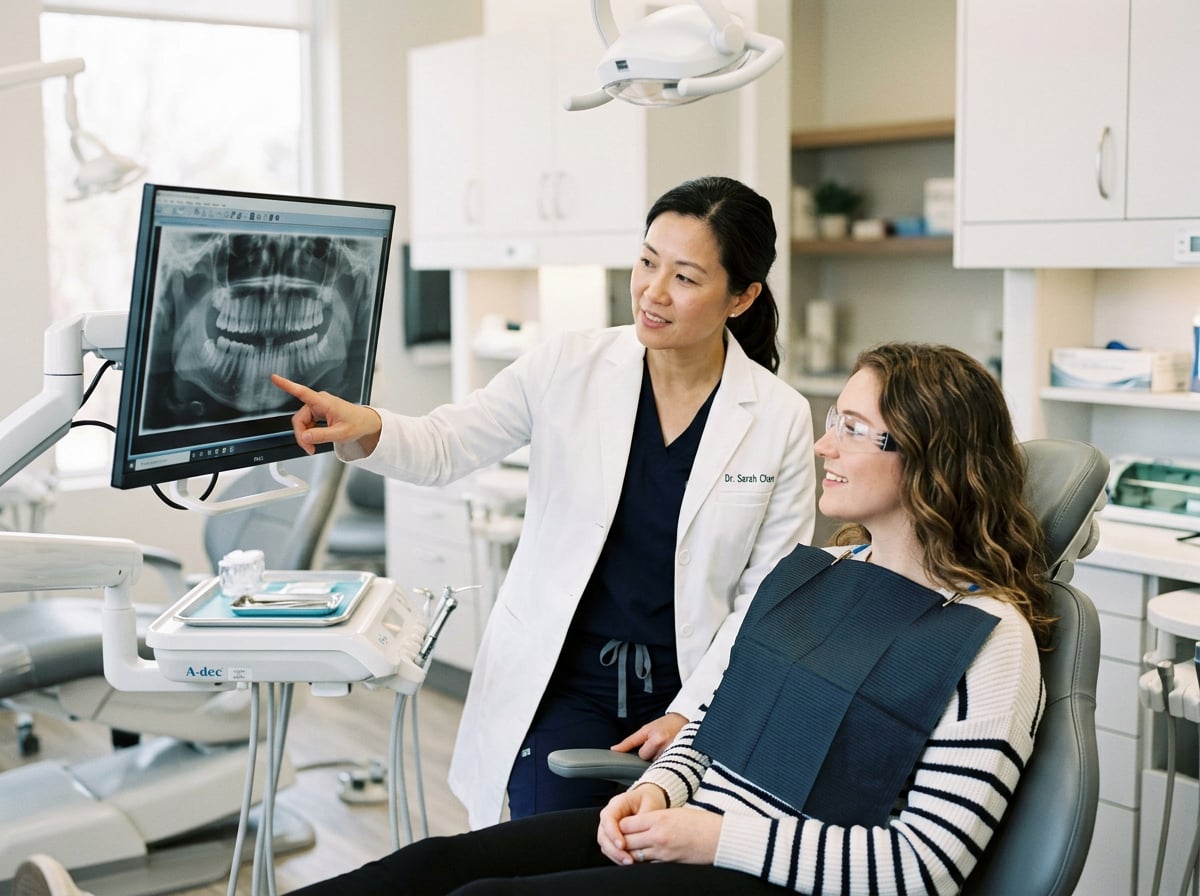
First, an exam and an X-ray. The X-ray tells me the most important thing: where the wisdom tooth is headed. A panoramic X-ray is the best way to see the position of erupting wisdom teeth, and that position decides most of the plan.
Cleaning and irrigation. For a mild to moderate flare, the first step is to gently flush out the space under the flap and clean away the trapped debris. Current evidence treats this local cleaning as the first-line therapy for early pericoronitis.
Antibiotics, only when they are needed. This surprises people. Antibiotics are not automatic for pericoronitis. A review of the evidence recommends local treatment over antibiotics and reserves antibiotics for severe cases, such as when the infection is spreading or you have a fever. The same review found that antibiotics are often prescribed when they are not needed, which adds to antibiotic resistance. If I do prescribe them, it is alongside cleaning the area, not instead of it.
Removing the flap (operculectomy). If the tooth is coming in straight and has room to reach the bite, I may recommend removing the gum flap so there is no pocket left to trap food. This can be done with a laser, electrocautery or a scalpel. It only works for teeth in a good position. If the tooth is tilted or has no room, the trap tends to come back.
Removing the tooth. When a wisdom tooth is unlikely to come in fully and keeps getting infected, extraction is the most permanent solution. The American Association of Oral and Maxillofacial Surgeons advises that wisdom teeth associated with disease, or at high risk of it, should be surgically managed. Sometimes the upper wisdom tooth that bites into the flap is removed too.
Here is how the main options compare:
At Enhanced Wellness we evaluate wisdom teeth and talk through every option, including extraction through our oral and maxillofacial surgery services. Whatever the plan, the goal is the same: get you comfortable now and keep the problem from returning.
Will pericoronitis come back?
The honest answer: it often does, unless the cause is removed. Rinsing, cleaning and, when needed, antibiotics can settle a flare, but they do not change the shape of the gum or the position of the tooth. The pocket under the flap is still there, waiting for the next bit of food.
Whether it keeps coming back depends mostly on the tooth:
- If the tooth has room and is coming in straight, the flap can shrink on its own as the tooth finishes erupting, and the problem may resolve once eruption is complete.
- If the tooth is tilted, stuck or short on space, pericoronitis is likely to persist or recur. In those cases, removing the tooth tends to be the lasting fix, and studies have found it improves symptoms and quality of life for people with recurring flares.
What I tell my patients is this: one mild episode that clears up with cleaning is worth watching. A second or third episode on the same tooth is your mouth telling us it is time to make a longer-term plan.
When to see a dentist (and when it is an emergency)
Call for a dental visit within a few days if:
- The sore gum has not improved after a day or two of home care
- You have a bad taste, bad breath or pus coming from the area
- This is not the first time this tooth has flared up
- You are not sure what is causing the swelling
Get care the same day if you have any of these:
- Difficulty opening your mouth or swallowing
- Swelling of your cheek, jaw or face
- Fever or feeling generally unwell
Go to the emergency room or call 911 if you have trouble breathing, cannot swallow your saliva, or the swelling is spreading quickly toward your neck or eye. These signs can mean the infection is spreading to the deeper spaces of the head and neck, which can threaten your airway.
If you are not sure which group you fall into, call us and describe what you are feeling. My post on what counts as a dental emergency can also help you decide, and our emergency dentist page explains how we handle urgent visits.
Frequently asked questions
Can pericoronitis go away on its own?
A mild flare can settle with good cleaning and salt-water rinses, and if the wisdom tooth has room to fully erupt, the gum flap may shrink and the problem can resolve. If the tooth is stuck or tilted, though, pericoronitis usually returns. Because it can also spread, it is worth having a dentist look rather than waiting it out.
Do I need antibiotics for pericoronitis?
Not usually. Evidence-based guidance recommends cleaning and flushing the area as the first treatment and saving antibiotics for severe cases, such as fever, facial swelling or signs the infection is spreading. Antibiotics alone also do not remove the gum flap that causes the problem, so they are not a long-term fix.
How long does pericoronitis last?
It varies. A mild acute flare that is cleaned out promptly often improves within days, while chronic pericoronitis can come and go for months until the flap or tooth is dealt with. If your symptoms are getting worse instead of better, see a dentist.
Can pericoronitis cause swollen lymph nodes?
Yes. As your body fights the infection, the lymph nodes under your jaw on that side can become swollen and tender. This is a normal immune response, but together with fever or facial swelling it means the infection needs prompt attention.
Should I get my wisdom tooth removed if I have pericoronitis?
Not always. If the tooth is coming in straight with enough room, removing the gum flap or simply waiting for full eruption may be enough. If the tooth is impacted or the flares keep coming back, extraction is usually the most lasting solution. An X-ray helps your dentist decide.
Is salt water good for pericoronitis?
Warm salt-water rinses can help flush food and debris from under the gum flap and may ease mild soreness. They are a useful first-aid step, but they cannot remove the flap or the trapped pocket, so they will not stop pericoronitis from coming back. See a dentist if symptoms persist.
Get that sore back gum checked
A swollen gum around one back tooth is common, treatable and usually not a crisis, but it rarely fixes itself for good. The sooner we can see what the tooth is doing, the simpler the plan tends to be.
If you are in or around Washington, PA, I would be happy to take a look. You can request an appointment at Enhanced Wellness or call us at (724) 225-5070. Every mouth is different, so the right treatment for you will depend on your exam and X-rays.
Sources
- Pericoronitis. StatPearls, NCBI Bookshelf (updated Nov 2022).
- Schmidt J, Kunderova M, Pilbauerova N, Kapitan M. A Review of Evidence-Based Recommendations for Pericoronitis Management and a Systematic Review of Antibiotic Prescribing for Pericoronitis among Dentists. Int J Environ Res Public Health. 2021;18(13):6796.
- Interventions for Early-Stage Pericoronitis: Systematic Review of Randomized Clinical Trials. Antibiotics. 2022;11(1):71.
- American Association of Oral and Maxillofacial Surgeons. Management of Third Molar Teeth (white paper).
- American Association of Oral and Maxillofacial Surgeons. The Importance of Wisdom Teeth Management (news release, 2016).
Sore, swollen gum behind a back tooth?
A quick exam and X-ray show what the wisdom tooth is doing, so you get relief now and a plan that keeps the flare from coming back. Dr. Liza will walk you through every option before anything is done.

Dr. Elizabeth Wakim, DDS, is the founder of Enhanced Wellness. She’s a compassionate and highly-regarded dentist with her own practice in Washington, Pennsylvania, known for providing modern, comprehensive dental care, botox and facial aesthetics with a focus on patient comfort and anxiety reduction, serving general, cosmetic, and pediatric dentistry needs.