What Is a Dental Bone Graft and Why Would I Need One?
Been told you need a bone graft before an implant? Dr. Liza Wakim explains what dental bone grafts are, where the material comes from, what the procedure involves, and why it’s sometimes necessary.
“You may need a bone graft before we can place the implant.”
For a lot of patients, this is where the conversation stops — or at least where the anxiety starts. A bone graft sounds significant. It sounds surgical. It sounds like a complication that means the simple procedure they were hoping for has become a complicated one.
In most cases, it’s more straightforward than it sounds. But patients deserve a real explanation of what a bone graft is, why it’s sometimes necessary, and what the process actually involves — not a brief mention in the middle of a treatment planning conversation and a “don’t worry, it’s routine.”
Here’s what I want patients to understand before they agree to anything.
Why bone loss happens in the first place
To understand why bone grafts are sometimes necessary, it helps to understand how bone loss happens in the dental context.
The bone in your jaw — specifically the alveolar bone, the portion that surrounds and supports the roots of the teeth — exists in a dynamic relationship with the teeth it holds. It’s maintained by the stimulation it receives from biting and chewing forces transmitted through the tooth roots. When a tooth is lost or extracted, that stimulation disappears. Without it, the bone in that area begins to resorb — it shrinks, both in height and in width, as the body gradually recycles the bone tissue it no longer needs to maintain.
This process begins almost immediately after tooth loss and continues over time. In the first year after an extraction, a significant percentage of the bone volume in that area can be lost. The longer a space has been without a tooth, the more bone resorption typically occurs.
Bone loss also occurs from other causes: periodontal disease, which destroys the bone supporting the teeth as part of its inflammatory process; infection around a tooth or implant; certain systemic conditions; and in some cases, trauma.
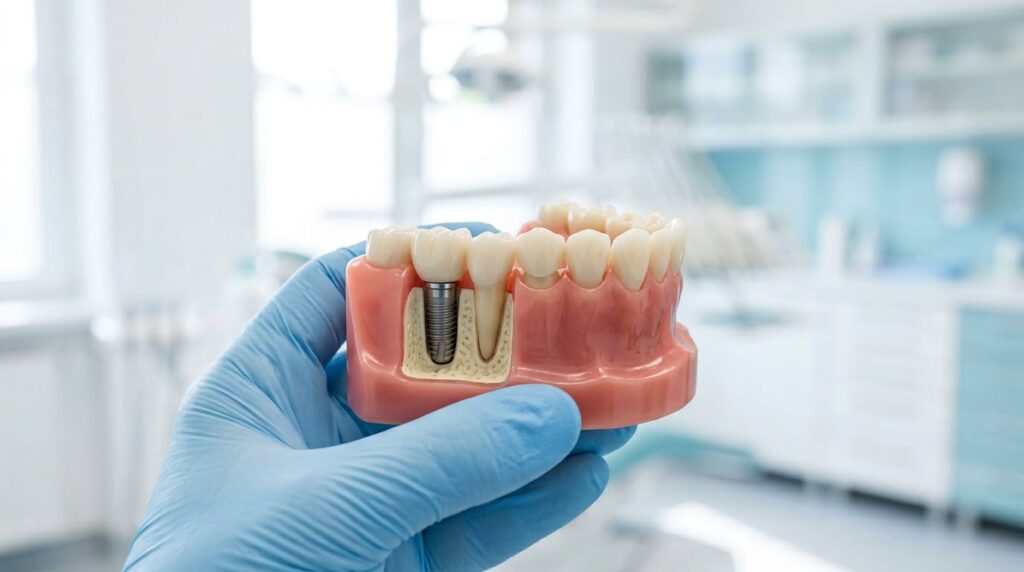
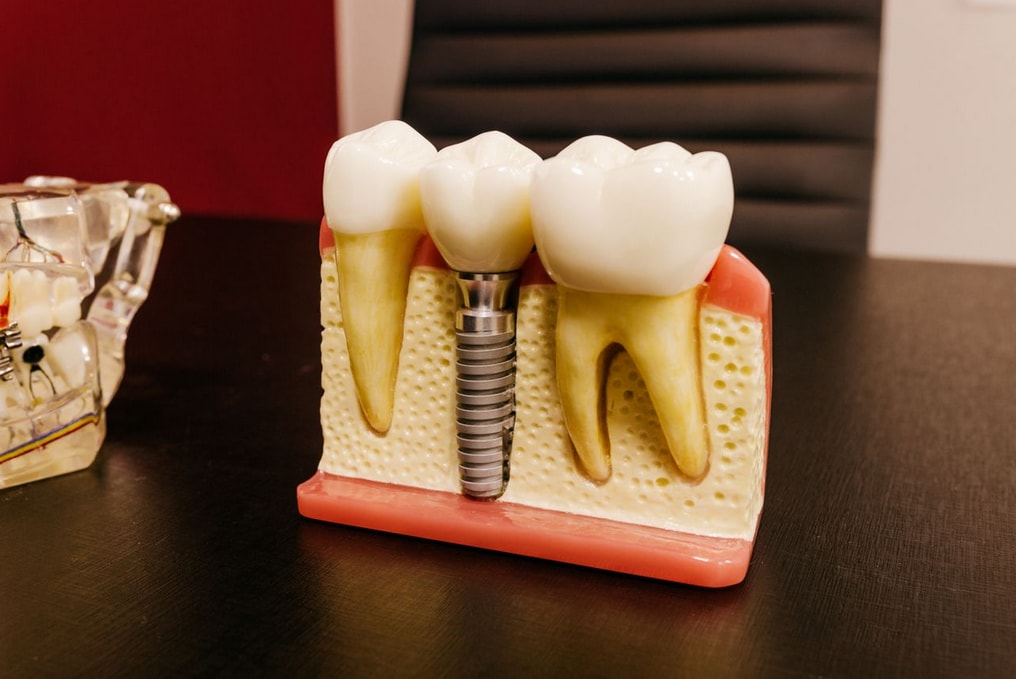
The clinical consequence is that when a patient wants a dental implant — which requires a titanium post to be placed in the jawbone and integrate with it — there needs to be adequate bone volume and density to anchor the post securely. If there isn’t, the implant has nowhere adequate to go.
A bone graft creates that volume.
What a bone graft actually is
A dental bone graft is a surgical procedure in which bone material is placed in an area of deficiency to stimulate the growth of new bone. The graft material acts as a scaffold — it occupies the space where new bone needs to grow, and over time, the body’s own bone-forming cells infiltrate the graft and replace it with new, natural bone.
The procedure doesn’t immediately give you more bone. It gives your body the framework to grow more bone — a process that takes months.
Where the graft material comes from
This is one of the questions patients ask most often, and it’s worth addressing directly.
Autograft — bone taken from another site in the patient’s own body, typically the chin, the back of the jaw, or the hip for larger grafts. Autograft is considered the gold standard because it contains the patient’s own living bone cells and has the highest integration success rate. The tradeoff is a second surgical site.
Allograft — bone from a human donor, processed and sterilized to remove cells while preserving the mineral scaffold. This is the most commonly used graft material in dental bone grafting because it avoids a second surgical site while still providing an effective scaffold. The material is extensively processed and screened — the risk of disease transmission is exceptionally low.
Xenograft — bone from an animal source, most commonly bovine (cow). Also processed and sterilized, with the organic components removed, leaving only the mineral matrix. Widely used and well-documented in the literature.
Alloplast — synthetic bone substitute materials, typically made from calcium phosphate compounds that mimic the mineral composition of natural bone. No donor or animal source involved.
In my practice, the choice of graft material depends on the specifics of the case — the size of the defect, the location, the patient’s preferences, and what the research supports for that particular situation. I discuss the options with patients before proceeding.
The types of bone grafting procedures
Healing time varies by procedure — socket preservation: 4–6 months. Ridge augmentation and sinus lift: longer. Your dentist will confirm the timeline based on your specific case.
Not all bone grafts are the same, and the type I recommend depends on what’s needed.
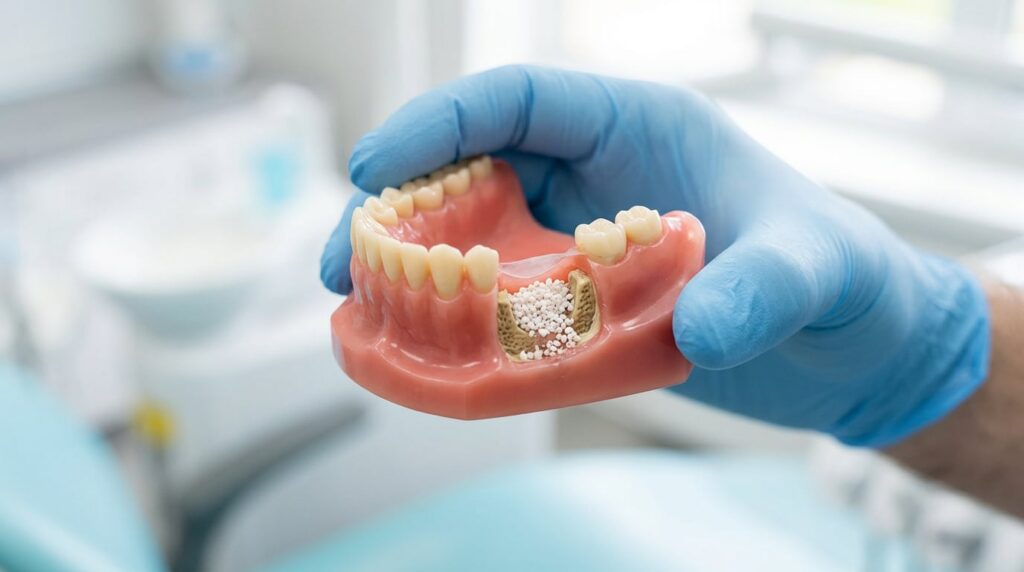
Socket preservation graft. This is the most straightforward and most commonly recommended type. When a tooth is extracted, I place graft material in the empty socket before closing the gum tissue. The purpose is to preserve the bone volume in that area so that it doesn’t resorb significantly before an implant can be placed. This is typically recommended at the time of extraction when implant placement is part of the long-term plan. It’s a relatively minor addition to the extraction procedure.
Ridge augmentation. When a tooth has been missing for some time and significant bone resorption has already occurred, a ridge augmentation procedure rebuilds the width and height of the remaining ridge to create an adequate site for implant placement. This is a more involved procedure than socket preservation and typically requires a healing period of several months before the implant can be placed.
Sinus lift. The upper back teeth sit directly below the maxillary sinuses — the air-filled cavities in the skull above the upper jaw. When upper back teeth are lost, the sinus can expand downward as bone resorbs, leaving insufficient bone height for implants in that area. A sinus lift procedure adds bone material between the jaw and the sinus floor to create adequate height. This is a more specialized procedure and is one I refer to an oral surgeon in complex cases.
Periodontal bone graft. Bone grafts can also be used in the treatment of advanced periodontal disease, where bone loss around the roots of existing teeth has created pockets. Placing graft material in those pockets can help regenerate lost bone support. This is part of the spectrum of periodontal surgical treatment rather than implant preparation.
What the procedure involves
For a socket preservation graft — the most common type — the process is relatively simple. After the tooth is extracted under local anesthesia, I place the graft material in the socket, cover it with a membrane to protect the space, and close the gum tissue over it. You go home. The healing timeline for socket preservation is typically four to six months before the site is ready for implant placement.
For ridge augmentation or a sinus lift, the procedure is more involved — a separate surgical appointment, local anesthesia with possible sedation, and a longer healing period before the implant stage begins.
In all cases, the bone graft phase is followed by a healing period during which the body is doing the work of incorporating the graft and building new bone. X-rays and clinical assessment confirm when the site is ready for the next step.
What to expect during recovery
For socket preservation, recovery is similar to extraction recovery — a few days of soreness and swelling, soft diet for the first week, avoiding disturbing the site. The graft site shouldn’t be probed or pressured during healing.
For more involved grafting procedures, recovery is longer — typically one to two weeks before patients feel fully normal, with dietary restrictions and activity limitations during that window.
The honest question patients ask most
“Do I really need this, or is it being recommended unnecessarily?”
Fair question, and I’ll answer it directly. A bone graft before an implant is recommended when there genuinely isn’t adequate bone volume to predictably place and integrate an implant. Placing an implant in insufficient bone is a clinical failure waiting to happen — the post won’t integrate properly, or it will integrate and then fail as the remaining bone can’t support it long-term.
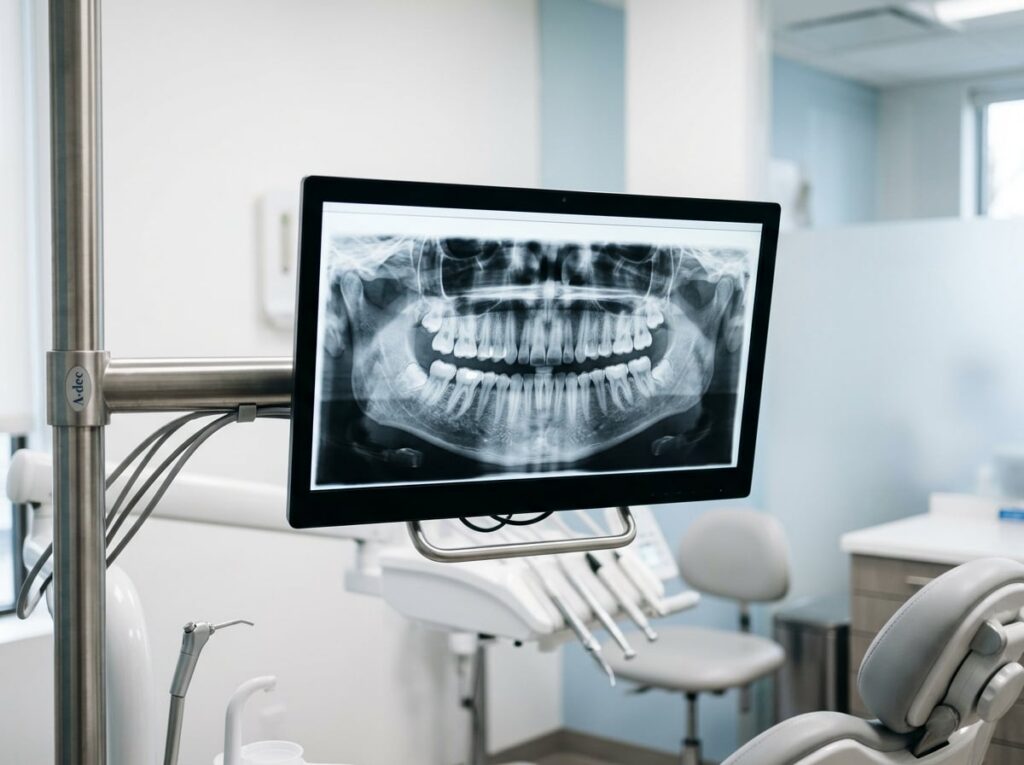
That said, not every patient needs a bone graft before an implant. Many patients who present for implant consultation have adequate bone volume — sometimes because they’re seeking treatment soon after extraction, sometimes because their individual anatomy has preserved bone well. I assess this with a cone beam CT scan, which gives me a three-dimensional picture of the bone volume available, rather than making assumptions.
If I recommend a bone graft, it’s because the imaging shows that it’s necessary for a successful implant outcome. If the bone is adequate, I’ll tell you that too.
Ready to understand your specific situation?
If you’ve been told you need a bone graft and want to understand what that means for your treatment timeline and what the process would look like — or if you’re considering an implant and want to know whether your bone volume is adequate — come in for an evaluation. I’ll review your imaging, explain what’s there, and give you a clear picture of the path forward.
Serving patients in Washington, PA and the greater Pittsburgh area.
Washington, PA & Pittsburgh
Questions about bone grafting before an implant?
Dr. Liza will review your imaging and explain clearly whether a graft is necessary for your situation — and what the process would look like from start to finish.

Dr. Elizabeth Wakim, DDS, is the founder of Enhanced Wellness. She’s a compassionate and highly-regarded dentist with her own practice in Washington, Pennsylvania, known for providing modern, comprehensive dental care, botox and facial aesthetics with a focus on patient comfort and anxiety reduction, serving general, cosmetic, and pediatric dentistry needs.